
Service History
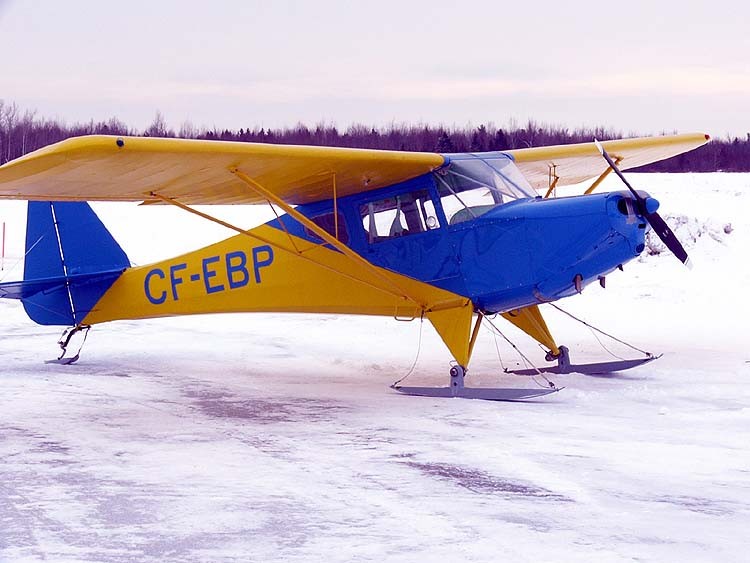
The Fleet 80 Canuck carved out a significant niche in Canadian aviation during the postwar flying boom. Central Airways of Toronto operated more Canucks than any other organization, training thousands of pilots from their base at Toronto Island Airport under the leadership of brothers Robert and Tommy Wong. The aircraft served Canadian flying clubs, charter companies, and private owners throughout the country, with its versatility on floats and skis making it particularly valuable in Canada's diverse terrain. By the 1990s, many Canucks remained active in civilian service, testament to their robust construction and reliable performance.
The Manufacturer
Fleet Aircraft Limited emerged as a prominent Canadian manufacturer during the 1920s and 1930s, producing successful trainers including the Fleet Fawn and Finch during World War II. The company operated from Fort Erie, Ontario, and sought to transition into the postwar civilian market by acquiring the rights to J. Omer Noury's N-75 design in May 1945. Fleet invested heavily in refining the design but faced severe financial difficulties as the anticipated postwar aviation boom failed to materialize. After producing 198 Canucks between 1945 and 1947, Fleet sold the production rights to Leavens Brothers of Toronto and ceased operations shortly thereafter, becoming another casualty of the challenging postwar aircraft market.
Engine & Technical Details
The Canuck was powered by the Continental C-85-12J, a four-cylinder horizontally-opposed engine producing 85 horsepower. This reliable powerplant, manufactured by Continental Motors during the mid-1940s through 1950s, provided excellent performance for the aircraft's light airframe while maintaining the fuel efficiency crucial for training operations. The aircraft featured a welded-steel tube fuselage covered in fabric, distinguishing it from competitors like the Piper Cub through its stronger construction. Design innovations included a relocated fuel tank for better balance, an added cabin skylight for improved visibility, a lowered front fuselage, and an enlarged vertical stabilizer for enhanced stability.
Designer & Development
J. Omer Noury created the original N-75 design with assistance from engineers George Dalton and input from Charles H. Cotton and Lyle Nesbitt. When Fleet Aircraft acquired the design rights, their engineering team refined the aircraft for production, addressing stability issues and improving overall performance. Test pilot Tommy Williams conducted the first flight of Fleet's modified version on September 26, 1945, validating the improvements made to Noury's original concept. The design objectives focused on creating a lightweight, versatile trainer suitable for Canada's varied flying conditions while maintaining the simplicity essential for flight training operations.
Pilot Perspective
Pilots appreciated the Canuck's forgiving flight characteristics and robust construction, which made it ideal for training operations. The aircraft cruised at 100 miles per hour with a maximum speed of 111 miles per hour, while its gentle stall speed of just 44 miles per hour provided a comfortable margin for student pilots. With a service ceiling of 12,000 feet and a range of 300 miles, the Canuck offered sufficient performance for most training missions. The side-by-side seating arrangement facilitated instruction, while the aircraft's adaptability to floats and skis expanded its operational versatility throughout Canada's diverse landscape.
Production & Legacy
Total production reached 225 aircraft over a thirteen-year span from 1945 to 1958. Fleet Aircraft produced 198 examples at Fort Erie between 1945 and 1947, while Leavens Brothers assembled an additional 25 aircraft from components between 1947 and 1949, with final production ending in 1958. A single Fleet 81 variant with three-seat capacity was also constructed. Despite its solid design and performance, the Canuck faced intense competition from American manufacturers like Piper and Cessna, limiting its commercial success.
Approximately 70 Canucks remained on the Canadian civil registry as of April 2023, demonstrating the type's longevity and continued appeal to vintage aircraft enthusiasts. The Canada Aviation and Space Museum in Ottawa displays CF-EBE, the 149th aircraft built in 1946, complete with its original skis and floats configuration. This particular aircraft previously served with Central Airways, representing the thousands of pilots who learned to fly in Canucks during Canada's postwar aviation expansion. The Canuck stands as one of the few successful Canadian-designed light aircraft of the postwar era, embodying the nation's aviation heritage and engineering capabilities during a pivotal period in civilian flying.