
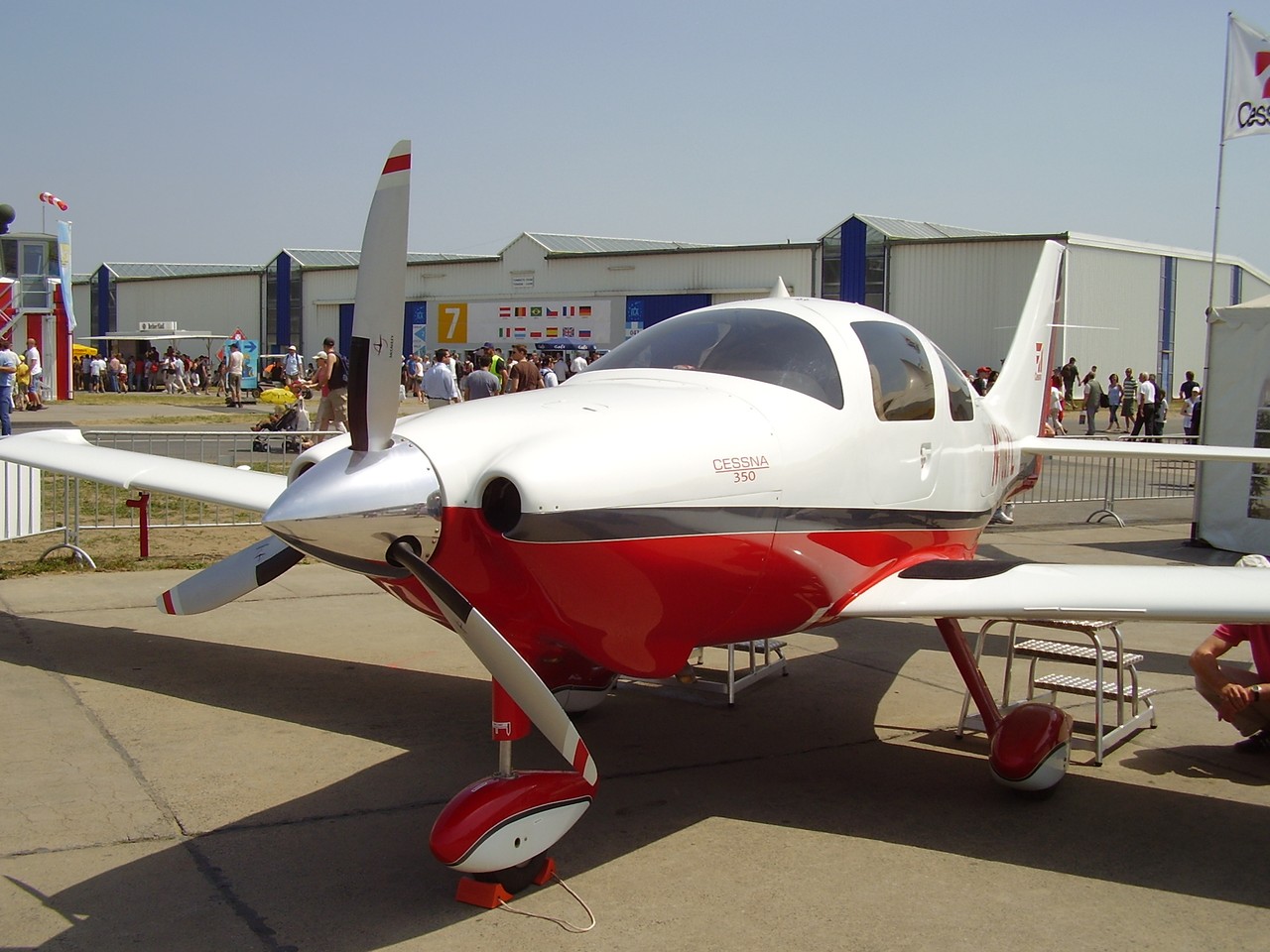
Development and Certification
The aircraft that would become the Cessna 350 Corvalis originated from Columbia Aircraft Manufacturing Company's ambitious design program launched in the late 1990s. Columbia Aircraft, founded in April 1995 as part of NASA's Advanced General Aviation Transport Experiments project, initially developed the Model LC40-550FG as the Columbia 300, which received FAA certification on September 18, 1998. The upgraded Columbia 350 variant achieved certification on March 30, 2003, incorporating advanced glass cockpit technology originally developed for the turbocharged Columbia 400.
Manufacturing Transition
Production began at Columbia's Bend, Oregon facility in 2003, where the aircraft was manufactured until the 2008 recession devastated the general aviation market. Textron announced its acquisition of Columbia Aircraft in September 2007, with the purchase clearing regulatory approval in November 2007. The Columbia 350 was immediately rebranded as the Cessna 350, and in January 2009, Cessna added the marketing designation "Corvalis," derived from Corvallis, Oregon, located west of the original Bend production facility.
Following the closure of the Bend facility due to economic pressures, Cessna relocated production to Independence, Kansas in October 2009. The new production line operated at a dramatically reduced pace of one aircraft every six months, with composite components manufactured in Chihuahua, Mexico. This represented a significant scaling back from the original production ambitions.
Technical Innovation
The Cessna 350 Corvalis marked a revolutionary departure for Cessna, becoming the company's first single-engine aircraft to extensively employ bonded composite structures rather than traditional aluminum construction. The airframe was certified for 25,200 flight hours of service life and featured a maximum takeoff weight of 3,400 pounds with a maximum landing weight of 3,230 pounds.
Powering the aircraft was the Teledyne Continental IO-550-N engine, a horizontally-opposed, air-cooled powerplant producing 310 horsepower at 2,700 rpm. This engine, part of the proven Continental IO-550 series that had been in production since the 1980s, provided the reliability expected in the high-performance single-engine market.
Production Challenges
The Cessna 350's production life was marred by significant quality control issues that ultimately contributed to the program's termination. In December 2010, a Cessna 400 undergoing production acceptance testing experienced a catastrophic structural failure when approximately seven feet of wing skin disbonded from the upper forward wing spar. This incident prompted the FAA to issue an Emergency Airworthiness Directive affecting seven Cessna 400s and one Cessna 350 still on the production line, though no customer aircraft in service were impacted.
The manufacturing quality problems, combined with the ongoing effects of the 2008 recession on the luxury general aviation market, proved insurmountable. Cessna made the decision to cease production of all former Columbia aircraft models in 2010-2011, ending the Corvalis program after only seven years of production across both Columbia and Cessna ownership.
Legacy and Impact
Despite its abbreviated production run, the Cessna 350 Corvalis represented an important technological milestone for Cessna Aircraft Company. The program demonstrated the company's willingness to embrace composite construction technology and modern avionics integration, setting the stage for future single-engine developments.
The aircraft's glass cockpit avionics suite and composite construction established benchmarks that would influence subsequent general aviation designs. While production numbers remained limited due to the program's premature termination, the Corvalis proved that traditional manufacturers could successfully adapt advanced materials and technologies from the experimental aircraft world.
Today, the surviving Cessna 350 Corvalis aircraft remain in private hands, serving as examples of early 21st-century general aviation innovation. The program's legacy lives on in Cessna's continued exploration of composite materials and advanced avionics integration in their current single-engine product line, though no direct successor to the Corvalis has emerged in the years since production ended.