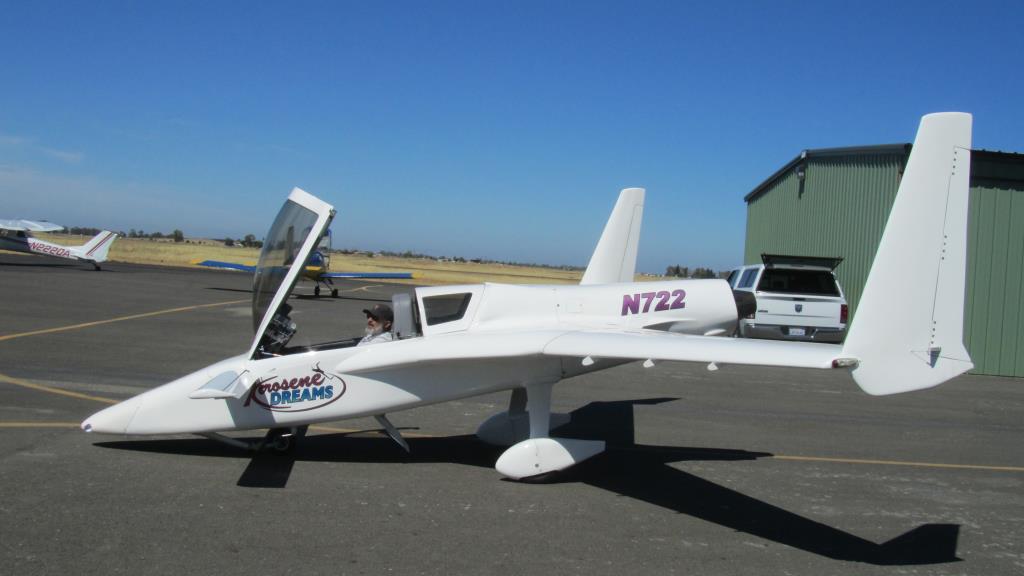
Individual builder (Gregory W. Richter) CozyJet

Fixed Wing Single Engine

Aircraft Information

ICAO Code
COZJ
Manufacturer
Individual builder (Gregory W. Richter)
Model
CozyJet
Aircraft Type
Fixed Wing Single Engine
Primary Role
General Aviation

Technical Data

Engine Type
Turboshaft
Engine Model
T58-8F
Production Years
2000-2001
Units Produced
1
First Flight
2001
Notable Operators
Experimental aircraft community

The CO-Z CozyJet represents one of aviation's most ambitious homebuilt projects, transforming a conventional piston-powered design into a turbine-powered experimental aircraft. First flown in 2001, it was a canard pusher configuration powered by a GE T58-8F turboshaft engine producing 800 pounds of thrust, seating 2-3 occupants. The aircraft achieved this transformation through the vision of Gregory W. Richter, who modified the basic CO-Z Cozy design originally created by Co-Z Development Corporation.

Origins and Development

The CozyJet emerged from the established CO-Z Cozy lineage, a family of homebuilt aircraft that began with designer Nat Puffer's vision in January 1980. Puffer, working alongside his wife Shirley, sought to create a wider-cabin derivative of Burt Rutan's Long-EZ design. The original Cozy prototype first flew on July 19, 1982, powered by a 118-horsepower Lycoming O-235-L2C engine and featuring a distinctive canard pusher configuration with side-by-side seating.

The Turbine Transformation

Gregory W. Richter undertook the most radical modification of the Cozy design, installing a General Electric T58-8F turboshaft engine in place of the conventional piston powerplant. The GE T58-8F, originally developed for helicopter applications including the Bell UH-1 series, produced 800 pounds of thrust and weighed 363 kilograms. This engine choice represented a significant departure from typical homebuilt practice, requiring extensive modifications to accommodate the turbine's unique requirements.

The conversion necessitated substantial changes to the aircraft's fuel system, increasing capacity to 416 liters (92 gallons) to feed the thirsty turbine engine. The additional weight of both engine and fuel systems added 363 kilograms to the aircraft's empty weight compared to piston-powered variants.

Flight Testing and Performance

Richter's CozyJet, registered as N722, completed its first flight in 2001 after initial experimentation with a rotary engine configuration. The aircraft represented a unique achievement in homebuilt aviation, successfully mating military surplus turbine technology with civilian experimental aircraft construction techniques.

The project demonstrated at EAA AirVenture Oshkosh, where it drew considerable attention from the experimental aircraft community. The combination of the Cozy's proven aerodynamic design with turbine power created performance characteristics unlike any other homebuilt aircraft of its era.

Manufacturing Heritage

The CozyJet's foundation lay in the broader CO-Z aircraft family, which achieved remarkable success in the homebuilder market. Co-Z Development Corporation, established in Minnesota, marketed plans rather than complete aircraft, enabling amateur builders worldwide to construct their own examples. The company's business model proved highly successful, with production records indicating 305 Co-Z aircraft across all variants, though estimates suggest more than 200 actually flew.

In 2004, Aircraft Spruce & Specialty Co. acquired the Cozy III and Cozy Mark IV designs from Co-Z Development Corporation, gaining exclusive marketing rights effective January 1st of that year. This transition ensured the continued availability of plans and support for builders, though it marked the end of Co-Z Development as an independent entity.

Global Impact

While the CozyJet remained a one-off experimental project, the broader Cozy family achieved international recognition. Builders constructed aircraft in the United States, Europe, Venezuela, Canada, South Africa, Australia, and New Zealand. Notable examples include VH-BRN (constructor number 686) photographed in Australia in 2008, and ZK-COZ (constructor number E749.AACA-2085) registered in New Zealand.

The European market saw particular development under Ulrich 'Uli' Wolters, who acquired European rights in 1987 and established Co-Europe, later renamed Cosy Europe, to market the Cosy Classic variant.

Technical Innovation

The Cozy design family incorporated several innovations that made the CozyJet conversion possible. The original design featured composite construction using "hot-wire saw" techniques licensed from Rutan Aircraft Factory. The 38-inch wide fuselage provided adequate space for side-by-side seating and dual controls, including side stick controllers, rudder pedals, and brakes.

The canard configuration offered inherently stable flight characteristics and stall-resistant behavior, qualities that proved valuable when adapting the design for turbine power. The pusher propeller arrangement simplified engine installation and provided excellent forward visibility for the crew.

Legacy and Current Status

The CozyJet project highlighted the adventurous spirit of experimental aviation, demonstrating that dedicated individuals could successfully integrate military surplus turbine engines into civilian airframes. While N722 remains the only known turbine-powered Cozy variant, its existence inspired other builders to explore unconventional powerplant installations.

Today, dozens of conventional Cozy aircraft continue flying worldwide, supported by Aircraft Spruce & Specialty Co.'s ongoing parts and plans availability. The CozyJet serves as a testament to the experimental aircraft community's ingenuity and willingness to push technological boundaries, even within the constraints of homebuilt aircraft regulations.