
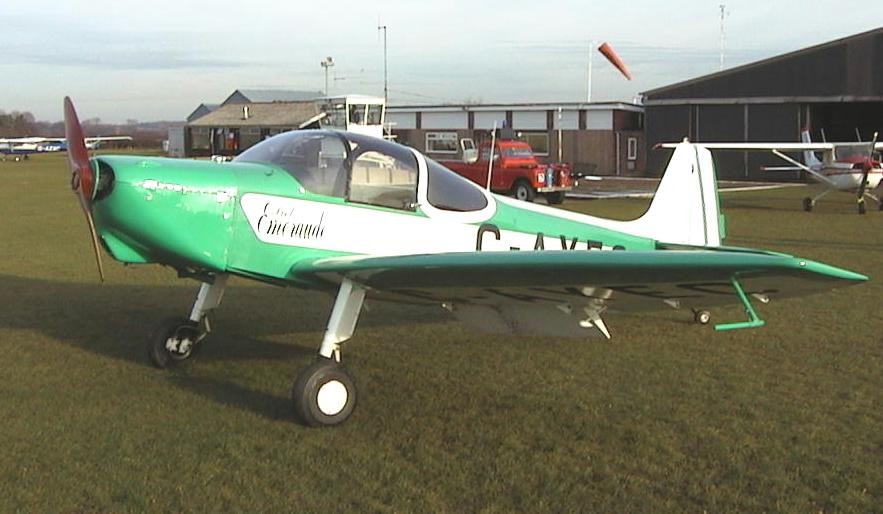
Design Evolution
The Super Emeraude CP-1310/1315/1330 series emerged as sophisticated developments of the original Piel Emeraude design philosophy, incorporating aerodynamic refinements that enhanced the aircraft's performance envelope. The most notable modifications included the implementation of short flaps and rounded wingtips, departing from earlier angular configurations while retaining the time-tested NACA 23012 wing profile with its 1500mm chord dimension.
Construction and Materials
Scintex employed traditional yet proven construction techniques in manufacturing these aircraft, utilizing a combination of spruce structural elements and Okoumé plywood sheeting. The assembly process incorporated Aérodux glue and Résine 12 resin systems, providing weather-resistant bonds essential for the aircraft's longevity. This construction methodology represented a continuation of European homebuilt traditions while meeting contemporary certification standards.
The aircraft featured a deliberately simplified electrical system philosophy, incorporating no battery, starter motor, or electrical charging system. This approach reduced both weight and complexity while appealing to pilots seeking straightforward, reliable operation reminiscent of vintage aviation practices.
Performance Characteristics
The Super Emeraude variants demonstrated exceptional short-field performance capabilities, achieving stall speeds as low as 50 kilometers per hour. This low-speed handling translated into practical operational advantages, with takeoff distances limited to 140 meters and landing rolls of just 110 meters. These figures positioned the aircraft favorably for operations from restricted airfields and private strips.
Propeller selection centered on a 130/74 centimeter unit, carefully matched to the aircraft's power and performance requirements. The propeller dimensions reflected optimization for the aircraft's intended operational envelope, balancing takeoff acceleration with cruise efficiency.
The Piel Legacy
Claude Piel established his reputation in French aviation through innovative homebuilt designs that emphasized both performance and constructability. His aircraft consistently demonstrated that amateur builders could achieve professional-level results through careful engineering and detailed construction guidance. The Emeraude series became synonymous with quality homebuilt aviation throughout Europe and beyond.
The transition of production responsibilities to Scintex represented an evolution in the aircraft's commercial development, moving from purely homebuilt origins toward more standardized manufacturing processes while preserving the design's essential characteristics.
Operational Philosophy
The Super Emeraude variants embodied a philosophy of aviation that prioritized simplicity and reliability over complexity. The absence of electrical systems reflected this approach, requiring pilots to master hand-propping techniques and rely on mechanical instruments. This design choice appealed to aviators seeking authentic flying experiences reminiscent of aviation's golden age.
The aircraft's low stall speed and forgiving handling characteristics made it particularly suitable for pilot training applications and recreational flying. The generous margins provided by the NACA 23012 airfoil contributed to predictable behavior throughout the flight envelope, reducing pilot workload during critical phases of flight.
Technical Innovation
While maintaining traditional construction methods, the Super Emeraude incorporated subtle refinements that improved overall performance. The rounded wingtips reduced induced drag while contributing to the aircraft's distinctive aesthetic appeal. Short flaps provided enhanced lift coefficients during approach and landing phases, directly contributing to the impressive short-field performance figures.
The 1500mm wing chord dimension represented an optimal balance between structural efficiency and aerodynamic performance, providing adequate internal volume for fuel and equipment while maintaining favorable aspect ratios.
Market Position
The CP-1310/1315/1330 variants occupied a unique position in the homebuilt aircraft market, offering proven performance in a refined package. The aircraft appealed to builders seeking traditional construction methods combined with contemporary performance standards, bridging the gap between vintage designs and modern requirements.
The series demonstrated that evolutionary rather than revolutionary design approaches could yield meaningful performance improvements while preserving the essential character that made the original Emeraude successful.