
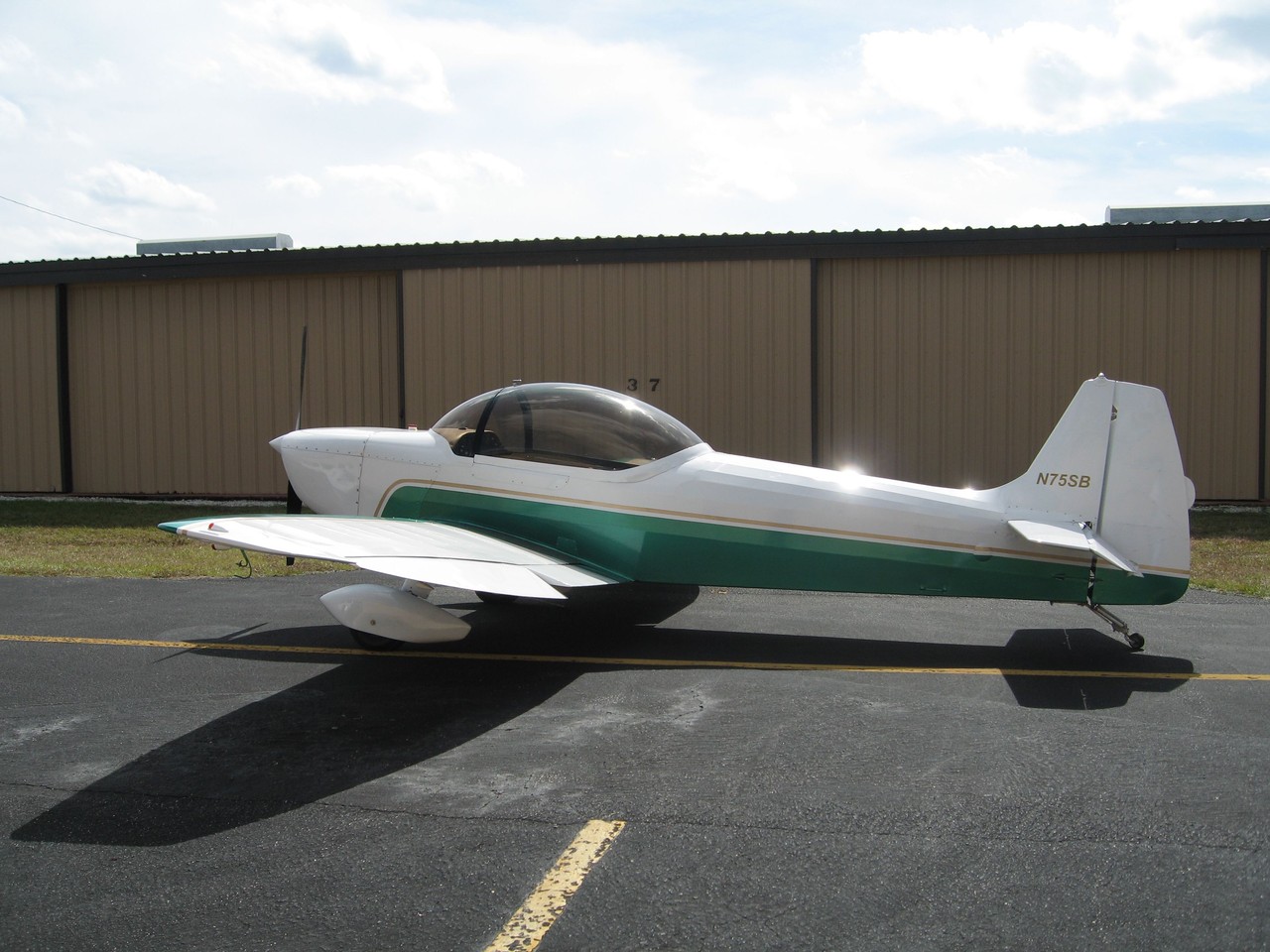
Design Genesis and Innovation
Claude Piel's CP-30 Emeraude emerged from his earlier single-seat CP-20 Pinocchio design, which resembled a miniature Supermarine Spitfire. When Piel unveiled the CP-30 design in 1953 at Toussus-le-Noble, he created what would become a cornerstone of European light aviation. The prototype, initially powered by a 65-horsepower Continental engine, demonstrated exceptional performance that improved dramatically when refitted with a 90-horsepower Continental, establishing its reputation as France's fastest civilian two-place aircraft.
The aircraft's construction utilized traditional wood building techniques with a laminated box spar and distinctive elliptical trailing edge. This design philosophy made it particularly suitable for amateur construction, a factor that would prove crucial to its long-term success. Piel's engineering approach emphasized both performance and buildability, creating an aircraft that satisfied both factory production requirements and homebuilder capabilities.
Production Success Across Multiple Manufacturers
Unlike many aircraft designs tied to single manufacturers, Piel licensed the Emeraude to multiple companies, creating a distributed production network that maximized the design's reach. Coopavia handled early production, while Menavia became the most prolific manufacturer, delivering 96 aircraft by June 1959 at a rate of seven per month. This production pace demonstrated the design's commercial viability and manufacturing efficiency.
Scintex produced the refined CP-301C variant featuring a bubble canopy, while CAARP, associated with Mudry, manufactured the CP-1310 variant. International production expanded the aircraft's presence significantly, with more than 110 aircraft built in America, Canada, New Zealand, and South Africa. Germany contributed 60 CP-301 aircraft, including 22 produced by Binder-Aviatik, which also manufactured 25 of the specialized CP-301S Smaragd variants.
The Super Emeraude Evolution
The early 1960s marked a significant development milestone when Piel, working at Scintex, created the Super Emeraude. This evolution incorporated structural reinforcements based on static testing conducted at CEAT in Toulouse during 1958, resulting in an airframe capable of aerobatic certification. The Super Emeraude CP-1310 variant, powered by a 100-horsepower Continental O-200 engine, featured cleaned-up aerodynamics and enhanced structural integrity.
This refined design proved so successful that it served as the foundation for the renowned CAP-10 aerobatic aircraft, extending Piel's influence into competitive aviation. The Super Emeraude CP-320 plans were further revised and simplified for amateur builders, ensuring the design's continued relevance in the homebuilding community under French CNRA certification.
Engine Variants and Performance
The Emeraude family accommodated multiple powerplant options, demonstrating the design's versatility. While the Continental C90 remained the primary engine choice, variants included the Continental C85 in the CP-304, Lycoming O-235 in the CP-305, and a 78-kilowatt Potez engine in the CP-315. This engine flexibility allowed operators to select powerplants based on availability, performance requirements, and regional preferences.
The Continental C90-14F, producing 71 kilowatts, provided the standard Emeraude with cruise performance that established its reputation for speed among light aircraft. The aircraft's maximum takeoff weight of 700 kilograms and efficient aerodynamics contributed to performance characteristics that impressed both factory-built and homebuilt aircraft communities.
Claude Piel's Design Legacy
Claude Piel (1921-1982) represented the artisan-constructor tradition in French aviation, beginning his design career in 1943 with the CP-10 Pinocchio. His systematic approach to aircraft development, progressing through the CP-20, CP-30, CP-40, and CP-60 designs, established him as a significant figure in light aviation development. The first production Emeraude, registered F-BIJA, was delivered to Aéroclub d'Enghien-Moiselles in late July 1957, marking the beginning of the type's operational service.
Piel's licensing strategy, rather than establishing a single production company, maximized the design's distribution and ensured its survival across changing market conditions. This approach proved prescient, as various manufacturers could adapt production to local market demands while maintaining design integrity.
Enduring Homebuilding Appeal
The Emeraude's most lasting impact lies in its success among amateur builders. Plans remained available throughout the aircraft's production years and beyond, creating a community of builders that spans multiple generations. The design's wood construction aligned with traditional homebuilding skills, while its performance capabilities provided motivation for the significant time investment required for amateur construction.
Today, Super Emeraude variants continue construction under CNRA certification in France, demonstrating the design's enduring appeal more than seven decades after Piel's initial design work began. This longevity reflects both the soundness of Piel's original engineering and the aircraft's ability to satisfy recreational flying requirements across changing technological and regulatory environments.