
Design and Development
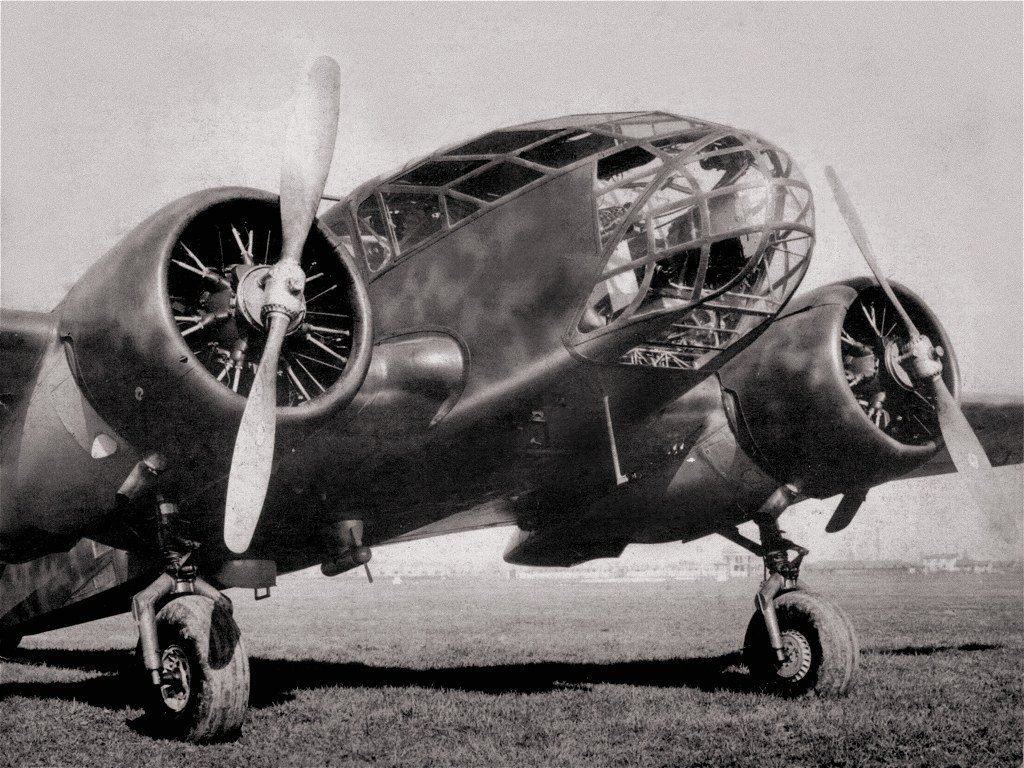
Designed under the leadership of Italian engineer Cesare Pallavicino, the Caproni Ca.311 was developed as an evolution of the Ca.310. The aircraft was specifically intended to replace the IMAM Ro.37, shifting the Italian reconnaissance role from single-engine biplanes to a modern, all-metal twin-engine monoplane layout. A defining characteristic of the Ca.311 was its extensively glazed nose, which provided the crew with excellent forward and downward visibility, making it highly effective for artillery spotting and ground observation. While the most specific published date for its first flight is 1 April 1939, the aircraft was part of a broader family of five twin-engine reconnaissance models developed by Caproni starting in 1936.
Production and Manufacturer
The aircraft was produced by Officine Caproni (Caproni Aeronautica Bergamasca group) in Italy. While exact production dates are not explicitly documented, the aircraft was manufactured prior to and during the early years of World War II, with service beginning in 1940. Production is estimated to have occurred between 1939 and 1942. Total production figures vary, with some records indicating approximately 300 units were ordered, while other sources cite a total of 335 copies built.
Technical Specifications
The Ca.311 was powered by two Piaggio Stella P.VII C.35 seven-cylinder, air-cooled radial piston engines, each producing 350 kW (470 hp). This powerplant allowed the aircraft to reach a maximum speed of 307 km/h and achieve a service ceiling of 7,400 meters, with a maximum range of 1,600 km. The crew typically consisted of three to four members, including a pilot, observer/bombardier, radio-operator/gunner, and a ventral gunner. For defense, the aircraft was equipped with three 7.7 mm Breda-SAFAT machine guns: one fixed in the port wing, one in a dorsal Lanciani-type revolving turret, and one flexible gun in a ventral hatch. It could carry up to 400 kg of bombs in an internal fuselage bay.
Military Service and Legacy
Introduced to service in 1940, the Ca.311 operated across all major Italian theaters of World War II. In North Africa, it saw early action with the 129th Squadron. It became operational in Albania by the fall of 1940 and served on the Russian front starting in the spring of 1941. Beyond the Regia Aeronautica, which operated 284 aircraft, the type was exported to the Yugoslav Royal Air Force (15 aircraft) and later transferred to the Independent State of Croatia in late 1942. Post-war, surviving examples served with the SFR Yugoslav Air Force.
Despite its reliability and good handling, the Ca.311 was hampered by limited engine power and defensive armament. By late 1941, it began to be superseded by the more powerful Ca.313 and Ca.314. However, several airframes remained in training roles until 1945 with the Regia Aeronautica in southern Italy and the Aeronautica Nazionale Repubblicana in the north.