
Service History
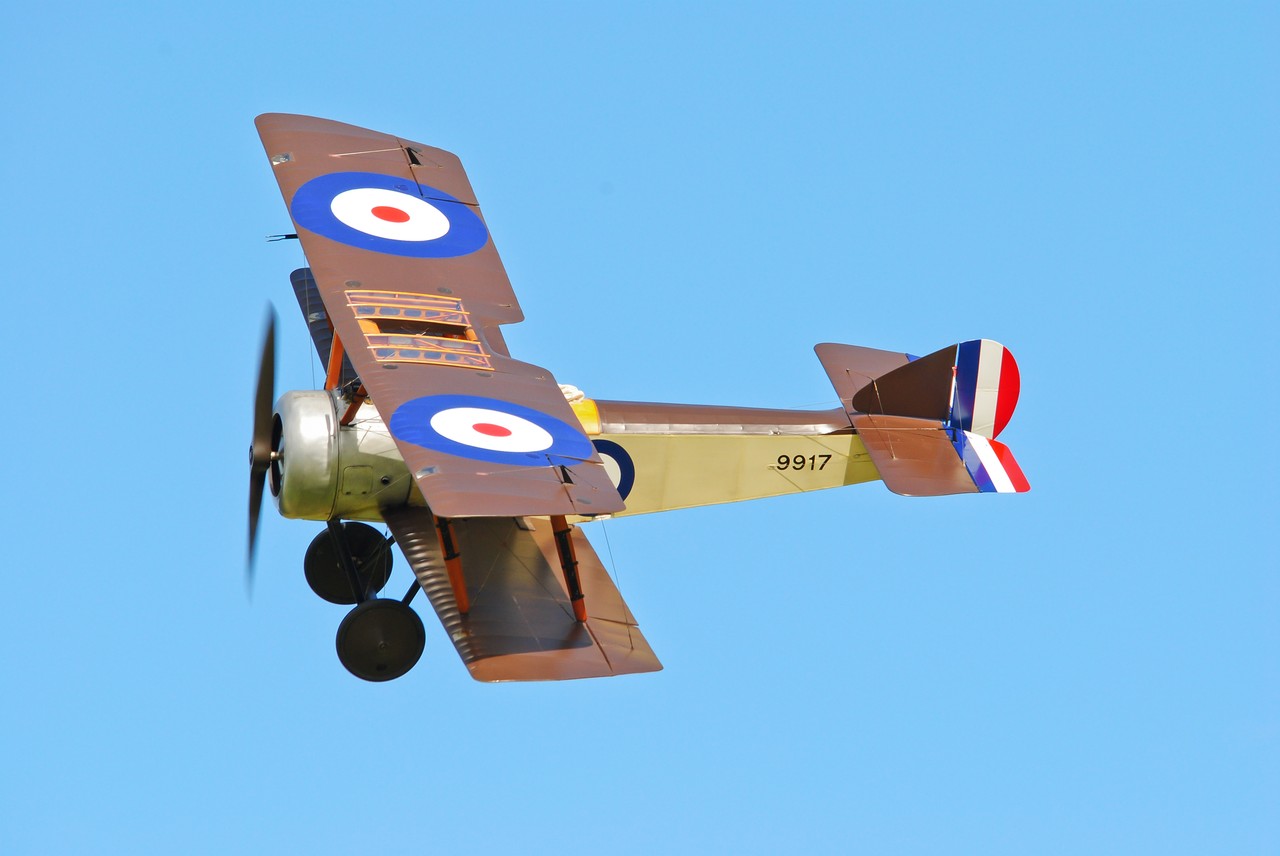
The Sopwith Pup entered Royal Naval Air Service and Royal Flying Corps service in autumn 1916, quickly establishing itself as a formidable opponent on the Western Front. Despite being outgunned by newer German fighters like the Albatros series by late 1917, the Pup's superior maneuverability allowed skilled pilots to compete effectively against larger, more powerful aircraft. The type pioneered naval aviation operations, serving aboard five aircraft carriers and seven Royal Navy cruisers, conducting the first successful deck landing and takeoff trials that would shape future carrier aviation.
By early 1917, RFC squadrons were receiving their first Pups, with the aircraft proving invaluable in both fighter and reconnaissance roles. The type's operational peak occurred during 1917, after which it was gradually relegated to home defense duties and training roles as more advanced fighters entered service. Following the war, small numbers were exported to international operators, with the Royal Australian Air Force receiving 11 examples in 1919, while others went to Greece, the Netherlands, Russia, and the United States.
The Manufacturer
Sopwith Aviation Company, founded in late 1912 by Thomas Octave Murdoch Sopwith, became one of Britain's most prolific wartime aircraft manufacturers. The company's Kingston factory delivered 849 aircraft in 1917 alone, part of 1,462 total aircraft produced by that year. However, Sopwith prioritized production of the two-seat 1½ Strutter over the Pup, manufacturing only 96 of the 1,796 total Pups produced.
The majority of Pup production was handled by subcontractors: Standard Motor Company's Canley factory built 850 examples starting in November 1916, reaching peak production of 24 aircraft per week by mid-1917. Whitehead Aircraft Ltd of Richmond, Surrey, contributed 820 aircraft, while William Beardmore & Company produced 30 standard Pups plus 100 examples of their folding W.B.III naval variant. Following the war, Sopwith Aviation Company eventually merged into Hawker Aircraft in 1935, later becoming part of Hawker Siddeley and ultimately BAE Systems.
Design and Development
Harry Folland led the design team that created the Pup as a lightweight single-seat derivative of the successful two-seat Sopwith 1½ Strutter. The prototype, bearing serial number 3691, was completed in February 1916 and underwent testing at Upavon in late March 1916. Five additional prototypes followed, numbered 9496, 9497, and 9898 through 9900.
The aircraft earned its unofficial nickname "Pup" due to its relationship to the larger Strutter, though it was officially designated as the Sopwith Scout or Admiralty Type 9901. The design emphasized maneuverability and ease of handling, characteristics that would make it beloved by pilots throughout its service life.
Engine and Technical Specifications
The Pup was powered by the reliable 80-horsepower Le Rhône 9C or 9J rotary engine, manufactured by the French company Gnome et Rhône. This nine-cylinder, air-cooled powerplant provided excellent reliability despite being somewhat fuel-hungry, as was typical of rotary engines of the era. The rotary design offered natural cooling benefits and provided gyroscopic stability, contributing to the aircraft's renowned handling characteristics.
Standard armament consisted of a single synchronized Vickers machine gun, providing adequate firepower for the period. The aircraft's single-bay biplane configuration and lightweight construction enabled exceptional maneuverability that often compensated for its modest armament compared to later, more heavily armed fighters.
Variants and Development
Beyond the standard Sopwith Pup, several variants were developed for specific roles. The Beardmore W.B.III featured folding wings for shipboard storage, with 100 examples built specifically for naval operations. The post-war Sopwith Dove converted the design into a two-seat civilian aircraft, though only 10 were constructed. A single example was modified into the experimental Alcock Scout, representing the type's final development.
Production and Legacy
Total Pup orders reached 2,066 aircraft by late 1917, though actual production totaled 1,796 examples. The first Standard Motor Company-built Pup to be lost in combat was shot down on January 4, 1917, marking the beginning of the type's operational history.
Post-war civilian use was limited, with only eight examples appearing on the British civil register, all of which had disappeared by 1924. No original airworthy examples survive from the 850 built by Standard Motor Company, though accurate replicas exist, including N6542 G-BIAU displayed at the Fleet Air Arm Museum.
The Sopwith Pup's legacy extends beyond its combat record to its role in establishing fundamental principles of carrier aviation and fighter aircraft design. Its combination of docile handling with effective combat capability influenced subsequent fighter development and earned it a lasting place in aviation history as one of the war's most pilot-friendly aircraft.