
Design and Development
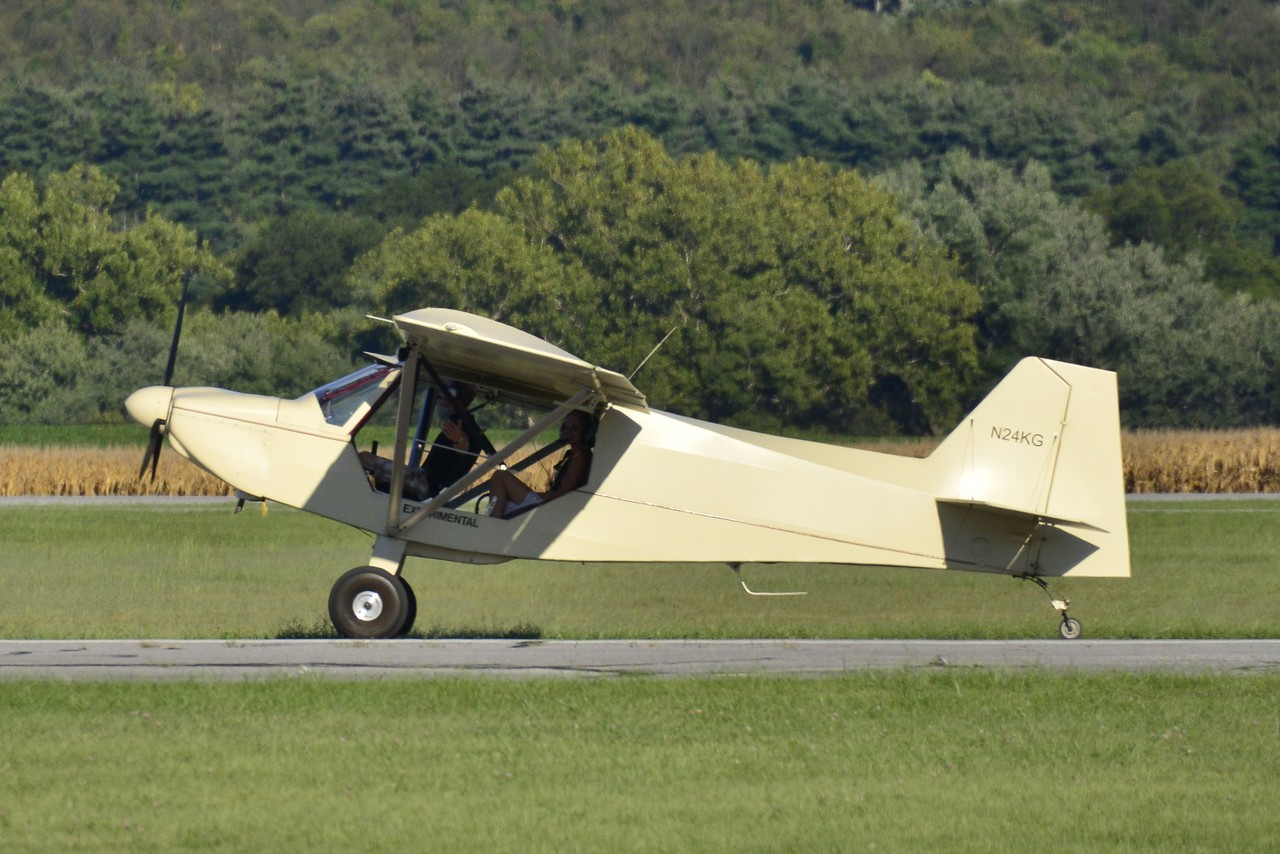
Randy Schlitter conceived the S-7 Courier in the mid-1980s as a two-seat trainer to complement his single-seat S-4 Coyote, naming it after the legendary Helio Courier that he admired. The prototype took to the skies in November 1985, launching what would become one of the most enduring kit aircraft designs in aviation history. Schlitter's company, RANS Inc., had been founded in the early 1980s with a focus on affordable homebuilt aircraft, and the S-7 represented the culmination of his design philosophy emphasizing simplicity and practicality.
Production Success
Kit production began in 1986 and continued for nearly three decades, with variants still available as late as 2015. By October 2003, RANS had sold 344 kits with 190 completed, plus 10 factory-built S-7C models. Production numbers climbed steadily, reaching 325 completed aircraft by December 2007 and exceeding 600 total S-7 variants by 2011. The aircraft's popularity extended internationally, with 74 examples registered in western European countries by November 2010.
Technical Innovation
The S-7's design incorporated several innovative features for a homebuilt aircraft of its era. The structure combined a welded 4130 steel tube cockpit framework with a bolted aluminum rear fuselage, all covered in fabric. The constant-chord wings utilized 6061-T6 aluminum spars and ribs, braced by A-struts in classic high-wing configuration. A particularly practical feature was the aircraft's foldable wings, which could be rigged for flight in just 30 to 45 minutes, making hangar storage more affordable for owners.
Engine Evolution
The original S-7 was powered by the 37-kilowatt (50-horsepower) Rotax 503 two-stroke engine, with an optional 48-kilowatt (64-horsepower) Rotax 582 available. Later variants, including the S-7C, S-7S, and S-7LS, standardized on the more powerful 73.5 to 75-kilowatt (98.6 to 100-horsepower) Rotax 912UL and 912ULS four-stroke engines. These Austrian-built powerplants featured reduction gearing ratios of 2.27:1 or 2.43:1, driving two-blade propellers from manufacturers including Tennessee, Sensenich, and Whirlwind. The fuel-efficient engines consumed approximately 5 gallons per hour at 75 percent power.
Performance Characteristics
The later S-7S and S-7LS variants demonstrated impressive performance for their class, achieving cruise speeds of 118 mph and stall speeds as low as 41 mph. The aircraft's short takeoff and landing (STOL) capabilities were enhanced by a climb rate of 1,000 feet per minute and a service ceiling of 14,500 feet. With fuel capacity of 68 liters total (58 usable), the S-7 could achieve ranges between 390 and 572 miles, providing an endurance of 5.2 hours. The aircraft's wing loading of 8.37 pounds per square foot contributed to its gentle handling characteristics.
Certification Milestone
RANS achieved a significant milestone on September 14, 2001, when the S-7C received type certification after seven years of development. This factory-built version represented an attempt to enter the certified aircraft market, though it proved less commercially successful than the kit variants. The certification effort demonstrated the design's fundamental soundness and safety.
Adaptation to Light Sport Aircraft Rules
When the FAA introduced Light Sport Aircraft regulations in the mid-2000s, RANS successfully adapted the S-7 design to comply with the new rules. This transition allowed the aircraft to continue serving as both an Experimental Light Sport Aircraft for kit builders and a Special Light Sport Aircraft for factory-built examples. The company narrowed its production lines around 2006-2007 to focus on LSA-compliant designs.
Legacy and Current Status
The S-7 Courier's legacy extends beyond mere production numbers to its influence on affordable recreational aviation. Aviation journalists praised later variants, with a 2015 review describing the aircraft as a "refined little fun flyer." The design's longevity—with kits available for three decades—testifies to its enduring appeal among amateur builders seeking a practical, forgiving aircraft for recreational flying.
While RANS Inc. appears to have ceased broader operations after 2006, support for S-7 variants continued into the 2010s. The aircraft's impact on homebuilt aviation remains significant, proving that simple, well-executed designs could achieve both commercial success and lasting popularity among pilots seeking accessible entry into aircraft ownership.