
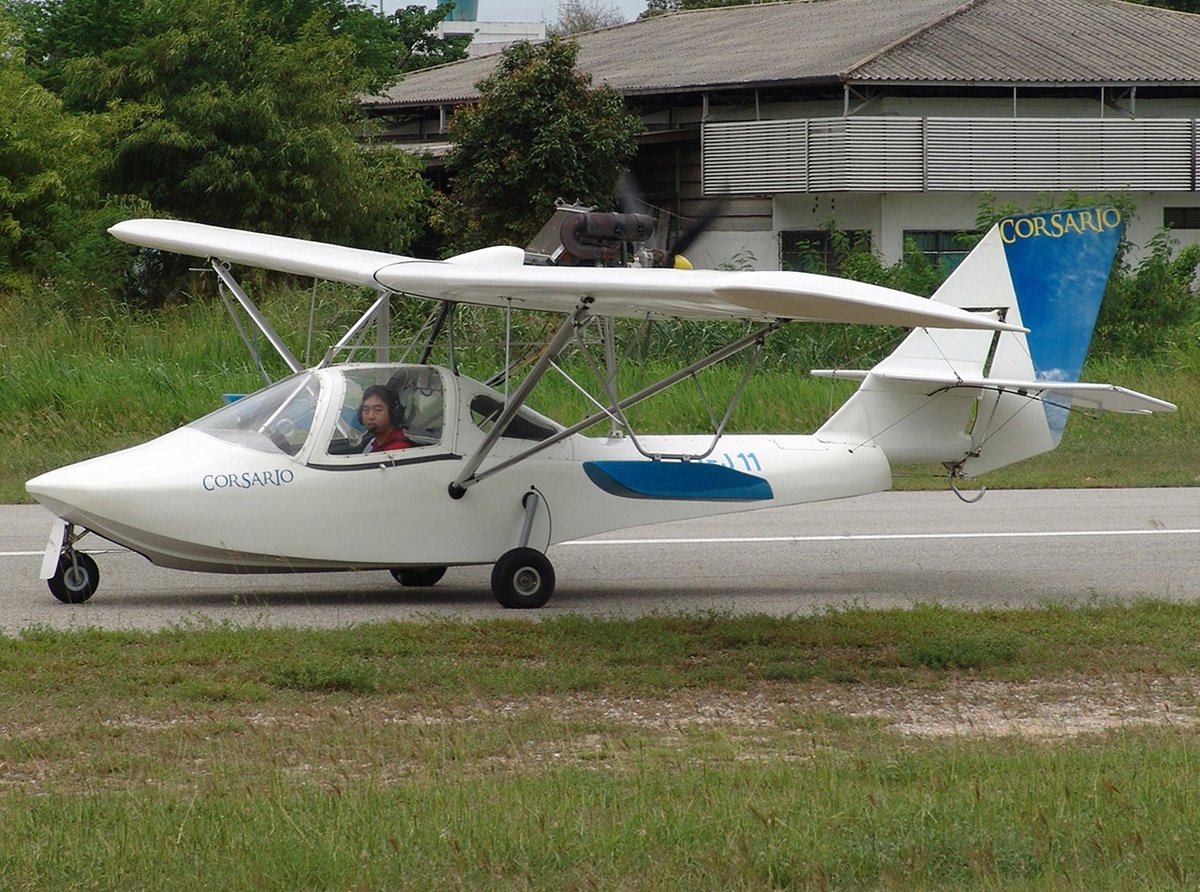
The Brazilian Ultralight Pioneer
The Corsario emerged during Brazil's ultralight aviation boom as the nation's first amphibious flying boat designed specifically for the recreational market. Built exclusively as a kit aircraft for amateur construction, it represented Microleve's most ambitious design, combining the versatility of amphibious operations with the accessibility of ultralight regulations under Fédération Aéronautique Internationale microlight rules.
The Manufacturer's Legacy
Microleve established itself in 1982 as Brazil's pioneering ultralight manufacturer, founded during the early years of the global microlight movement. Operating from Rio de Janeiro, the company achieved the distinction of becoming Latin America's largest ultralight aircraft manufacturer for many years. Beyond producing original Brazilian designs like the Corsario, Microleve served as an importer for Italian manufacturer Tecnam's aircraft, establishing crucial aviation trade links between South America and Europe. The company's operations continued for nearly three decades before ceasing business around 2011, marking the end of Brazil's most significant ultralight aviation enterprise.
Design Innovation and Configuration
The Corsario's engineering reflected thoughtful adaptation of traditional flying boat principles to ultralight specifications. Its strut-braced parasol wing configuration provided the high wing position essential for water operations while maintaining structural simplicity suitable for kit construction. The composite fuselage and hull construction offered durability and water resistance, critical factors for amphibious operations in Brazil's extensive coastal and inland waterways.
The enclosed cockpit accommodated two occupants in side-by-side seating, unusual luxury for ultralight aircraft of the era. Manual retraction of the conventional landing gear allowed operations from both water and prepared airstrips, significantly expanding operational flexibility for recreational pilots.
Engine Options and Performance
Microleve offered the Corsario with three distinct powerplant options to suit varying pilot preferences and budgets. The 64-horsepower Rotax 582 two-stroke served as the entry-level option, while the 74-horsepower Rotax 618 two-stroke provided enhanced performance. The premium 80-horsepower Rotax 912UL four-stroke engine delivered maximum capability with improved fuel efficiency and reduced maintenance requirements typical of four-stroke designs.
All variants utilized a three-bladed composite propeller in pusher configuration, protecting the propeller from water spray during amphibious operations. This arrangement also provided improved pilot visibility during water landings and takeoffs, a critical safety consideration for amphibious aircraft.
Technical Specifications and Variants
The Mark 5 version demonstrated Microleve's commitment to offering customer choice through alternative wing construction methods. Buyers could select between an all-composite wing incorporating 25-liter fuel tanks mounted behind the cockpit seats, or opt for traditional aluminum tubing and fabric wing construction with larger 35-liter wing-mounted fuel tanks. This dual approach balanced performance considerations with construction complexity and cost factors important to kit builders.
With an empty weight of 545 pounds and maximum gross weight of 1,157 pounds, the Corsario provided substantial payload capacity within ultralight limitations. The aircraft's 99-mph maximum speed and 75-mph cruise speed offered respectable performance for recreational flying, while the 30-mph stall speed ensured manageable low-speed handling characteristics essential for water operations.
Operational Characteristics
The Corsario's amphibious capabilities opened Brazilian recreational aviation to the country's vast network of rivers, lakes, and coastal waters. Brazil's geography, with extensive inland waterways throughout the Amazon basin and Atlantic coastline, provided ideal operating environment for amphibious ultralight aircraft. The manual gear retraction system, while requiring pilot attention, offered simplicity and reliability advantages over complex electrical or hydraulic systems.
Fuel capacity of 70 liters provided adequate range for recreational cross-country flying while maintaining weight distribution suitable for both land and water operations. The side-by-side seating arrangement facilitated flight training and recreational flying with passengers, expanding the aircraft's utility beyond solo operations typical of many ultralight designs.
Market Position and Legacy
The Corsario represented the most sophisticated aircraft in Microleve's product line, targeting experienced kit builders seeking amphibious capabilities unavailable in simpler ultralight designs. As a specialized amphibious ultralight, it occupied a unique niche in the Brazilian recreational aviation market, offering capabilities typically found only in significantly more expensive certified aircraft.
Following Microleve's closure around 2011, the Corsario joined the ranks of orphaned aircraft designs, with existing examples dependent on owner maintenance and parts sourcing. The aircraft's composite construction and standard Rotax engines provide some advantages for ongoing maintenance, though specialized amphibious components may present challenges for current operators.
The Corsario's development and production demonstrated Brazil's capability in recreational aircraft design during the height of the global ultralight movement, contributing to Latin American aviation independence and technical expertise in light aircraft manufacturing.