
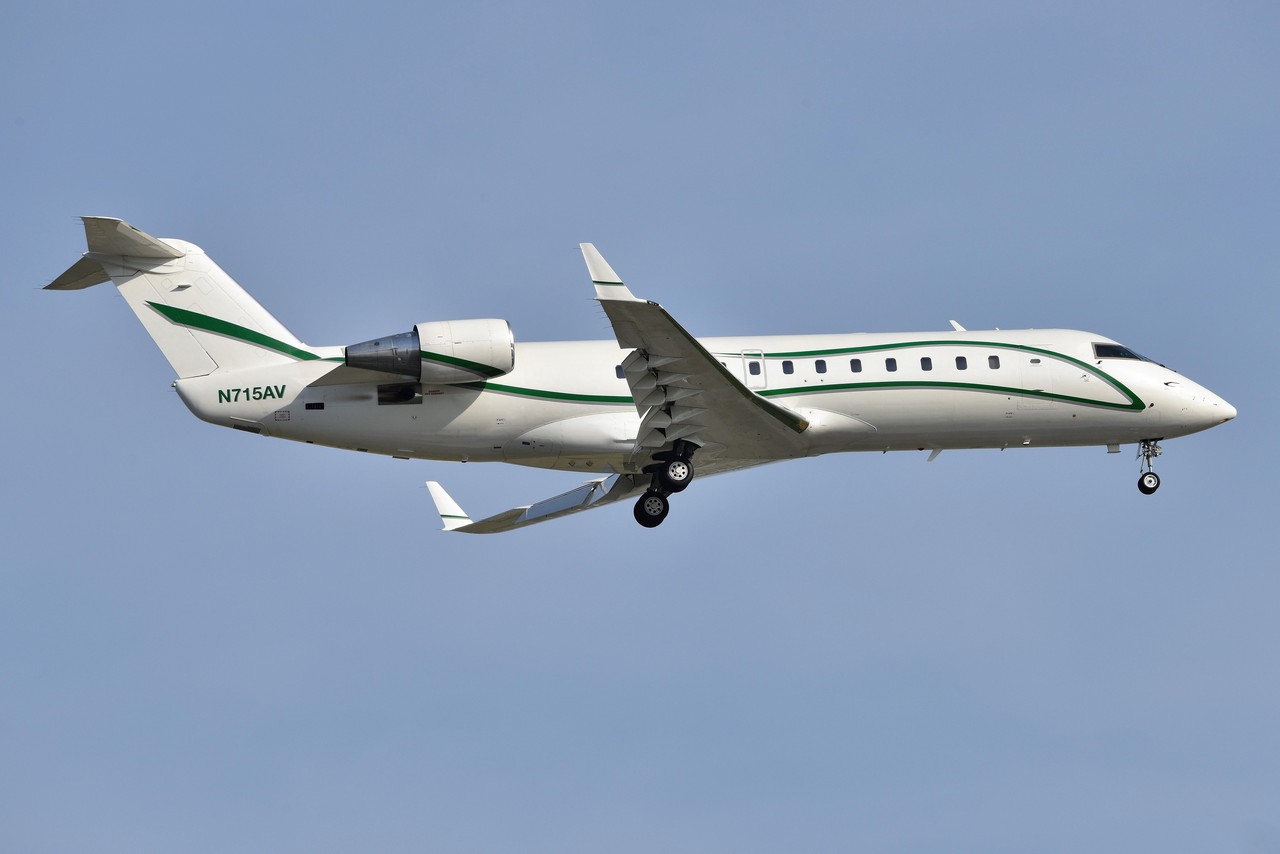
Service History
The CRJ-100 transformed regional aviation by demonstrating that jets could profitably serve smaller markets previously dominated by turboprops. Lufthansa CityLine became the launch customer, taking delivery of the first aircraft in October 1992 and beginning revenue service on November 2, 1992, with flights between Frankfurt and Barcelona. The aircraft's success was immediate and substantial—it offered significantly lower operating costs than competing aircraft like the Fokker 50, ATR-42, and even Bombardier's own Dash 8-300 turboprop.
Of the 226 CRJ-100s manufactured between 1991 and 2006, most remain in active service today, with numerous airlines modernizing their fleets to extend the aircraft's operational life. The CRJ-100's impact extended far beyond its own production numbers, establishing the foundation for what Bombardier claims is the most successful family of regional jets in aviation history, with 2,023 total CRJ aircraft of all variants built by 2021.
The Manufacturer
Bombardier Aerospace developed the CRJ-100 after acquiring Canadair, the original designer of the aircraft concept. The program launched on March 31, 1989, with initial orders for 56 aircraft and six options, backed by significant Canadian government financial support. Manufacturing took place at Bombardier's facility at Montreal-Pierre Elliott Trudeau Airport, where the company leveraged cost-sharing benefits from their 1990 acquisition of Learjet to achieve competitive pricing.
In a significant industry shift, Mitsubishi Heavy Industries acquired the entire CRJ program on June 1, 2020, forming MHI RJ Aviation Group. Bombardier completed assembly of remaining orders on Mitsubishi's behalf, delivering the final CRJ variant on February 26, 2021. Today, the Montreal-based MHI RJ Aviation Group provides service and support for the global CRJ fleet, while Bombardier continues as a major aerospace manufacturer focused on other aircraft families.
Engine & Technical Details
The CRJ-100 was powered by twin General Electric CF34 high-bypass turbofan engines, a powerplant that became widely adopted across multiple regional aircraft platforms. The CF34 family, in production since the 1980s, provided the reliability and fuel efficiency necessary for the aircraft's commercial success, with thousands of these engines manufactured across various configurations.
The aircraft's design was ingeniously based on a stretched Challenger CL600 business jet fuselage, allowing Bombardier to leverage existing certification and manufacturing experience. This approach enabled the company to meet their design objectives of creating a 48-50 seat regional jet that could outperform similarly-sized turboprops while maintaining relatively low development costs.
Variants and Evolution
The original CRJ-100 spawned several variants that extended its capabilities and market reach. The CRJ-100ER offered 20 percent greater range than the baseline model, while the CRJ-100LR provided 40 percent extended range for longer regional routes. The CRJ-200 followed with more efficient engines, higher operating speeds, and increased cruising altitudes.
Bombardier's success with the CRJ-100 led to an entire family of larger variants, including the 70-seat CRJ-700 that entered production in 1999, the CRJ-900, and eventually the 100-seat CRJ-1000 NextGen. This product line expansion demonstrated the scalability and market acceptance of the original CRJ-100 concept.
Certification and Legacy
The CRJ-100 achieved a remarkably smooth certification process, receiving Transport Canada airworthiness certification on July 31, 1992, just over a year after its maiden flight. European JAA certification followed on January 15, 1993, and FAA approval came on July 21, 1993, opening global markets for the aircraft.
The CRJ-100's legacy extends far beyond its production numbers or operational statistics. It proved that regional jets could successfully compete with turboprops, establishing Bombardier as a major force in commercial aviation and creating an entirely new market segment. The aircraft demonstrated that passengers strongly preferred jet travel over turboprops, even on short regional routes, fundamentally changing airline route planning and fleet composition strategies worldwide. Today, the success of modern regional jet families from Embraer, Mitsubishi, and other manufacturers can be traced directly back to the market validation provided by the pioneering CRJ-100.