
Service History
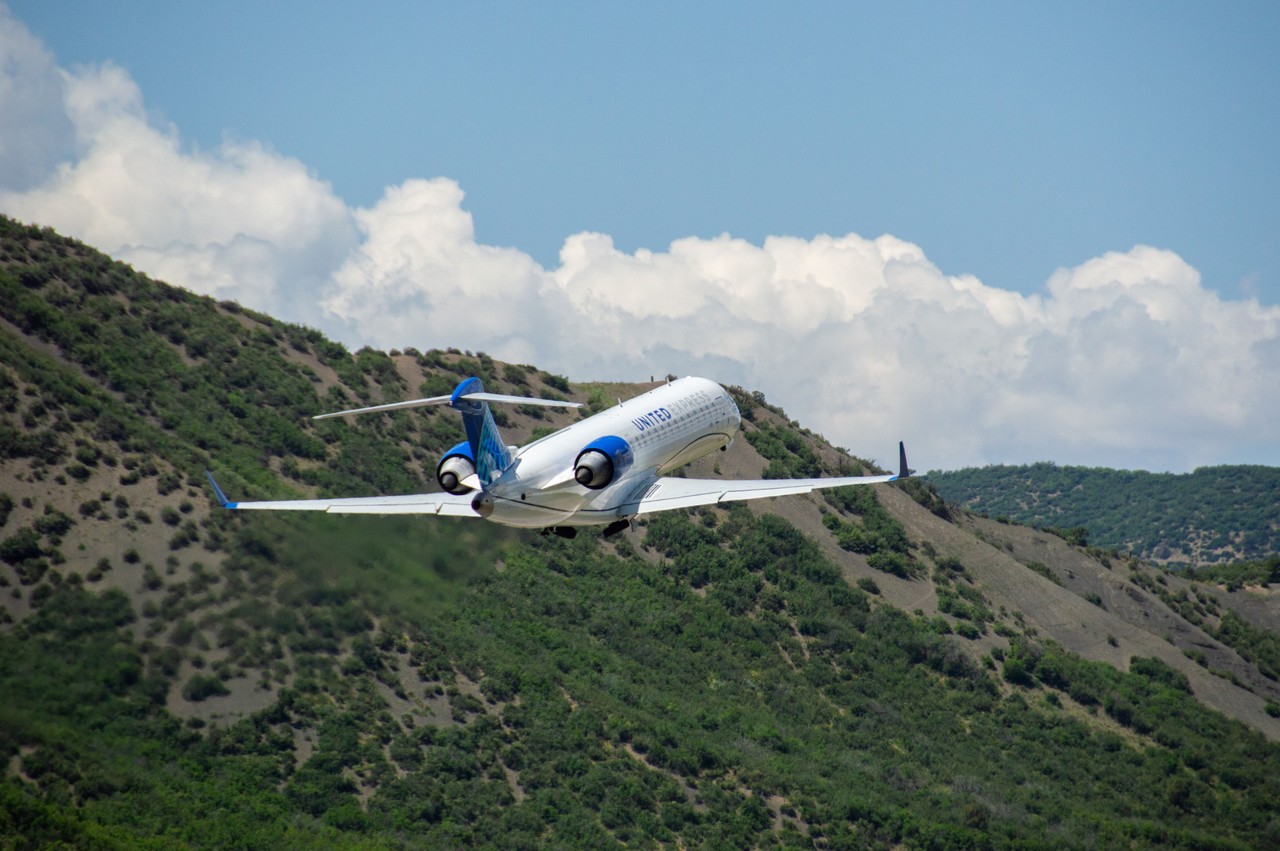
The CRJ-700 transformed regional aviation by providing airlines with an economical 70-seat solution that maintained operational compatibility with smaller CRJ variants. Brit Air became the launch customer in 2001, and the aircraft quickly gained traction among regional carriers worldwide. The type's success stemmed from its ability to offer common type rating with the CRJ-200, allowing pilots to transition seamlessly between aircraft sizes while reducing training costs for operators.
By the time production ended in 2020, Bombardier had delivered 347 CRJ-700s as part of the broader CRJ family's 2,023 total aircraft. The type became particularly popular with North American regional airlines operating feeder services for major carriers, where its capacity perfectly matched thin route demand while maintaining jet speeds and passenger appeal.
The Manufacturer
Bombardier Aerospace, originally the Canadair division of the Canadian transportation conglomerate, launched the CRJ-700 program in January 1997 after beginning design work in 1995. The company invested C$650 million in developing the aircraft, constructing a dedicated $170 million final assembly facility at Montreal-Mirabel Airport that opened on October 22, 2001.
Manufacturing involved international collaboration, with Bombardier's Montreal facilities producing the wing, forward fuselage, rudder, and flight surfaces, while the company's Shorts operation in Belfast, Northern Ireland, handled mid-fuselage sections. This distributed production model allowed Bombardier to leverage specialized expertise across its global facilities.
On June 1, 2020, Mitsubishi Heavy Industries acquired the entire CRJ program through its MHI RJ Aviation Group subsidiary. Bombardier completed final deliveries on behalf of Mitsubishi, with the last CRJ variant delivered in February 2021. Product support transitioned to MHI RJ Aviation, based in Montreal, while the former Mirabel production line now manufactures Airbus A220 aircraft.
Engine & Technical Details
The CRJ-700 utilized two General Electric CF34-8C high-bypass turbofan engines, a powerplant specifically optimized for regional jet operations. These engines provided the thrust necessary to operate the stretched fuselage while maintaining fuel efficiency crucial for regional route economics.
Bombardier incorporated significant design improvements over the earlier CRJ-200, including a new wing with leading-edge slats and extensions for enhanced aerodynamic performance. Engineers lowered the cabin floor to improve passenger accessibility, addressing a common complaint about earlier regional jets. The aircraft maintained a two-pilot crew configuration with modern avionics systems.
Transport Canada granted type certification in January 2001, followed by Federal Aviation Administration approval in May 2001 after minor avionics modifications. The certification process validated the aircraft's performance across multiple variants, including standard, Extended Range, and Long Range configurations that offered operators flexibility in route planning.
Production & Legacy
Production spanned from 1999 to 2020, with the CRJ-700's success spawning larger variants within the CRJ NextGen family. The CRJ-900, announced in 2000, made its maiden flight on February 21, 2001, eventually accumulating 499 deliveries as an 86-seat variant. The 100-seat CRJ-1000 NextGen followed in 2007, though with more limited success at 64 units delivered.
Bombardier marketed the entire CRJ family as the world's most successful regional jet program, with 96 percent of aircraft delivered to commercial operators and approximately 4 percent configured as business jets. The CRJ-700 particularly excelled in the North American market, where scope clause agreements between major airlines and pilot unions often limited regional aircraft to specific seat counts.
The type remains in active service worldwide, though production permanently ended when Mitsubishi completed the final order backlog. In 2021, Mitsubishi investigated restarting production of the CRJ-550, a 50-seat variant of the CRJ-700 designed to circumvent scope clause restrictions, but abandoned these plans by March 2024 due to the complexity and cost of rebuilding manufacturing capability.
Today, hundreds of CRJ-700s continue operating regional routes, testament to the aircraft's successful balance of capacity, economics, and operational flexibility that defined regional aviation in the early 21st century.