
Service History
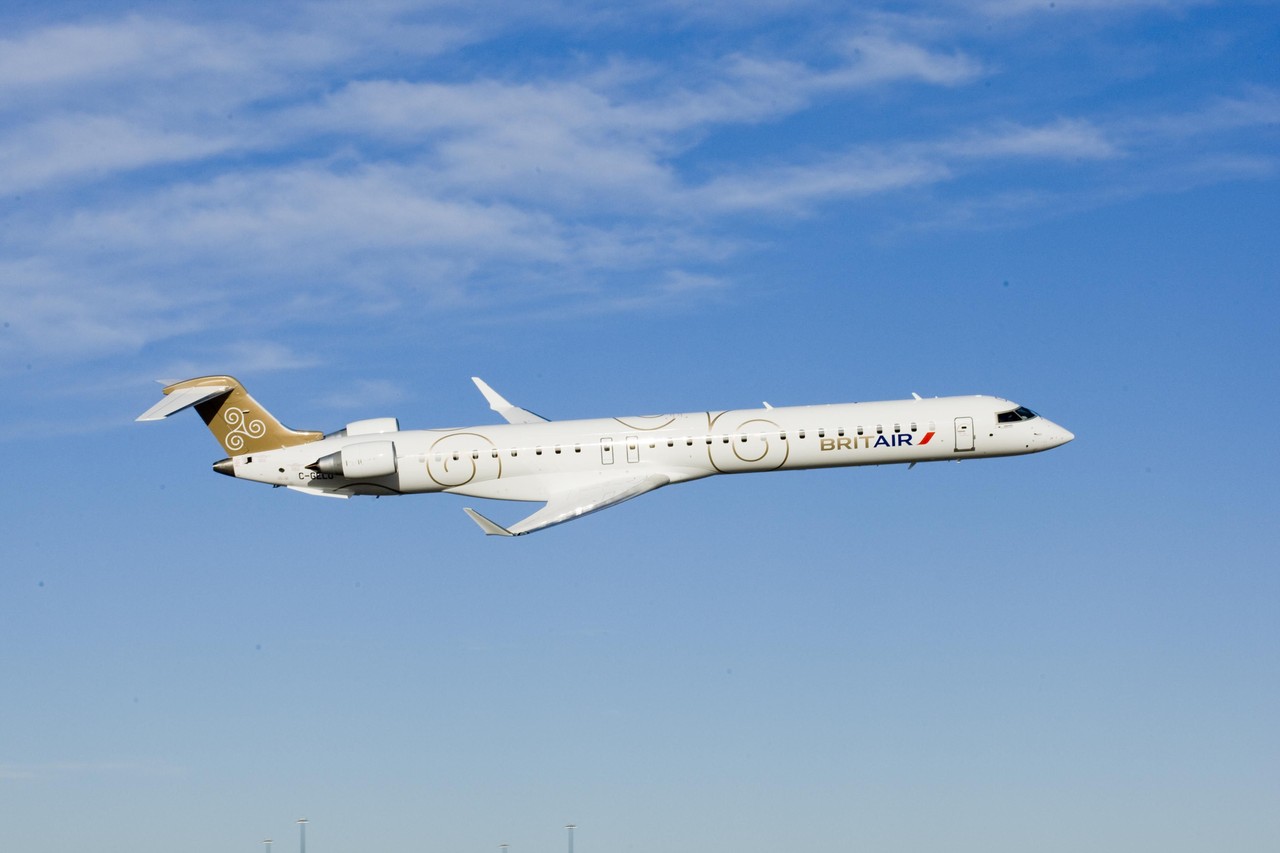
The CRJ-1000 entered commercial service in December 2010 with launch customers Brit Air and Air Nostrum, marking the culmination of the CRJ series that had captured more than 20 percent of all US airline departures by 2015. Despite being part of a family totaling 1,945 aircraft across all variants, the CRJ-1000 achieved limited commercial success with only 49 orders recorded by July 2011. The aircraft's higher maximum takeoff weight—9 percent above the CRJ900—significantly limited its penetration into the crucial US regional market, where scope clause restrictions favored lighter aircraft.
Air Nostrum, one of the primary operators, retired its first CRJ-1000 in 2023 after just 13 years of service, highlighting the type's relatively brief operational lifespan. Other notable operators included MyAir of Italy, which ordered 15 aircraft, though the overall fleet remained small compared to its smaller CRJ siblings.
The Manufacturer
Bombardier Aerospace's journey to the CRJ-1000 began with the 1986 acquisition of Canadair, transforming a Quebec snowmobile manufacturer founded in 1942 into a major aviation player. The CRJ series traced its lineage to 1980s Canadair studies that evolved the Challenger business jet concept into regional airliner configurations. Bombardier leveraged Canadian government backing to achieve lower break-even points than competitors like the Fokker 50, ATR-42, and Dash 8-300.
The CRJ program's conclusion came in 2020 when Bombardier sold the entire line to Mitsubishi Heavy Industries in a deal closing June 1, 2020. Bombardier completed the remaining backlog, delivering the final CRJ—a CRJ900 to SkyWest Airlines—on February 28, 2021. As of March 2024, MHI operates support services from Montreal but has not resumed production, effectively ending the CRJ era.
Engine & Technical Innovation
General Electric's CF34-3A1 and CF34-3B1 turbofan engines powered the CRJ-1000, representing an evolution of the reliable powerplants that had supported the entire CRJ family. The CF34-3B1 variant offered improved performance over the earlier CF34-3A1, enabling higher speed and altitude capabilities essential for regional airline operations.
The aircraft featured a two-pilot cockpit configuration with modern avionics systems inherited from the CRJ family lineage. Design innovations focused on maximizing passenger capacity while maintaining the operational efficiency that made the CRJ series successful. The stretched fuselage accommodated up to 104 passengers in maximum-density configuration, directly targeting the 100-seat market segment dominated by Embraer's E190/195 series.
Development and Testing
Bombardier announced the CRJ-1000 on February 19, 2007, initially designating it the CRJ900X before settling on the final nomenclature. The prototype achieved first flight on September 3, 2008, from Mirabel, reaching 30,000 feet and 480 kilometers per hour during initial testing. The first production aircraft flew on July 28, 2009, marking a significant milestone in the program.
Testing encountered challenges when a rudder fault grounded the program following the 2009 production flight, with flight testing resuming in February 2010. These delays impacted the delivery schedule but allowed engineers to resolve critical control system issues before customer deliveries commenced.
Performance Specifications
The CRJ-1000 achieved a normal cruise speed of 480 mph with a service ceiling of 41,000 feet, matching performance expectations for regional airline operations. Operating empty weight reached 30,500 pounds with maximum payload capacity of 13,500 pounds. The aircraft's wing area of 520.4 square feet provided adequate lift characteristics for the increased passenger load.
Fuel capacity reached 2,135 US gallons, enabling range performance suitable for regional routes, though exact range figures varied based on passenger load and operating conditions. The aircraft's performance envelope positioned it competitively against the Embraer E190/195 series in the crucial 100-seat market segment.
Legacy and Current Status
The CRJ-1000 represented both the pinnacle and conclusion of regional jet development that began with Canadair's vision in the 1980s. As part of the CRJ family that Bombardier claimed as the world's most successful regional jet series, it demonstrated the technical feasibility of stretching the basic design to 100+ seat capacity.
Today, surviving CRJ-1000s continue operating with various airlines, though exact numbers remain undisclosed. The type's limited production run and early retirements by operators like Air Nostrum suggest a relatively small active fleet. No examples are known to be preserved in museums, reflecting the aircraft's brief production period and limited historical significance compared to its more numerous CRJ siblings. The program's sale to Mitsubishi effectively ended any prospects for production resumption, marking the CRJ-1000 as a final chapter in Canadian regional jet manufacturing.