
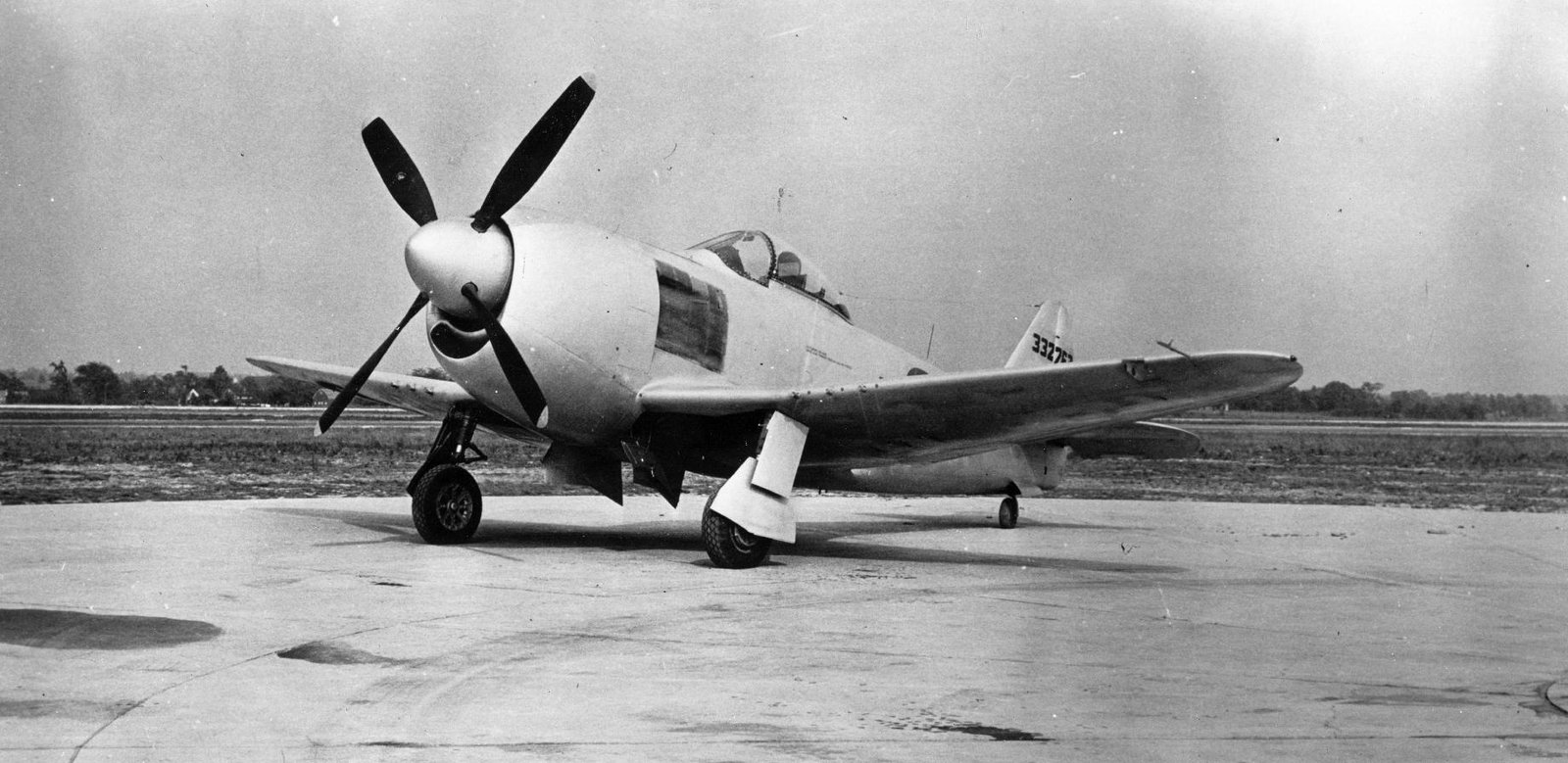
The Curtiss P-60 was developed by the Curtiss-Wright Corporation as a modern replacement for the P-40 fighter. The program is historically significant as it marked the final attempt by Curtiss-Wright to produce a new fighter design during the wartime era. The aircraft's development was characterized by a lengthy evolution of prototype versions, resulting in a final design that bore little resemblance to its P-40 predecessor.
The prototype activity for the P-60 spanned from 1942 to 1944, although the aircraft's first flight occurred earlier, on September 18, 1941. Throughout its development, the program experimented with multiple piston engine installations across various prototype variants, including the XP-60, XP-60C, and XP-60D. Despite these efforts and the continued evolution of the airframe, none of the P-60 variants ever reached full production, and the aircraft never entered operational military or combat service.
Technically, the P-60 was a single-seat fighter equipped with four 0.50 inch (13 mm) M2 Browning machine guns. Performance data for the type indicates a maximum speed of 414 mph (666 km/h, 360 kn) achieved at an altitude of 20,350 feet (6,200 m). The aircraft possessed a service ceiling of 35,000 feet (11,000 m) and a rate of climb of 3,890 feet per minute, allowing it to reach 30,000 feet in six minutes. Other specifications include a range of 315 miles (507 km), a wing loading of 39.2 lb/sq ft, and a power loading of 0.19 hp/lb.
The failure of the P-60 to enter service illustrates the challenges Curtiss-Wright faced regarding engine issues and shifting fighter requirements during the later stages of the war. The company itself, formed in 1929 through the consolidation of Curtiss, Wright, and other suppliers, remained a major U.S. aviation manufacturer throughout World War II. Today, Curtiss-Wright continues to operate as an American manufacturer and services provider based in Davidson, North Carolina.