
Market Dominance in Canadian Homebuilding
The Cuby 2 achieved notable success in the amateur-built aircraft market, with more than 200 examples completed and flying by the time production ceased. Priced at $15,662.76 complete with engine, propeller, paint, and fabric in 1988, it offered homebuilders an affordable entry into recreational aviation. The aircraft's appeal extended beyond North America when it received certification for production in Hungary, establishing a European market presence that broadened its international reach.
ACES HIGH Light Aircraft Legacy
ACES HIGH Light Aircraft operated from London, Ontario during the company's active years in the 1980s and 1990s. The manufacturer focused exclusively on the Cuby family, producing both the single-seat Cuby I and the two-seat Cuby 2 variant. The company's business model centered on kit aircraft sales, targeting the growing homebuilt aviation market in Canada and the United States. When ACES HIGH ceased operations in the 1990s, the Cuby designs became orphaned, with no successor company continuing production or providing ongoing support.
Engine and Performance Characteristics
The standard powerplant for the Cuby 2 was the Austrian-manufactured Rotax 503, a liquid-cooled, two-stroke engine producing 50 horsepower at 6,500 rpm. Builders could alternatively specify a 42-horsepower single-carburetor version of the same engine for reduced complexity and cost. The Rotax 503's twin-cylinder configuration provided reliable power for the aircraft's 1,058-pound maximum gross weight, enabling a prototype to achieve takeoff in just 300 feet at an indicated airspeed of 30 mph.
Design Philosophy and Construction
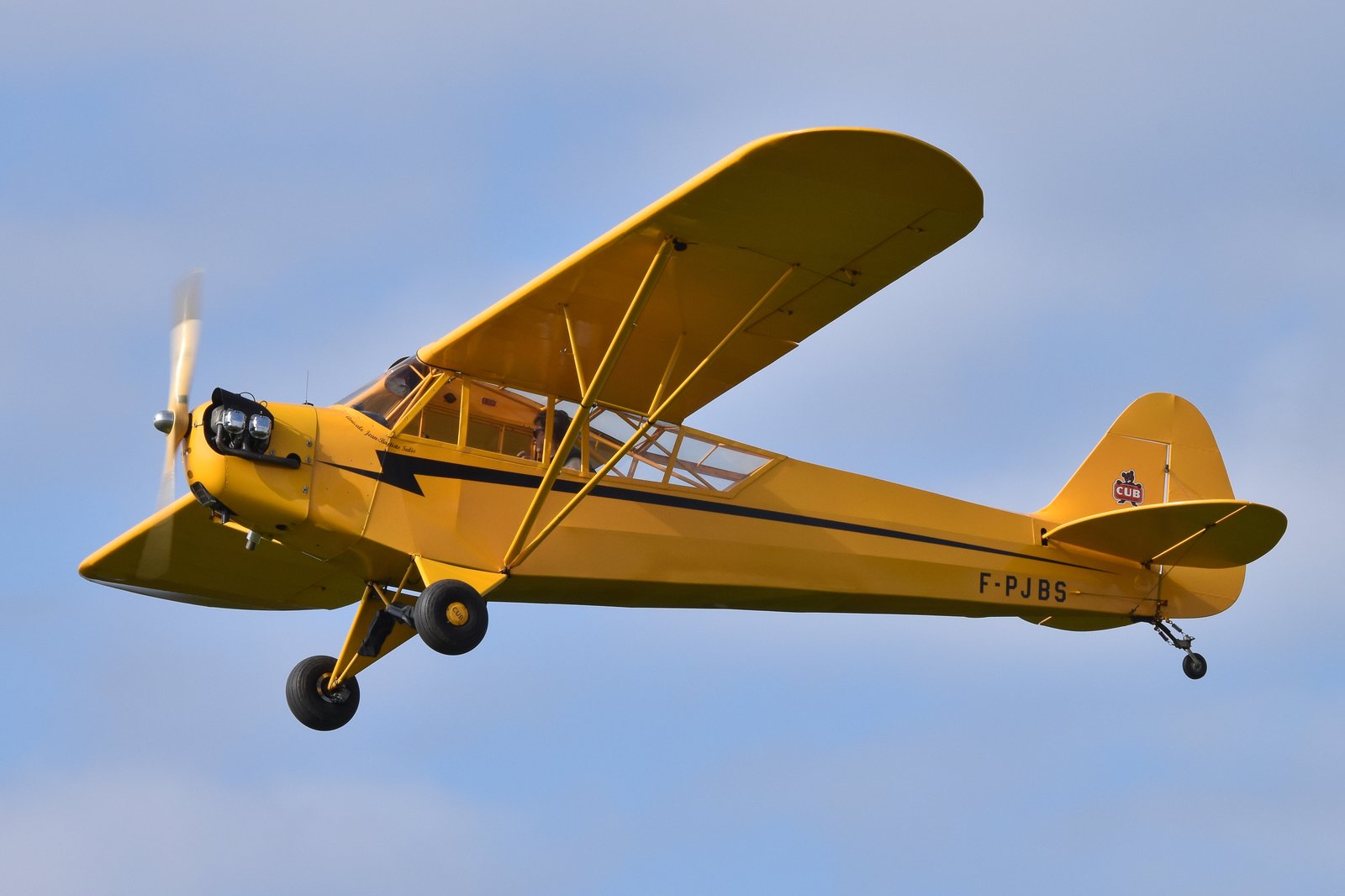
Engineers designed the Cuby 2 to replicate the flying characteristics and visual appeal of the legendary Piper J-3 Cub while incorporating modern materials and construction techniques. The fuselage structure utilized welded 4130 chromoly steel tubing, providing strength and durability while maintaining relatively light weight. Wings featured aluminum spars with aluminum D-cell leading edges, all covered in aircraft-grade fabric using traditional dope and fabric techniques that homebuilders could master with basic tools.
The aircraft incorporated conventional three-axis flight controls without flaps, emphasizing simplicity and reducing both construction complexity and maintenance requirements. Landing gear consisted of bungee-suspended main wheels and a steerable tailwheel, providing excellent ground handling characteristics on both paved and grass airstrips.
Pilot Experience and Handling
Pilots appreciated the Cuby 2's docile handling characteristics and forgiving flight behavior, traits inherited from its Piper Cub inspiration. The aircraft achieved a maximum speed of 100 mph with a cruise speed typically 10-15 mph lower, making it ideal for recreational flying and flight training. Its 700-foot-per-minute climb rate provided adequate performance for normal operations, while the 143-mile range suited local and regional flights.
The side-by-side seating configuration offered a 38-inch-wide cabin, providing more shoulder room than many similar aircraft and making it suitable for flight instruction. A large baggage compartment behind the seats accommodated camping gear, tools, or personal items for cross-country adventures.
Operational Flexibility and Options
ACES HIGH offered several factory options that expanded the Cuby 2's operational envelope. Folding wings allowed owners to store the aircraft in standard automobile garages or transport it on trailers. Float landing gear converted the aircraft for water operations, opening access to Canada's extensive lake system. The agricultural spray kit option targeted commercial operators seeking an economical platform for crop dusting and aerial application work.
Regulatory Classification and Market Position
The Cuby 2 qualified for multiple regulatory categories across different jurisdictions. In the United States, it met amateur-built experimental aircraft requirements under Federal Aviation Regulations. Canadian authorities certified it as a basic ultralight, advanced ultralight, or amateur-built aircraft depending on specific configuration and builder preferences. This regulatory flexibility allowed builders to choose the certification path that best matched their intended use and pilot qualifications.
Safety Record and Operational History
Aviation safety databases documented several accidents involving Cuby 2 aircraft between 1995 and 1999, reflecting the type's active operational status during that period. These incidents, typical of amateur-built aircraft operations, included both pilot error and mechanical failure scenarios. The aircraft's conventional design and predictable handling characteristics generally provided pilots with adequate warning of developing problems, though the type's amateur-built nature meant maintenance quality varied significantly between individual examples.
Current Status and Surviving Aircraft
With ACES HIGH's closure in the 1990s, no new Cuby 2 kits entered the market, and existing aircraft owners faced challenges obtaining spare parts and technical support. Many of the 200-plus completed aircraft likely remain airworthy, though specific numbers of currently flying examples are not documented. The orphaned status of the design means that owners must fabricate replacement parts or source components from other aircraft, making long-term maintenance increasingly challenging as the fleet ages.