
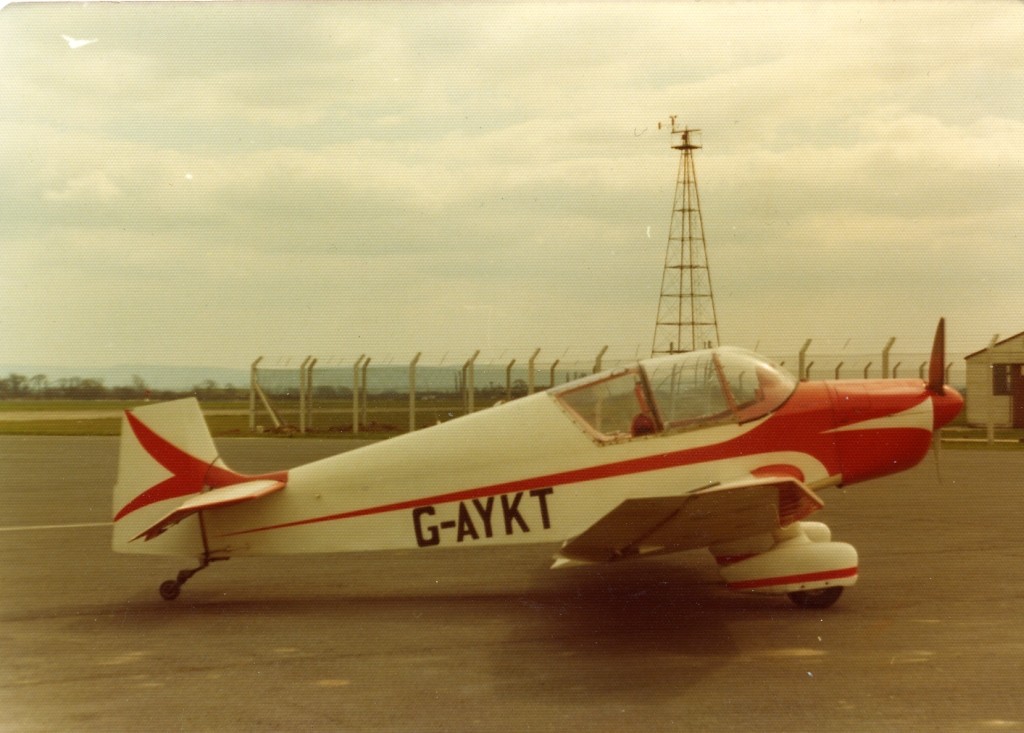
Service History and Impact
The D-11 became the backbone of French aviation training, serving as the standard aircraft for the nation's flying clubs for several years through a government subsidy program. More than 1,500 commercially manufactured examples rolled off production lines, while countless amateur builders constructed additional aircraft from plans. The type's popularity extended far beyond France, with over 20 completed in Australia and 30 in New Zealand, where it briefly held the distinction as the most popular amateur-built aircraft in both regions.
French flying clubs adopted the D-11 en masse following its introduction, transforming pilot training across the country. The aircraft's forgiving handling characteristics and robust construction made it ideal for student pilots, while its touring capabilities satisfied experienced aviators seeking reliable cross-country transportation.
The Manufacturer and Production Network
Société Avions Jodel, established by designers Édouard Joly and Jean Délémontez, took an innovative approach to manufacturing by licensing production to multiple companies rather than building large quantities in-house. Wassmer at Issoire, Société Aéronautique Normande at Bernay, and Spanish manufacturer Aero-Difusión all produced certified versions of the design.
In Canada, Falconar Aircraft created modified variants including the F-11A Sporty and F-12A Cruiser, featuring swept tail surfaces and accommodation for engines up to 140 horsepower. This licensing strategy proved remarkably successful, enabling worldwide distribution while maintaining quality control through established manufacturers.
Design Innovation and Technical Excellence
Joly and Délémontez created the D-11 by combining the wing of their projected D-10 with an enlarged D-9 fuselage, responding to a French government request for low-wing club aircraft. The designers' innovative bent-wing configuration featured a straight center section with dihedral only in the outer panels, creating the distinctive appearance that became synonymous with Jodel aircraft.
The all-wood construction utilized a single-piece box-spar wing that simultaneously supported the fixed tricycle landing gear, demonstrating elegant engineering efficiency. This approach made the aircraft accessible to amateur builders while ensuring structural integrity and excellent flying qualities that professional pilots appreciated.
Engine Options and Performance
Continental Motors provided the most popular powerplants, with the Continental O-200 becoming the standard choice for most installations. The 90-horsepower Continental C90 and 65-horsepower Continental A65 offered alternatives for different performance requirements, while some aircraft received the Continental O-170 or French Salmson 9 engines.
With typical Continental power, the D-11 achieved a maximum speed of 129 mph and cruised at 121 mph, impressive figures for its era. The aircraft's 27-knot stall speed provided excellent low-speed handling, while its 16,000-foot service ceiling and 800-foot-per-minute climb rate offered respectable high-altitude performance. Range varied from 715 to 730 miles depending on fuel capacity and engine installation.
Pilot Experience and Handling
Pilots praised the D-11's predictable handling characteristics and forgiving nature, qualities that made it invaluable for training operations. The side-by-side seating configuration facilitated instruction, while the aircraft's stability and responsive controls built student confidence. Takeoff runs varied dramatically from 450 to 1,640 feet depending on conditions and loading, while landing distances ranged from 450 to 2,625 feet.
The NACA 23013.5 airfoil provided excellent low-speed characteristics essential for training operations, while the two-bladed fixed-pitch propeller kept maintenance requirements minimal. These design choices prioritized reliability and simplicity over maximum performance, perfectly suiting the aircraft's intended roles.
Global Reach and Amateur Construction
The D-11's success in the amateur construction market stemmed from its straightforward wooden construction and detailed plans availability. Southern Hemisphere builders particularly embraced the design, with significant numbers completed in Australia and New Zealand before more modern kit aircraft like the Vans RV series and Lancair family superseded it in popularity.
Plan-built examples could accommodate engine variations from 65 to 120 horsepower, allowing builders to tailor performance to their specific requirements and budgets. This flexibility, combined with the aircraft's proven design, sustained amateur construction efforts for decades after commercial production peaked.
Legacy and Continuing Influence
The D-11's influence extended beyond its immediate success, inspiring the later D-150 Mascaret as Jodel's intended successor to the aging design. The aircraft demonstrated that simple, well-executed designs could achieve remarkable commercial success while serving diverse markets from professional flight training to amateur construction.
Today, many D-11s remain airworthy worldwide, testament to their sound construction and enduring appeal. The type's combination of classic aesthetics, reliable performance, and historical significance ensures continued interest from vintage aircraft enthusiasts and those seeking authentic flying experiences from aviation's golden age.