
Service History
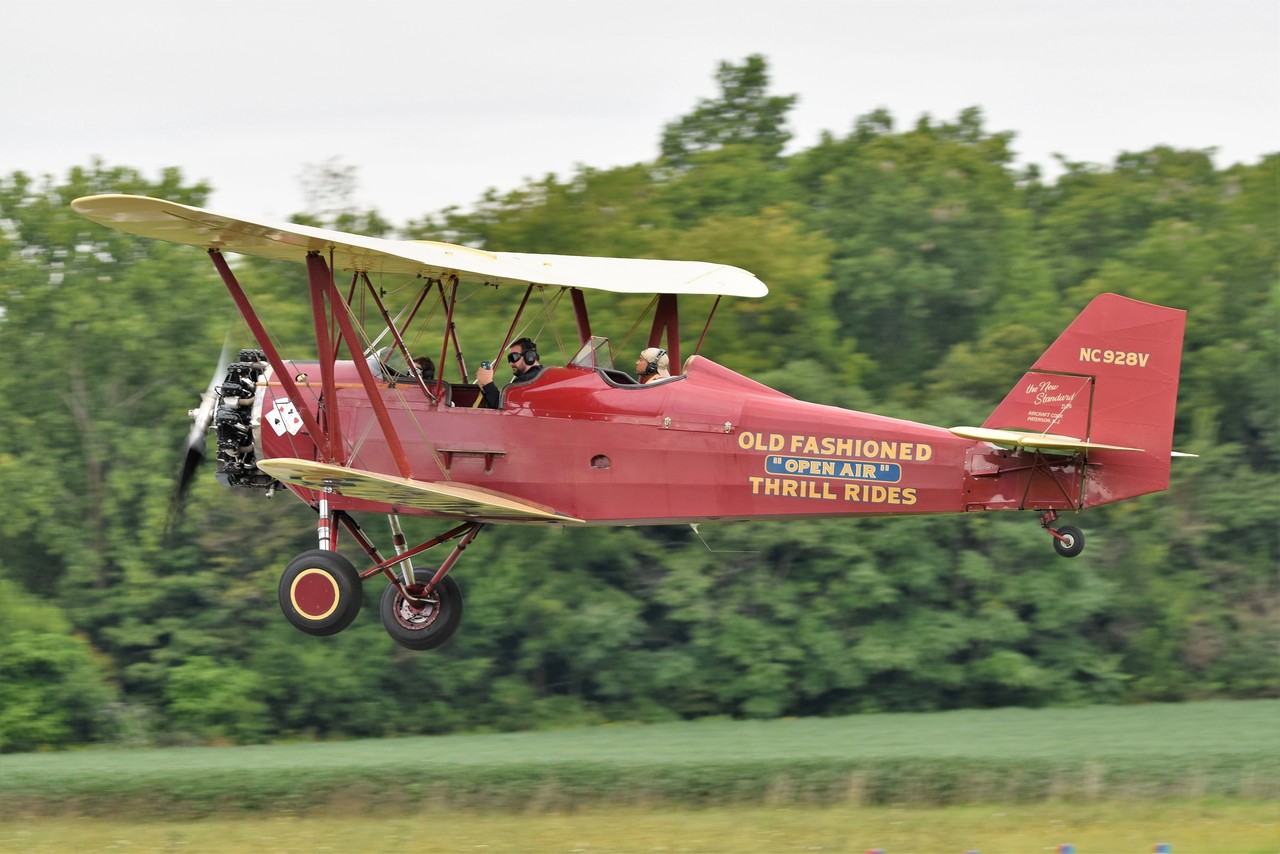
The D-25 dominated the barnstorming industry during its brief but impactful production run from 1929 to 1930. With 45 units constructed, the aircraft provided operators with unprecedented profitability through its four-passenger configuration—double the capacity of competing designs. The aircraft excelled in joyriding operations, crop-dusting missions, and mail carrying services, with its ability to operate from the smallest and roughest airfields making it ideal for reaching remote communities across America.
Military Variants
The U.S. Navy recognized the D-25's training potential, ordering the type as the NT-1 trainer variant. The U.S. Coast Guard operated the aircraft under the NT-2 designation, with at least two examples entering service through unusual circumstances—both had been confiscated from rum runners during Prohibition enforcement operations and subsequently converted for Coast Guard use.
The Manufacturer
New Standard Aircraft Company emerged from the Gates-Day Aircraft Company, established in 1927 by Charles Healy Day and Ivan R. Gates in Paterson, New Jersey. The company capitalized on the aviation boom following Charles Lindbergh's 1927 Atlantic crossing by rebranding from its original Gates-Day identity. Charles Healy Day brought considerable expertise to the venture, having previously designed the Standard J-1, one of the most mass-produced American aircraft of World War I alongside the Curtiss JN-4D Jenny. The company ceased operations after 1930, unable to survive the economic pressures of the Great Depression.
Engine & Technical Details
The D-25 utilized Wright Aeronautical Corporation's proven radial engines, with most examples powered by either the 200-horsepower Wright J-5 Whirlwind or the 225-horsepower Wright J-6. The aircraft featured a 62-gallon fuel tank and employed what were considered modern construction techniques for 1928. Its high-lift wing design and rugged wide-stance landing gear contributed to exceptional handling characteristics, particularly during landing and takeoff operations from unprepared surfaces.
Design Innovation
Charles Healy Day's 25th aircraft design—hence the D-25 designation—incorporated several innovations that distinguished it from contemporary aircraft. The biplane configuration featured deliberately oversized wings optimized for maximum lift at low speeds, enabling operations from fields as short as 500 feet. The aircraft's tandem cockpit arrangement placed four passengers in side-by-side pairs in the forward compartment, with the pilot positioned in the rear cockpit for optimal weight distribution and control authority.
Pilot Perspective
Pilots praised the D-25 for its forgiving flight characteristics and robust construction. The aircraft demonstrated remarkable stability during passenger operations, crucial for commercial success in an era when many potential customers had never flown. With a cruising speed of approximately 95 mph and service ceiling sufficient for most weather avoidance, the D-25 provided reliable transportation while remaining simple enough for pilots with minimal training to operate safely.
Certification and Production
The D-25 received Approved Type Certificate Number 108 in February 1929, validating its design for commercial operations. Production commenced immediately at the Paterson facility, with construction continuing through 1930. Each aircraft required approximately six weeks to complete, with final assembly taking place in a single hangar that could accommodate three aircraft simultaneously.
Legacy and Preservation
Multiple D-25 examples survive today in various states of preservation and restoration. Old Rhinebeck Aerodrome in Red Hook, New York, maintains two aircraft including N19157 currently undergoing restoration and NC176H in their collection. The Western Antique Aeroplane and Automobile Museum operates a fully restored example, construction number 152, which completed production on June 5, 1930. A third preserved aircraft, serial number 133 originally registered as NC9194, returned to flying status by May 2010 and remains active in Colorado.
Historical Significance
The D-25 represents a pivotal moment in American aviation when aircraft design prioritized operational versatility over pure performance. Its success demonstrated substantial market demand for affordable passenger flying during the pre-Depression era, establishing design principles that influenced general aviation development for decades. The aircraft's ability to generate revenue through passenger operations while maintaining low operating costs created a template for successful commercial aviation that extended well beyond the barnstorming era.