
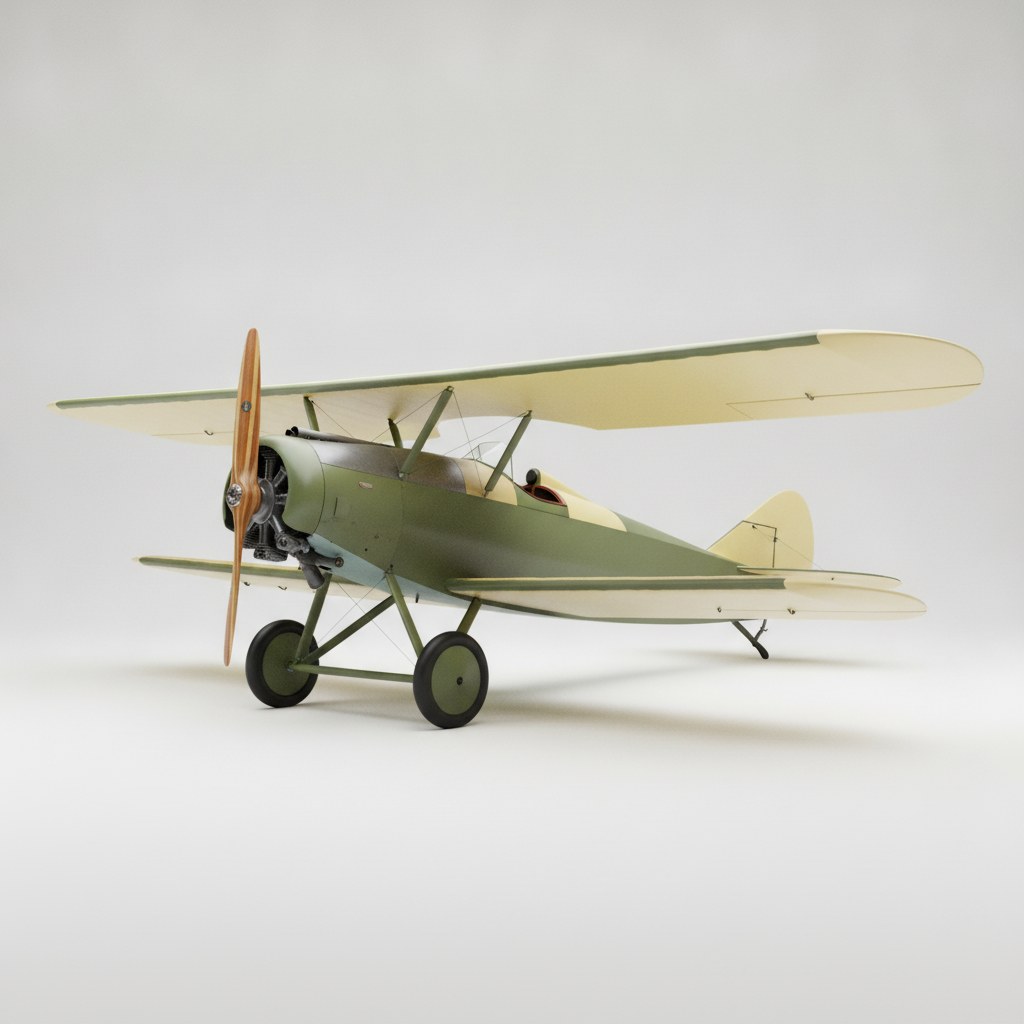
Modern Revival of a Wartime Legend
The Fokker D-8 Replica serves as a flying tribute to one of aviation's most intriguing might-have-beens. The original Fokker D.VIII arrived too late to significantly impact World War I, yet its brief service demonstrated remarkable potential that replica builders have sought to capture for modern pilots.
The Original Aircraft's Legacy
Reinhold Platz designed the original D.VIII as Germany's answer to Allied air superiority in 1918. The prototype V.28 first flew in May 1918, featuring a distinctive parasol wing configuration that provided exceptional pilot visibility. Of the approximately 381 aircraft built by Fokker Flugzeug-Werke GmbH, only 85 reached frontline service with German Jagdstaffeln between August and November 1918.
The aircraft's combat debut proved both promising and tragic. Lieutenant Emil Rolff of Jasta 6 scored the type's first victory on August 17, 1918, but died two days later when his aircraft suffered a catastrophic wing failure. These structural problems, traced to poor quality control at the Perzina piano factory that manufactured the wings, temporarily grounded the entire fleet until modifications strengthened the wing attachment points.
Replica Development and Manufacturers
Airdrome Aeroplanes emerged as the primary manufacturer of D-8 replicas, producing 21 examples by 2011 and continuing production today. These modern interpretations adapt the original's dimensions to accommodate contemporary powerplants and construction techniques while preserving the aircraft's distinctive appearance and flight characteristics.
Unlike the original's 110-horsepower Oberursel Ur.II rotary engine, replica builders typically install Rotax 503 two-stroke engines producing 50 horsepower, or Rotax 582 engines generating 65 horsepower. This power reduction reflects the replica's lighter construction and different performance objectives compared to the combat-focused original.
Technical Specifications and Performance
The replica maintains the original's parasol wing configuration but scales dimensions slightly smaller for practical reasons. With a wingspan of 25 feet compared to the original's 29 feet 6 inches, and a gross weight of approximately 517 pounds versus the original's 1,500 pounds, the replica achieves similar flight characteristics with significantly less power.
The steel-tube fuselage construction follows Platz's original concept, though modern materials and welding techniques improve durability and reduce maintenance requirements. The fabric-covered wings retain the original's distinctive shape while incorporating modern covering materials that resist weather and UV damage better than 1918-era fabric.
Pilot Experience
Pilots describe the D-8 replica as offering gentle handling characteristics that make the parasol configuration accessible to recreational aviators. The high-mounted wing provides excellent ground visibility during taxi operations, while the relatively low wing loading delivers short takeoff and landing performance suitable for grass airstrips.
Cruise speeds typically range from 65 to 75 mph depending on engine installation, with stall speeds around 35 mph. The aircraft's light weight and responsive controls create an authentic vintage flying experience that connects modern pilots to aviation's pioneering era.
The Original Manufacturer's Fate
Fokker Flugzeug-Werke GmbH, founded by Anthony Fokker in 1912, relocated from Germany to the Netherlands following World War I restrictions under the Treaty of Versailles. The company evolved through various mergers and acquisitions, eventually becoming VFW-Fokker in 1969 and Fokker N.V. before declaring bankruptcy in 1996. GKN Aerospace acquired key assets, though the Fokker name no longer operates as an aircraft manufacturer.
Current Operations and Availability
Replica D-8s serve primarily in the experimental and warbird communities, where their relatively simple construction and operation make them attractive to builders seeking an authentic World War I flying experience without the complexity and expense of maintaining original rotary engines.
Several examples participate in airshows and vintage aircraft gatherings, where their distinctive silhouette and historical significance draw enthusiastic crowds. The type's gentle flight characteristics also make it suitable for pilots transitioning to tailwheel aircraft or seeking to experience early aviation's unique demands.
Historical Significance
While no original Fokker D.VIII aircraft remain airworthy today, these replicas preserve the memory of Germany's final World War I fighter design. The original's brief but notable service included the distinction of scoring the last German fighter victory of the war, cementing its place in aviation history despite limited production numbers.
The replica program ensures that future generations can experience the flight characteristics that made the D.VIII a formidable opponent in its brief wartime service, maintaining a tangible connection to the rapid technological advancement that characterized early military aviation.