
Post-War Aviation Revival
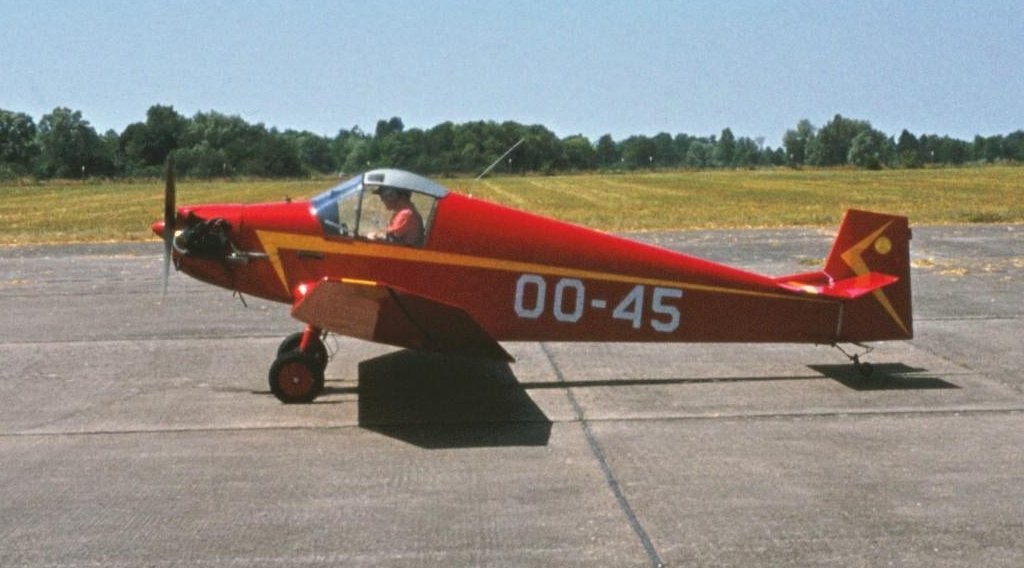
The Jodel D.92 Bebe emerged from the ashes of World War II as France sought to revitalize its aviation industry through grassroots enthusiasm. Over 500 aircraft from the entire D.9 series have been constructed by amateur builders and flying clubs worldwide, with more than 800 sets of plans sold internationally. This remarkable distribution demonstrates the design's appeal to home constructors seeking an affordable entry into aviation during the challenging postwar economy.
The Manufacturer
Société des Avions Jodel was established in March 1946 by Jean Délémontez and Edouard Joly, whose surnames combined to form the company name "Jodel." Rather than pursuing mass production, the company operated as a specialized design bureau focusing on providing plans, kits, and materials to amateur builders. The French government recognized the D.9's potential and provided subsidies through the SALS (Light Sport Aircraft Service) program to promote light aircraft development for aero clubs.
While Jodel concentrated on the amateur market, Wassmer produced 12 commercial examples of the D.9 series. Plans distribution extended internationally, with Falconair handling Canadian sales and Ben Keillor producing English translations for North American builders in 1959. The original Avions Jodel continues operations today, selling plans for the D.9, D.11 series, and newer models including the D.18 and D.19.
Design Innovation
Jean Délémontez led the technical design effort, creating a sophisticated yet buildable wooden structure featuring a cantilever low-wing configuration. The wing incorporated a parallel-chord inner section with distinctive 14-degree dihedral on the outer tapered panels, a characteristic that became signature feature of subsequent Jodel designs. The prototype, registered F-WEPF, achieved first flight on January 21, 1948, validating the designers' emphasis on simplicity and performance.
The open cockpit configuration and fixed tailskid landing gear reflected the utilitarian philosophy behind the design. Construction used readily available materials, making the aircraft accessible to builders with limited resources or specialized tools. The lightweight wooden structure demonstrated that amateur constructors could achieve professional-quality results without factory infrastructure.
Engine and Performance
Power came from converted Volkswagen automotive engines, typically producing 19-26 kilowatts (25-35 horsepower) from the air-cooled flat-four configuration. These O-69 1131cc engines provided reliable, economical operation suited to the ultralight's mission profile. The adaptation of automobile engines for aviation use became increasingly common among homebuilders, offering cost advantages over purpose-built aircraft engines.
With maximum takeoff weights ranging from 600-705 pounds, the D.92 achieved a maximum cruise speed of 126 kilometers per hour (78 mph). The aircraft's dimensions included a length of 17 feet 7 inches and height of 4 feet 12 inches, with a wing area of 97 square feet providing adequate lift at low speeds.
Global Impact
The D.9 series gained particular traction in international markets, with 12 examples constructed in New Zealand alone. As of 2010, seven of these remained on the New Zealand civil aircraft register, demonstrating the design's longevity and continued airworthiness. Active registrations like F-PIHM and F-PYFS continue flying in France, testament to the aircraft's enduring appeal among vintage aircraft enthusiasts.
The success of the single-seat D.92 directly influenced Jodel's development of the two-seat D.11 trainer series, which achieved even greater success with approximately 1,500 units built. This evolution demonstrated how the D.9's fundamental design principles could be scaled up for training applications, ultimately benefiting French aero clubs through government subsidies.
Cultural Significance
The Jodel D.92 Bebe holds historical importance as one of the first successful post-war homebuilt aircraft designs, arriving at a crucial moment when aviation enthusiasts sought affordable alternatives to expensive factory-built aircraft. Its influence extended beyond France, inspiring amateur aviation movements across Europe and North America during the 1950s and 1960s.
The design's emphasis on wooden construction using traditional techniques preserved craftsmanship skills that might otherwise have been lost in the transition to metal aircraft manufacturing. Plans remain available today, ensuring that new examples can still be constructed by dedicated builders seeking to experience aviation's grassroots heritage.
While production status continues as "ongoing" through plans sales, the D.92 represents a specific moment in aviation history when individual builders could construct high-performance aircraft in garage workshops, democratizing access to flight during aviation's post-war renaissance.