
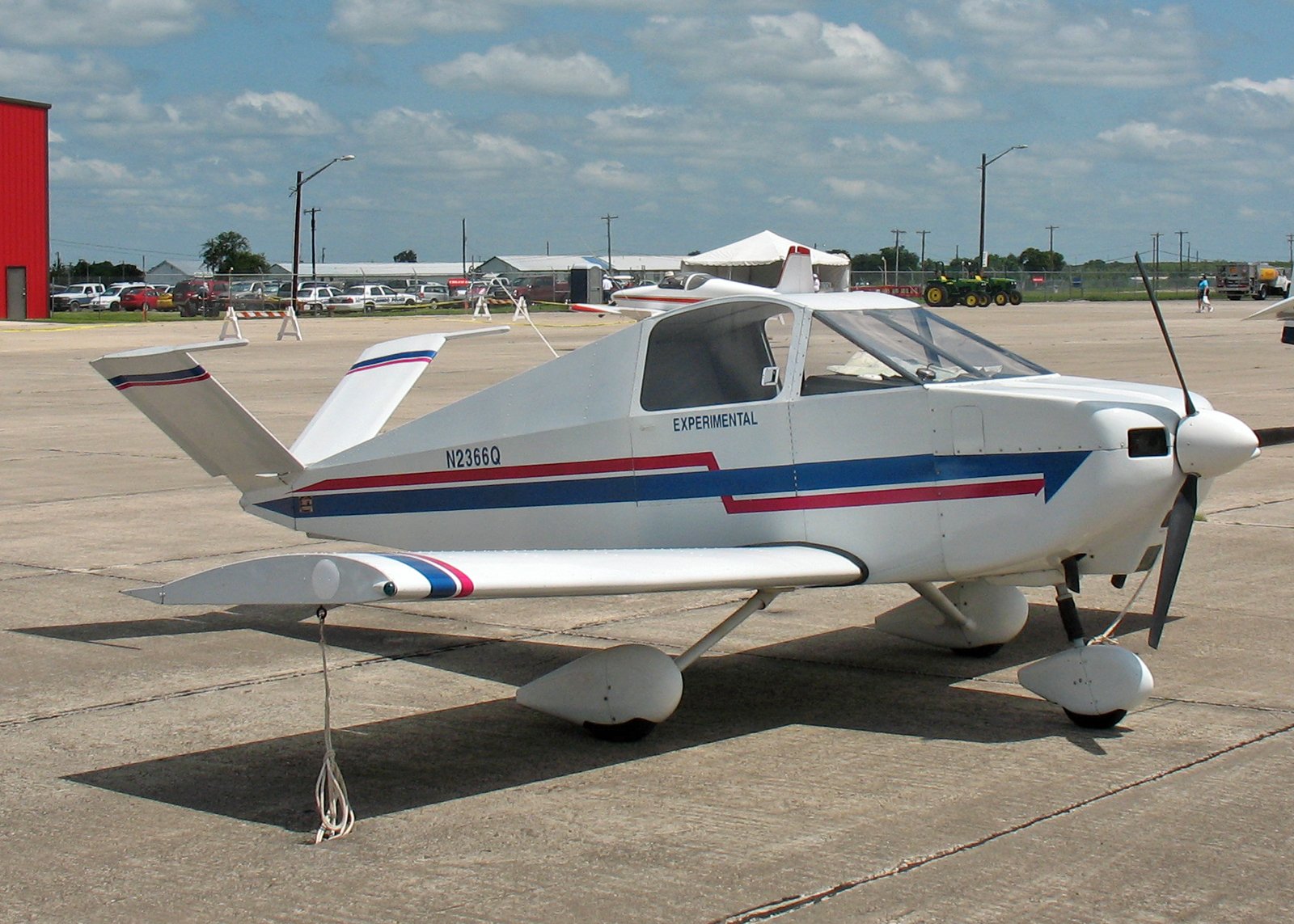
Design Revolution in Homebuilding
The DA-2 emerged during the 1960s homebuilt aircraft movement as a solution to the complexity that deterred many amateur constructors. Its designer prioritized ease of assembly by incorporating minimal curved components, reducing the number of control surfaces through the V-tail configuration, and creating wings from two sheets of aluminum requiring no trimming. This approach proved immediately successful when the prototype won awards for "most outstanding design" and "most popular aircraft" at the 1966 Experimental Aircraft Association annual fly-in.
Construction and Distribution Network
Unlike traditional aircraft manufacturers, Davis distributed the DA-2 as construction plans beginning in 1966. The original distribution occurred from Stanton, Texas, before marketing rights transferred to GFG Enterprises in 1983 and subsequently to D2 Planes, Inc. in 1986. As of August 2019, plans remained available through D2 Aircraft, demonstrating the design's enduring appeal over five decades.
International Adoption
The DA-2's simple construction methodology attracted builders across multiple continents. An estimated 45 to 60 aircraft were completed worldwide, with construction occurring in the United States, Canada, and the United Kingdom. Australia saw at least two completions, including VH-CLU (construction number W86), which achieved registration in June 1997 in Western Australia. New Zealand imported at least two DA-2A kits during the 1980s, though these projects remained unfinished.
Technical Innovation
The aircraft's distinctive engineering featured an all-moving V-tail with a 100-degree included angle, eliminating separate elevator and rudder surfaces. The fuselage employed slab-like construction using 1.5-centimeter square chrome-molybdenum steel tubing with riveted aluminum alclad skinning. This design philosophy minimized compound curves, requiring fiberglass components only for the engine cowling and fairings. The 82.5-square-foot wing area and 1,125-pound gross weight provided a practical balance for sport flying applications.
Engine Flexibility and Variants
The basic DA-2 accommodated the Continental A65 engine producing 65 horsepower, but the design's adaptability spawned multiple variants. The DA-2A accepted engines ranging from 65 to 100 horsepower, including the Continental O-200A. The DA-2B variant, designed for 100 to 125 horsepower engines, featured a refined and lighter structure with reduced fuselage depth for improved performance. At least one DA-2A utilized a modified GFM Corvair automotive engine, demonstrating the design's powerplant flexibility.
Performance Characteristics
With its Continental A65 engine, the DA-2 achieved a maximum speed of 120 mph and cruised at 115 mph. The aircraft demonstrated a stalling speed of 62 mph, providing reasonable low-speed handling characteristics for amateur pilots. Its rate of climb reached 400 feet per minute, with a service ceiling of 10,000 feet and range extending 450 miles. These specifications positioned the DA-2 as a capable cross-country sport aircraft despite its modest powerplant.
Notable Modifications
Several builders created significant variants that expanded the design's capabilities. Raymond Sample's DA-2A Bandit, first flown in 1995, incorporated new airfoil wings, wing tanks, an enlarged cabin, additional windows, a second door, and a 125-horsepower Lycoming O-290-G engine. John Storch's Devious DS-1, flown around 1985, featured detachable outer wing sections, wingtip extensions, lengthened V-tail surfaces, and a modified windscreen. These modifications demonstrated the design's adaptability to individual builder requirements.
Contemporary Legacy
The DA-2 influenced homebuilt aviation by proving that innovative design could simplify amateur construction without sacrificing performance or safety. Examples continue operating in private hands across multiple countries as of 2015, testament to the aircraft's structural integrity and enduring appeal. The design's emphasis on accessibility for first-time builders established principles that influenced subsequent homebuilt aircraft development, making it a significant contributor to the democratization of aviation construction.