
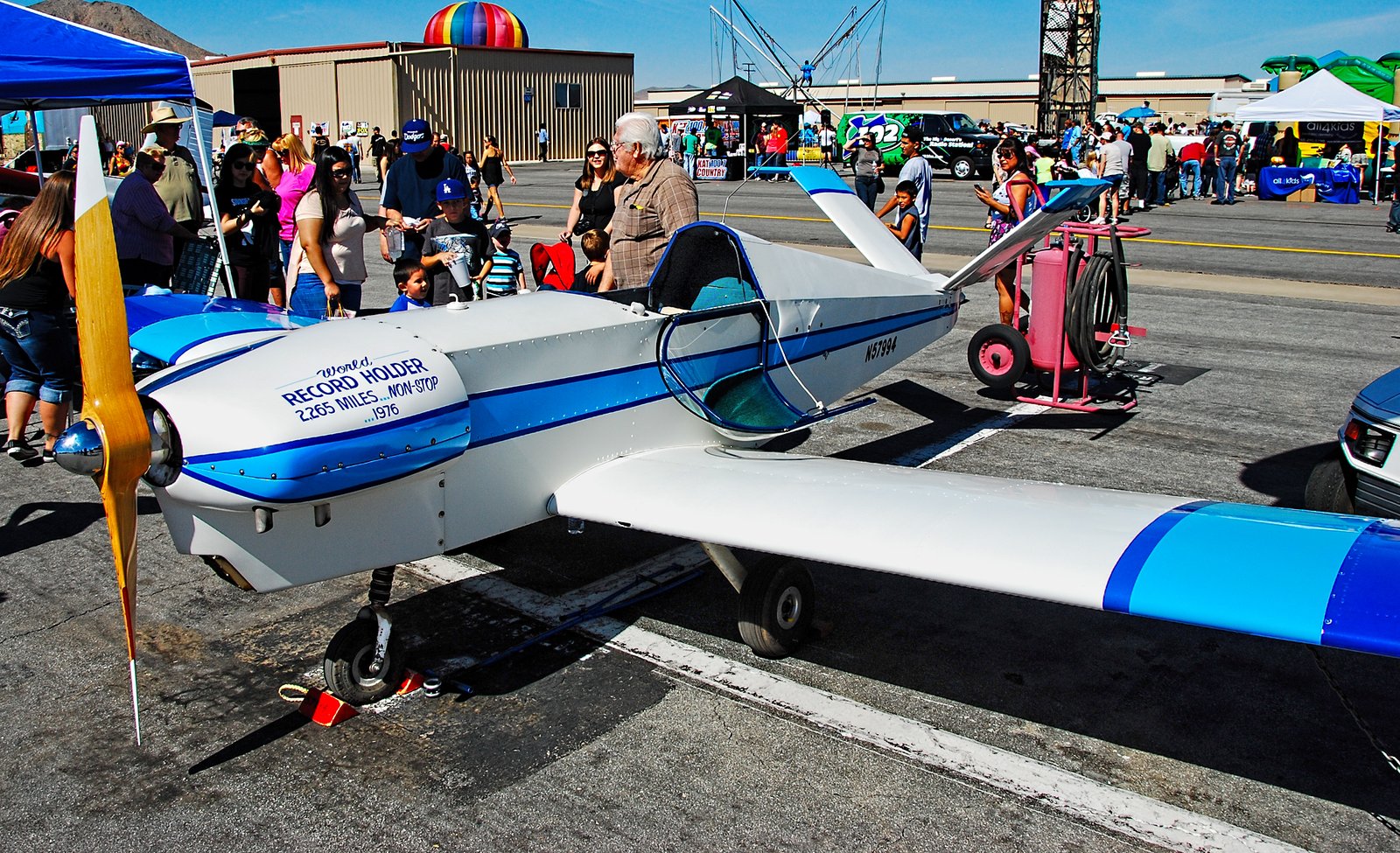
Design Philosophy and Development
The DA-5 emerged from Leeon D. Davis's revolutionary approach to aircraft design: build light to minimize engine requirements, which reduces fuel needs and further lightens the airframe. This cascading weight reduction allowed Davis to achieve remarkable performance with minimal power. Davis, known as "the most outspoken proponent of mass-produced aircraft at an affordable price," began design work on the DA-5 in 1972, following his successful two-seat DA-2.
The prototype construction demonstrated Davis's commitment to speed and efficiency. Completed in just 67 days in 1974, the aircraft achieved its maiden flight on July 22, 1974, with tail number N5822N. This rapid development timeline reflected both Davis's design expertise and the aircraft's intentionally simplified construction methods.
Innovative Construction Methods
Davis employed unconventional construction techniques specifically suited to homebuilders rather than commercial manufacturers. The DA-5 utilized a bending brake for sheet metal work without form blocks, eliminating complex tooling requirements. The cockpit area incorporated ½-inch 4130 square tubing instead of stressed aluminum members, simplifying fabrication while maintaining structural integrity.
The landing gear system exemplified Davis's practical approach to weight and cost reduction. Rather than conventional hydraulic shock absorption, the DA-5 used rubber mounts throughout. The nose gear employed stacked rubber doughnuts, similar to Ford motor mounts, to limit vertical movement. This system provided adequate shock absorption while eliminating hydraulic complexity and weight.
Engine and Performance
The Continental A65 horizontally-opposed four-cylinder engine produced 65 horsepower, driving a 2-bladed Hegy type 60-70 fixed-pitch wooden propeller with a 5-foot diameter. This modest powerplant proved sufficient due to the aircraft's exceptional power-to-weight ratio. With an empty weight of only 460 pounds and maximum takeoff weight of 775 pounds, the DA-5 achieved performance figures that challenged aircraft with significantly more power.
The aircraft's performance statistics validated Davis's design philosophy. Maximum speed reached 160 mph at sea level, with an economical cruise speed of 120 mph. The stall speed of 60 mph provided reasonable low-speed handling, while the never-exceed speed of 170 mph offered a comfortable margin above maximum speed. Rate of climb reached 800 feet per minute, impressive for a 65-horsepower aircraft.
Operational Characteristics
The DA-5's Clark Y airfoil, consistent with Davis's earlier designs DA-1 through DA-5, provided predictable handling characteristics. Takeoff run to 50 feet required 850 feet, while landing distance from 50 feet stretched to 1,100 feet. The service ceiling of 14,500 feet demonstrated the aircraft's ability to operate at significant altitudes despite its small engine.
Range capabilities reached 450 miles with the 17-gallon fuel capacity, providing reasonable cross-country capability for a single-seat sport aircraft. The combination of economical cruise speed and modest fuel consumption made the DA-5 practical for recreational flying and local transportation.
Production and Legacy
Unlike commercial aircraft manufacturers, Davis made the DA-5 available as plans for homebuilders to construct their own examples. This approach allowed individual builders to create aircraft without the regulatory burden of commercial production. Many DA-5 and DA-5A aircraft were built from these plans, though exact production numbers remain unspecified in available records.
The DA-5 represented the culmination of Davis's single-seat design evolution. Contemporary observers described it as "a caricature of Davis design" that "could be Leeon Davis carved out of aluminum. It's lean, fast, and has no hair." This characterization captured the aircraft's essence: uncompromising efficiency without unnecessary complexity.
Design Impact
After completing the DA-5A variant, Davis progressed to larger designs including the four-seat DA-6 and two-seat DA-7. However, the DA-5 remained his purest expression of lightweight, high-performance design. The aircraft successfully demonstrated that extreme simplification could deliver exceptional performance without complex systems or large engines.
The DA-5's influence extended beyond its own production numbers. Davis's construction methods and design philosophy influenced the broader homebuilt aviation community, proving that innovative approaches to weight reduction and simplified systems could produce viable aircraft. The availability of plans ensured that builders could access these design innovations, contributing to the aircraft's lasting legacy in experimental aviation.
Today, the DA-5 stands as a testament to focused design philosophy, proving that careful attention to weight reduction and system simplification could produce remarkable performance from modest powerplants. Its 67-day construction timeline and exceptional performance figures continue to inspire homebuilders seeking efficient, high-performance aircraft designs.