
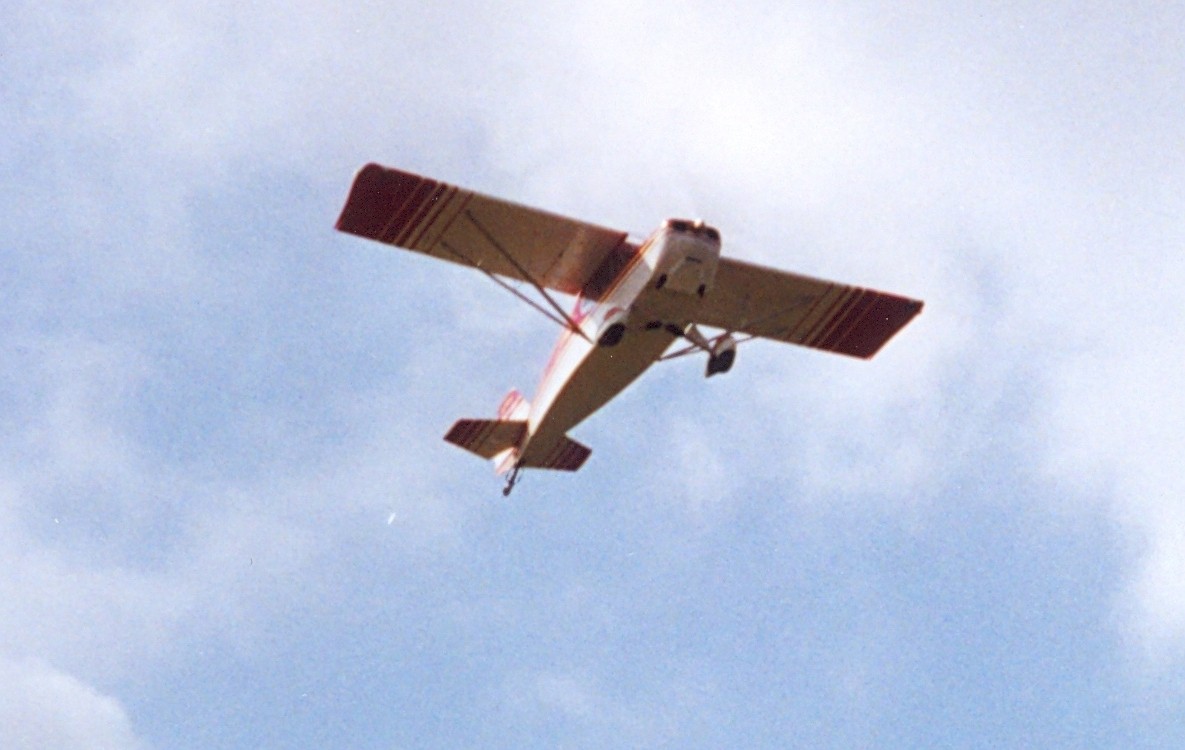
Service History in Sport Aviation
The Dakota Hawk emerged as one of Fisher Flying Products' most successful designs, capturing a significant segment of the homebuilt aircraft market through its combination of classical appearance and practical construction methods. Unlike factory-built aircraft competing for similar roles, the Dakota Hawk appealed specifically to builders comfortable with traditional wood-and-fabric techniques, representing approximately 80 percent of Fisher's kit sales by the late 1990s. The aircraft filled a crucial niche in sport aviation by offering genuine two-seat capability within ultralight regulations while maintaining construction simplicity.
The Manufacturer's Evolution
Fisher Flying Products originated in the early 1980s under Mike Fisher's leadership, initially focusing on Part 103 ultralight aircraft that provided "real airplane" characteristics. The company underwent significant ownership changes when Fisher sold to Darlene Jackson in 1984, following her husband Erv's death shortly before the acquisition. Jackson later married Gene Hanson, and together they expanded the product line to include scale aircraft replicas.
By 1998, Fisher Flying Products had developed 16 different aircraft designs, including the low-wing Avenger, Horizon One, Horizon Two, Youngster, and Celebrity models. The company faced operational challenges in the 2000s but was re-established under new ownership in early 2009, with the Dakota Hawk selected as one of the first models to resume production alongside the FP-202.
Engine Versatility and Technical Specifications
The Dakota Hawk's design originally specified the Rotax 912 engine producing 100 horsepower, but builders demonstrated remarkable flexibility in powerplant selection. Continental O-200 engines producing 100 horsepower and Continental C-85 engines generating 85 horsepower became popular alternatives, with Continental four-cylinder engines powering approximately 80 percent of completed aircraft despite the original Rotax specification.
One documented example equipped with a Rotax 912S achieved an empty weight of 630 pounds while demonstrating cruise speeds of 100 mph. The same aircraft recorded stall speeds between 35 and 38 mph, indicating excellent slow-flight characteristics essential for short-field operations. Climb performance varied significantly with atmospheric conditions, achieving 1,600 feet per minute in cool, clear weather but reducing to 800-1,000 feet per minute in humid conditions.
Construction Philosophy and Builder Appeal
Fisher Flying Products designed the Dakota Hawk for builders seeking approximately 500 to 700 hours of construction time, positioning it as an accessible project for amateur builders. The wood-and-fabric construction method appealed to builders with woodworking experience while avoiding the complexities of metal fabrication or composite techniques. Original construction plans weighed 10 pounds, reflecting the comprehensive documentation required for scratch-building.
The company offered multiple kit configurations to accommodate different builder preferences and skill levels. Partial kits containing wings, fuselage, and hardware shipped within three weeks, while complete kits required eight weeks for delivery. Quickbuild kits, featuring completed wing spars, ribs, finished fuselage sides, and empennage assemblies, extended delivery times to 12 weeks but significantly reduced construction hours.
Pilot Experience and Performance Characteristics
The Dakota Hawk's flight characteristics emphasized docile handling and practical cross-country capability rather than exceptional performance. The standard fuel configuration included a 12-gallon nose tank, with optional 6-gallon auxiliary tanks mounted in the wings for extended range. Average runway requirements of approximately 1,000 feet enabled operations from smaller airports typically inaccessible to heavier aircraft.
Pilots praised the aircraft's forgiving stall characteristics and stable cruise flight, making it suitable for builders with relatively modest flying experience. The combination of low stall speeds and 100-mph cruise capability provided a practical speed range for local flying and modest cross-country trips.
Production Legacy and Continuing Operations
The Dakota Hawk represented a kit aircraft investment of approximately 26,500 dollars, positioning it competitively within the homebuilt market segment. Serial number four, registered as CG-XPR and completed by Tom Marson in 1996, demonstrated the type's longevity by remaining in active service decades after construction, validating the design's structural durability.
Fisher Flying Products continues Dakota Hawk production today, maintaining the original design philosophy while incorporating builder feedback accumulated over three decades. The aircraft exemplifies successful niche marketing within general aviation, proving that specialized designs addressing specific builder requirements could achieve sustained commercial success where mass-market approaches might fail.
The Dakota Hawk's enduring popularity reflects its successful balance of classical aesthetics, practical construction methods, and reasonable performance expectations, establishing it as a significant example of homebuilt aircraft design serving the sport aviation community.