
Design Philosophy and Innovation
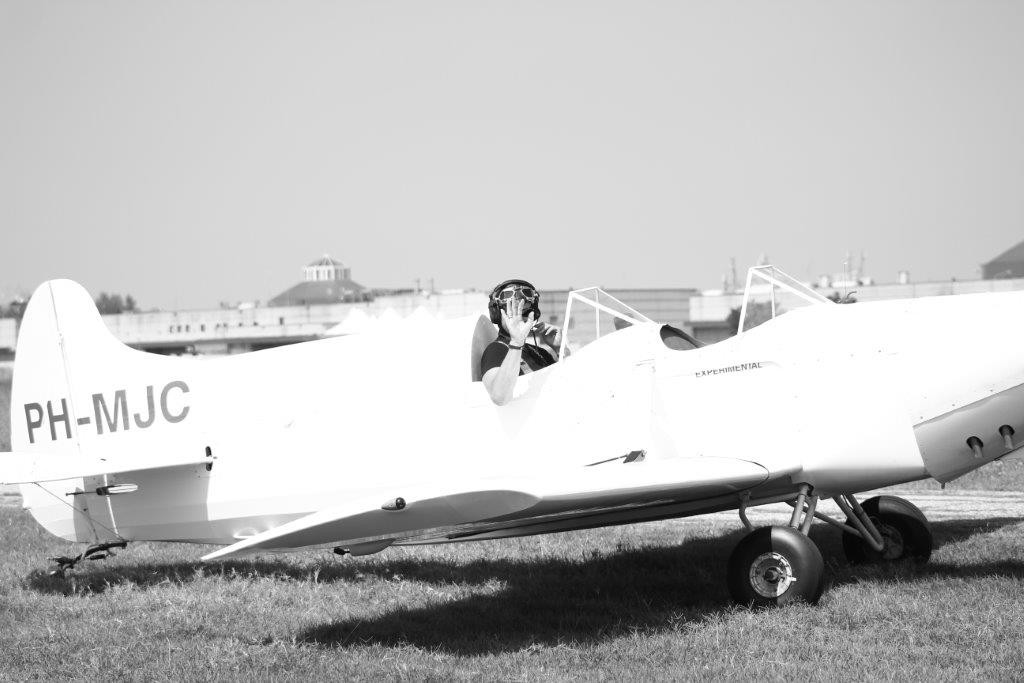
Tony Spezio's approach to aircraft design centered on radical affordability and practicality for the average aviation enthusiast. His prototype, completed in 1961 for the remarkable sum of $287, utilized an ingenious combination of surplus military components: tubing salvaged from a Cessna UC-78 trainer formed the fuselage framework, a Piper Tri-Pacer propeller provided thrust, and wheels from a military TG-6 glider supported the tailwheel landing gear. The aircraft earned its distinctive nickname "Tuholer" from the president of the Experimental Aircraft Association, a playful reference to its tandem seating arrangement reminiscent of traditional outdoor facilities.
Construction and Technical Features
The DAL-1's design prioritized simplicity and cost-effectiveness over complexity. Spezio employed a welded steel tube fuselage covered in fabric, combined with wooden wing spars and ribs that could be constructed in a home workshop. The aircraft's most innovative feature was its folding wing mechanism, allowing owners to trailer the aircraft to different airports—a significant advantage for builders without hangar access. The 23-gallon fiberglass fuel tank and Piper Cub-style screw-jack trim system further emphasized the practical, no-frills approach to recreational aviation.
The tandem cockpit configuration required pilots to operate solo flights exclusively from the rear seat, an unusual but functional arrangement that contributed to the aircraft's distinctive character. With no flaps and open cockpits, the Tuholer delivered an authentic vintage flying experience while maintaining modern construction techniques.
Performance Characteristics
Powered typically by a 125-horsepower Lycoming O-290 engine, the DAL-1 delivered impressive performance for its modest power plant. The aircraft achieved cruise speeds between 100 and 128 knots, with a maximum speed reaching 160 miles per hour. Its short-field capabilities proved exceptional, requiring only 160 feet for takeoff and 300 feet for landing roll. The climb rate of 2,000 feet per minute and operational range of 400 miles made it suitable for cross-country recreational flying.
With an empty weight of approximately 820 pounds and a gross weight of 1,500 pounds, the Tuholer maintained favorable power-to-weight ratios. Stall speeds between 39 and 45 knots provided gentle handling characteristics appropriate for amateur-built aircraft operations.
International Distribution
While originating in the United States, the DAL-1 plans found their way to builders across multiple countries. Construction examples appeared in New Zealand, the United Kingdom, and Sweden, demonstrating the design's international appeal among homebuilders. Notable examples include ZK-JRZ in New Zealand, which remained active through at least 2012 with flights to locations like Rangitata Island and the Otaki-Plimmerton area.
G-NOBI, constructed in the United Kingdom in 1970 with a Continental C125-2 engine, operated for nearly four decades before a 2007 accident. SE-XKI, originally registered as N1334 in the United States, was imported to Sweden in the late 1980s where it continued operations under Swedish registration.
Safety Record and Operational History
Several DAL-1 aircraft experienced accidents during their operational careers, reflecting both the experimental nature of homebuilt aviation and the open-cockpit flying environment. Notable incidents included N1141L in 1985, N8841 (a Bennett build) in 1989, and N20LW in 1990. These accidents contributed valuable safety data to the experimental aircraft community while highlighting the inherent risks of low-cost homebuilt aviation.
Tony Spezio himself flew the original prototype for 16 years, accumulating substantial experience that validated the design's fundamental airworthiness and reliability when properly constructed and maintained.
Legacy and Current Status
As of recent reports, at least one DAL-1 remains airworthy—ZK-JRZ in New Zealand, which maintained current registration status through 2012. Other examples have been dismantled or shipped internationally following accidents, with one reported dismantled aircraft located at Omaka Aerodrome in New Zealand.
The Tuholer's cultural significance extends beyond its modest production numbers. It embodied the spirit of 1960s experimental aviation, when surplus military components from World War II remained readily available and affordable. The aircraft demonstrated that recreational flying remained accessible to builders with limited financial resources but abundant enthusiasm and mechanical aptitude.
While no examples are confirmed in museum collections, the DAL-1 Tuholer represents an important chapter in homebuilt aviation history. It proved that innovative design and resourceful construction could produce capable aircraft without factory production or significant capital investment, inspiring generations of amateur builders to pursue their aviation dreams through hands-on construction projects.