
Production and Manufacturer History
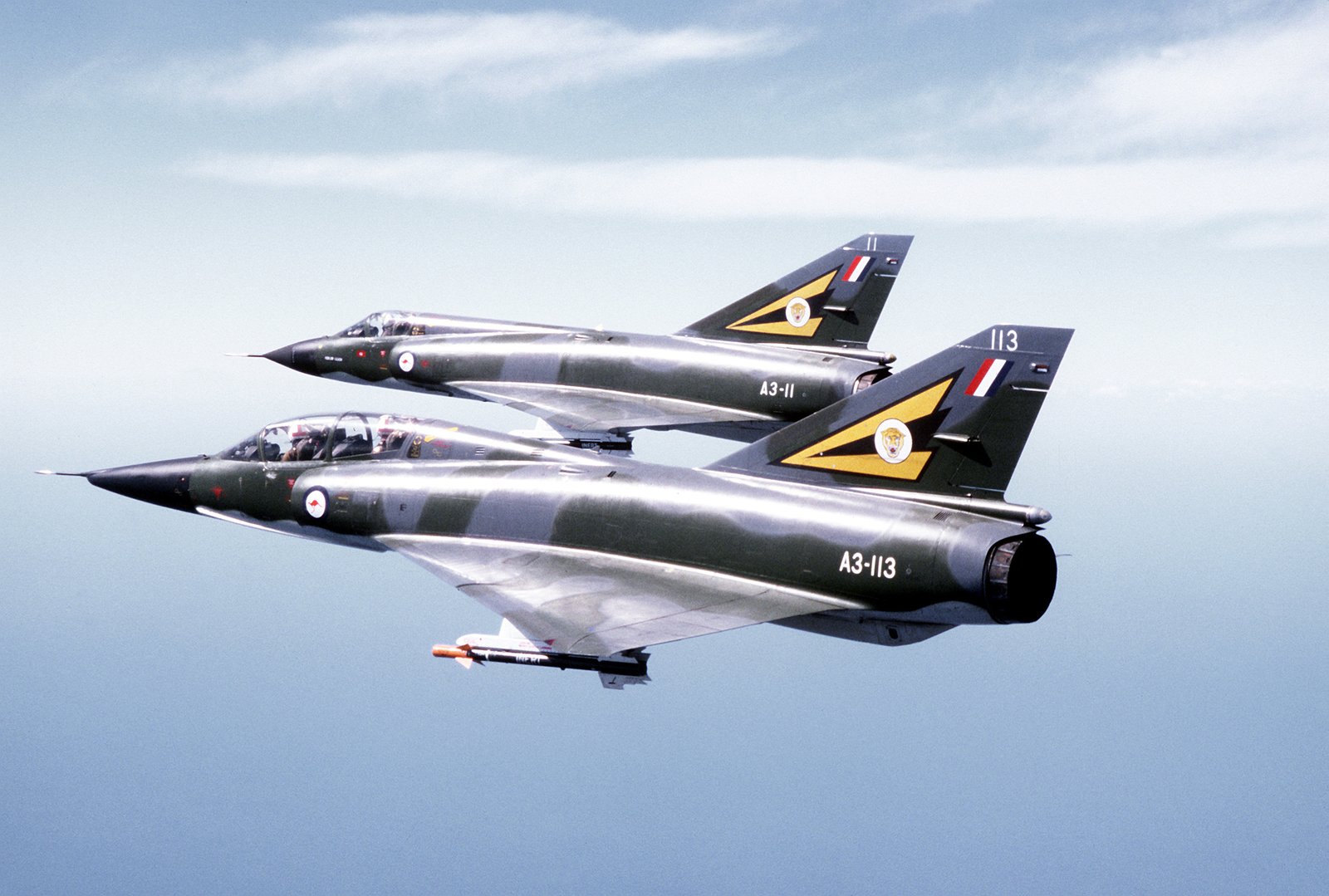
The Dassault Mirage III was developed by Avions Marcel Dassault, a firm led by Marcel Dassault (formerly Marcel Bloch). During the 1950s and 1960s, known as the "Magic Years," the company self-funded the development of the Mirage III and Mirage F1 before the French government provided production funding once design risks were mitigated. Production began in 1958 and continued into the early 1970s. A total of 1,401 aircraft within the Mirage III, 5, and 50 family were produced across 90 different versions. While primary final assembly occurred on a single line in France, the aircraft was also license-built in other nations, including Australia for the Royal Australian Air Force (RAAF).
Design and Technical Specifications
Designed at the end of 1955 to meet a French Air Force requirement for a light interceptor following the Korean War, the Mirage III utilized a tailless delta-wing configuration optimized for high-speed performance. Its fuselage was engineered according to the area rule, resulting in a "wasp-waisted" profile to reduce transonic drag. The aircraft was powered by a single SNECMA Atar series turbojet. For example, the Mirage IIIO variant utilized the Atar 9C, which produced 60.1 kN (13,670 lbf) of thrust with afterburner.
Service History and Performance
As a multirole platform, the Mirage III served as an interceptor, fighter-bomber, and reconnaissance aircraft. The French Air Force operated 457 units, including 95 Mirage III C interceptors, 183 Mirage III E fighter-bombers, 70 Mirage III R/RD reconnaissance aircraft, and 50 Mirage 5 F strike aircraft. The RAAF operated the Mirage IIIO and IIID from 1965 to 1987. Performance data for the Mirage IIIO indicates a maximum speed of Mach 2.2 (2,350 km/h) at 10,973 meters and a service ceiling of 16,994 meters. The aircraft saw extensive combat use in multiple conflicts, particularly influencing Middle Eastern air warfare during the 1960s and 1970s. It was exported to 21 countries, making it one of the most successful French fighter exports of the Cold War.
Legacy
The Mirage III established France as a leading global industrial power in military aviation. With approximately 3 million total flying hours recorded across the family, the aircraft paved the way for subsequent Dassault models such as the Mirage F1 and Mirage 2000. While the French Air Force retired its operational units by 1994, some aircraft remained in use as test planes at the Centre d’Essais en Vol (CEV).