
Service History
The DC-2 revolutionized commercial aviation by demonstrating that airlines could offer passengers both comfort and reliability. Transcontinental and Western Air (TWA) immediately ordered 20 aircraft after witnessing the prototype's performance, recognizing its superiority over the competing Boeing 247. The DC-2 delivered 20 percent faster cruise speeds and 40 percent greater payload capacity than Boeing's offering, carrying 14 passengers compared to the 247's 10-seat configuration.
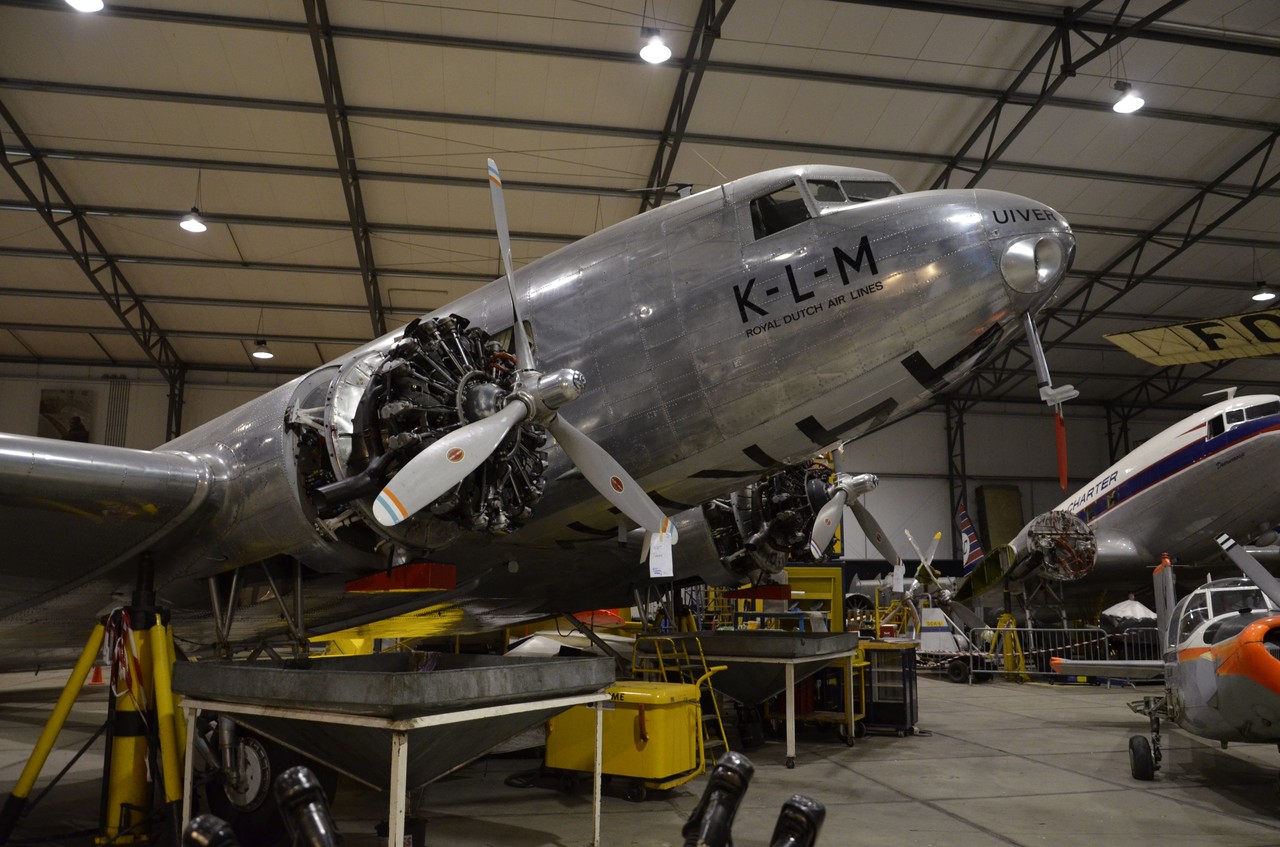
All but one major American airline recognized the DC-2's advantages, ordering approximately 60 aircraft for domestic routes. European carriers including KLM, LOT, Swissair, CLS, and LAPE operated DC-2s assembled by Fokker in the Netherlands. Between 1934 and 1937, airlines worldwide integrated 145 DC-2s into their fleets before production shifted to the improved DC-3.
Wartime Service
World War II transformed many civilian DC-2s into military transports. The United States Army Air Corps acquired 62 aircraft, operating them under the designations C-32A and C-33. These military variants served crucial roles in personnel and cargo transport throughout the Pacific and European theaters.
One notable example, construction number 1376, began service with Royal Dutch East Indies Airlines (KNILM) in 1935. When war erupted in the Pacific, this aircraft was evacuated to Australia and conscripted into the Allied Directorate of Air Transport. After military service ended in 1944, it joined Australian National Airways before finishing its career with Marshall Airways in the 1950s, registered as VH-CDZ.
The Manufacturer
Douglas Aircraft Company entered commercial aviation primarily as a military contractor responding to TWA's August 2, 1932 request for a modern transport aircraft. Based in Santa Monica, California, Douglas had established expertise in metal construction and aerodynamic design through military projects. The company's civil aviation venture proved transformational, establishing Douglas as America's premier airliner manufacturer.
Following the DC-2's success, Douglas produced 607 DC-3s and continued dominating commercial aviation through the 1960s. The company merged with McDonnell Aircraft in 1967, forming McDonnell Douglas, which Boeing acquired in 1997. Douglas's legacy remains embedded in modern aviation through designs that prioritized safety, reliability, and operational efficiency.
Engine & Technical Innovation
Twin Wright GR-1820-F52 Cyclone radial engines powered the DC-2, each generating 775 horsepower and providing exceptional reliability for 1930s aviation. These nine-cylinder engines enabled cruise speeds of 190 miles per hour with a service ceiling of 22,450 feet and range of 1,000 miles. The powerplant selection proved so successful that Douglas retained Wright engines for the subsequent DC-3.
The DC-2's all-metal construction featured a tapered wing design and fully retractable landing gear, representing advanced engineering for its era. Maximum gross weight reached 18,569 pounds, requiring a crew of two or three to operate safely. These innovations established design principles that influenced airliner development for decades.
Performance & Pilot Perspective
Pilots appreciated the DC-2's forgiving handling characteristics and reliable performance across diverse operating conditions. The aircraft's 190-mile-per-hour cruising speed made transcontinental routes commercially viable while maintaining passenger comfort through improved cabin design and reduced vibration compared to earlier transports.
Operational reliability became the DC-2's hallmark, with airlines achieving unprecedented schedule adherence. The type's performance margins allowed safe operation from shorter runways while carrying full passenger loads, expanding route possibilities for operators worldwide.
Production & Legacy
Production totaled 156 aircraft between 1934 and 1937, with sources varying between 130 and 145 civilian examples plus 62 military variants. Donald Douglas stated in 1935 that mass-produced DC-2s cost approximately $80,000 each, representing significant investment for Depression-era airlines.
While overshadowed by the DC-3's greater success, the DC-2 established fundamental principles of modern commercial aviation. Its demonstration of reliable passenger service created market confidence that enabled the airline industry's rapid expansion. Today, VH-CDZ represents one of the most complete surviving examples, undergoing restoration in Australia as a testament to the type's historical significance.
The DC-2's true legacy lies not in production numbers but in proving that commercial aviation could be profitable, safe, and comfortable. This foundation enabled Douglas to refine the design into the DC-3, which dominated global airline operations for decades and established the template for modern air transport.