
Service History
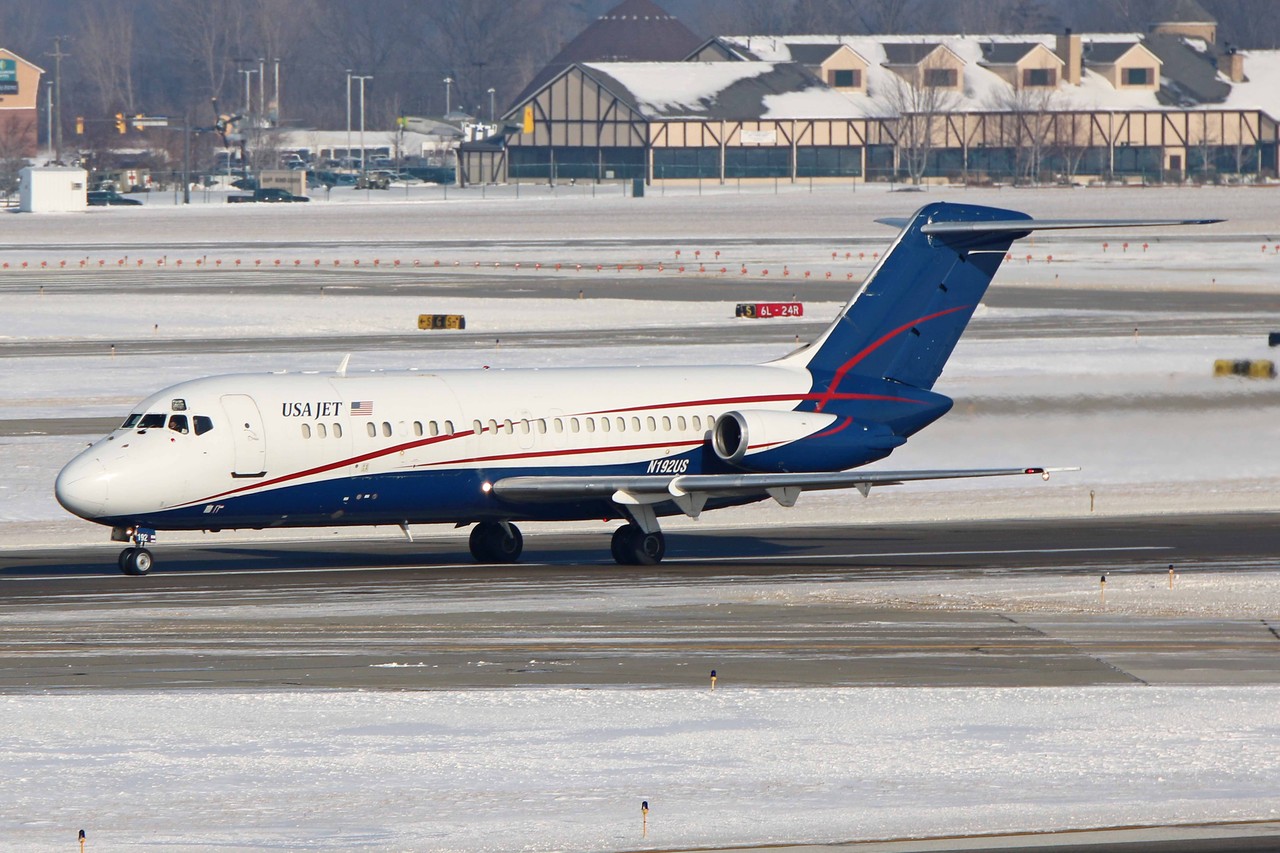
The DC-9-10 entered commercial service with Delta Air Lines on December 8, 1965, following delivery of the first production aircraft (N3304L) on October 7, 1965. Delta had placed the launch order for 15 aircraft in April 1963, eventually expanding their commitment to 58 firm orders with 44 options by January 1965. The aircraft quickly proved its worth in the regional market, with Eastern Air Lines adopting the larger Series 30 variant in 1967, followed by Scandinavian Airlines System operating the Series 20 from January 27, 1969. Northwest Airlines became synonymous with the DC-9, making it an iconic workhorse of their fleet for decades.
The DC-9-10's design philosophy centered on serving 98 percent of U.S. airports in 1965, filling a crucial gap in the market for efficient short-haul operations. Its success spawned an entire family of aircraft, with 976 DC-9 variants built across all early series through December 1982, when the last aircraft rolled off the production line.
Military Service
While primarily a commercial success, the DC-9 found limited military application with 41 aircraft delivered to U.S. forces. The Air Force operated the C-9A Nightingale for medical evacuation and transport duties, while the Navy and Marine Corps used the C-9B variant. The Air Force also employed the VC-9C for VIP transportation, though these military variants saw no combat service, entering service well after the Vietnam conflict.
The Manufacturer
Douglas Aircraft Company, founded in Santa Monica, California in 1921 by Donald Douglas, developed the DC-9 at their massive 1.4 million square foot Long Beach plant adjacent to Daugherty Field. The company had already established itself as a commercial aviation pioneer with the DC-8 in 1959 and recognized the emerging short-haul market opportunity as early as 1958. Design studies began that year under the leadership of teams that had previously worked under chief engineer Arthur E. Raymond.
The aviation landscape shifted dramatically during DC-9 production when Douglas merged with McDonnell Aircraft in May 1967, creating McDonnell Douglas. This merger occurred just two years after the DC-9's first flight, and the combined company continued production until 1982. McDonnell Douglas itself became part of Boeing in 1997, ending the independent lineage of this storied manufacturer.
Engine & Technical Innovation
The DC-9-10's most distinctive feature was its pair of Pratt & Whitney JT8D low-bypass turbofans mounted on the rear fuselage beneath a T-tail configuration. Each engine produced between 14,000 and 15,500 pounds of thrust, providing the power needed for operations from shorter runways that larger jets couldn't access. Pratt & Whitney manufactured over 14,000 JT8D engines during their production run from the 1960s through 1990s, with approximately 1,952 engines powering the 976 DC-9 airframes.
This rear-engine placement offered significant aerodynamic advantages, keeping the wings clean of engine nacelles and reducing drag. The design team incorporated leading-edge slats that were refined during flight testing, contributing to excellent short-field performance. The aircraft featured a built-in airstair for passenger boarding, eliminating ground support equipment requirements at smaller airports.
Performance Characteristics
Pilots appreciated the DC-9-10's reliability and versatility in short-haul operations. The aircraft cruised at speeds up to Mach 0.79 with a service ceiling of 37,000 feet and a range of approximately 1,300 nautical miles in the Series 15 configuration with extended fuel capacity. The two-person cockpit reduced operating costs compared to three-crew aircraft, while maintaining safety standards appropriate for commercial operations.
The original Series 10 accommodated 63 passengers, though capacity varied among subvariants including the Series 11, 12, 14, and 15 (no Series 13 was produced). A convertible passenger-cargo variant featuring a 136-by-81-inch cargo door received certification on March 1, 1967, expanding operational flexibility.
Production Legacy
Production began on March 6, 1964, with five prototypes completing flight testing by June 1965. The aircraft received its FAA type certificate on November 23, 1965, following an remarkably rapid development cycle that began with program approval on April 8, 1963. The DC-9-10 spawned an entire family tree including the MD-80, MD-90, and Boeing 717 series, with combined production reaching 2,441 aircraft by 2006.
Today, few original DC-9-10s remain in active service due to their age, though approximately 10-20 family variants continue flying as freighters. The first prototype (N9DC) found its way to North Texas Regional Airport in Sherman, Texas in 1992, serving as a parts source. Delta's first production aircraft (N3304L) is preserved at the Delta Flight Museum in Atlanta, having served the airline from 1965 to 2014. These museum pieces represent the aircraft that launched the regional jet revolution, fundamentally changing how Americans traveled on shorter routes and connecting smaller communities to the broader aviation network.