
Design and Development
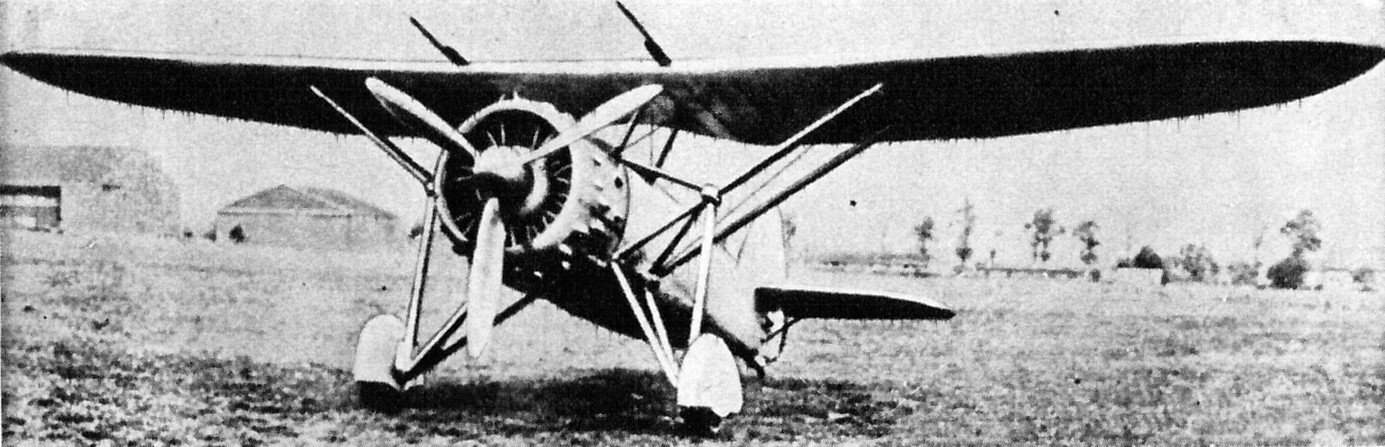
Designed by Émile Dewoitine, the D.371 was a single-seat fighter developed in the early 1930s. It represented a significant technological shift for French aviation, utilizing an all-metal construction and a parasol-wing configuration at a time when biplanes remained common. The aircraft featured an open cockpit and fixed landing gear, reflecting the transitional nature of fighter design during this era. The prototype first flew in March 1934, achieving a maximum speed of 400 km/h at an altitude of 4,500 meters.
Production and Manufacturer
The aircraft was manufactured in France by Société Aéronautique Française – Avions Dewoitine (SAF-Avions Dewoitine). Production took place between 1934 and 1935, with the final aircraft of the French order completed in December 1935. While sources vary slightly on total production, it is documented that the French Air Force (Armée de l'Air) and potentially the Aéronavale ordered between 28 and 29 airframes. The manufacturer, SAF-Avions Dewoitine, was later absorbed into the nationalized French aircraft industry in 1936–1937, eventually becoming part of SNCASE and contributing to the lineage of modern Airbus.
Technical Specifications
The D.371 was powered by a Gnome-Rhône 14-cylinder air-cooled radial piston engine, specifically the 14K-series (often cited as the 14Kds), producing approximately 800 hp. The aircraft had a wingspan of 10.50 meters, a length of 7.40 meters, and a wing area of 17.00 square meters. With an empty weight of roughly 1,480 kg and a loaded weight of 2,020 kg, it achieved a service ceiling of 11,000 meters and a range of 1,150 km. The standard French version was armed with two fuselage-mounted 7.5 mm MAC 1934 machine guns.
Military Service
The Armée de l'Air utilized the D.371 as a fighter before relegating it to second-line duties and advanced training as it became obsolete; the type was withdrawn from French service in 1939. The aircraft's most significant combat history occurred during the Spanish Civil War. Approximately 26 D.371 and D.372 aircraft served with the Spanish Republican Air Force, including a group organized by André Malraux known as "Escuadrilla España." In August 1936, three fully armed D.371s flown by Henri Rozés, René Halotier, and M. Poulain arrived in Barcelona. These aircraft proved superior to the German Heinkel He 51, notably defending bombers during a raid on Talavera de la Reina that targeted the headquarters of General Juan Yagüe. Eventually, the D.371s were replaced by Soviet Polikarpov I-15 and I-16 fighters and were largely destroyed by the German Legion Condor in raids such as those at Bañolas.
Legacy
Although no complete airframes are known to survive today, the D.371 is historically significant as the foundation for the D.37 family. Its development provided the structural and aerodynamic experience necessary for later French fighters, such as the Dewoitine D.520. Its combat performance in Spain served as a vital testing ground for fighter tactics during the inter-war period.