
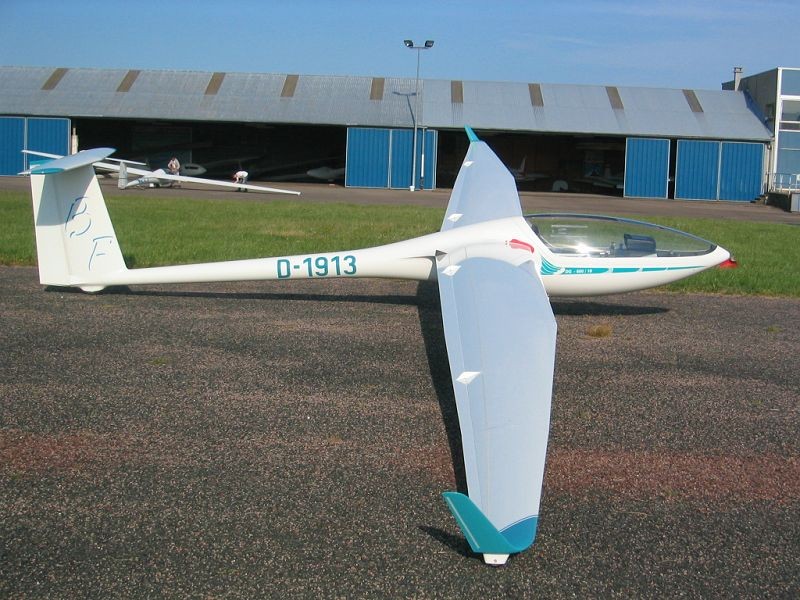
Competition Dominance
The DG-600M carved out a unique niche in FAI 15-meter and 18-meter competition classes, where its exceptional glide performance allowed it to compete effectively against newer designs including the later DG-800 series. Private pilots and soaring clubs prized the aircraft for its ability to carry 187 kilograms of water ballast while maintaining a glide ratio of 46:1, making it formidable in cross-country soaring competitions. The motorglider variant's self-launching capability eliminated dependence on ground crews and tow aircraft, giving pilots unprecedented operational flexibility.
The Manufacturer's Legacy
Glaser-Dirks Flugzeugbau GmbH emerged from the partnership of Gerhard Glaser, a civil engineering business owner, and Diplom Ingenieur Wilhelm Dirks in 1972. The company established its reputation with the DG-100 glider, producing 105 units before the design was licensed to Elan for an additional 222 aircraft. Glaser-Dirks pioneered carbon fiber construction in sailplanes with the DG-200/17C in 1980, followed by their most successful design, the DG-400 motorglider in 1981. The DG-300 series, introduced in 1983, achieved remarkable commercial success with 484 units delivered. After transitioning to DG Flugzeugbau, the company continued innovation with the DG-800 series by 1993 and remains operational today.
Engine and Technical Innovation
The DG-600M's powerplant was the Austrian-built Rotax 275, a two-stroke piston engine that retracted completely when not in use to maintain the aircraft's clean aerodynamic profile. This engine enabled the aircraft to launch independently without ground support, a crucial advantage for remote soaring sites. The airframe featured an advanced thin airfoil design using HQ-35 sections at the root transitioning to HQ-37 at the tips, combined with a high aspect ratio of 20.55 that contributed directly to its outstanding glide performance.
The aircraft's carbon fiber reinforced plastic construction provided exceptional strength while minimizing weight. At 255 kilograms empty weight, the DG-600M could accommodate a maximum takeoff weight of 525 kilograms in its 15-meter configuration. The design incorporated flaperons for enhanced control authority and featured a distinctive slender tailboom housing a 7-liter ballast tank in the tailfin.
Pilot Experience
Pilots appreciated the DG-600M's exceptional thermaling ability with a minimum sink rate of just 0.56 meters per second, though the aircraft demanded respect due to documented poor low-speed handling characteristics in its 15-meter configuration. The stall speed of 64 kilometers per hour required careful attention during approach and landing phases. Never-exceed speeds varied by flight condition: 270 kilometers per hour in smooth air, 200 kilometers per hour during aerotow operations, and 150 kilometers per hour during winch launches. The aircraft could withstand loads of +5.8 to -3.8 g, making it suitable for competitive soaring maneuvers.
Abbreviated Production
The DG-600 program's potential was cut short when a factory fire destroyed the wing molds in 1992, the same year full production had commenced following the January 14 first flight. This catastrophe limited total production to between 112 and 114 aircraft across all variants, instantly making the DG-600M one of the rarest modern competition sailplanes. The timing was particularly unfortunate as the design had proven itself capable of bridging the gap between 1980s motorglider technology and the advanced sailplane designs that would follow.
Contemporary Operations
Surviving DG-600M aircraft remain highly valued by their owners, with examples like D-KIJO (constructor number 6-97/M43) still active at European soaring sites such as Nötsch im Gailtal, Austria. The aircraft's rarity has been compounded by several accidents over the years, including the loss of D-KEUP on July 28, 2000, D-KIHR on October 13, 2021, near Bordes-de-Rivieres, and a fatal accident near Borja on July 19, 1999.
Despite its limited production run, the DG-600M's influence on sailplane design was significant, demonstrating the potential of combining advanced aerodynamics with reliable self-launching capability. The aircraft served as a technological stepping stone between the successful DG-400 series and the later DG-800 designs that would incorporate lessons learned from the DG-600's brief but impactful production run.