
Design and Development
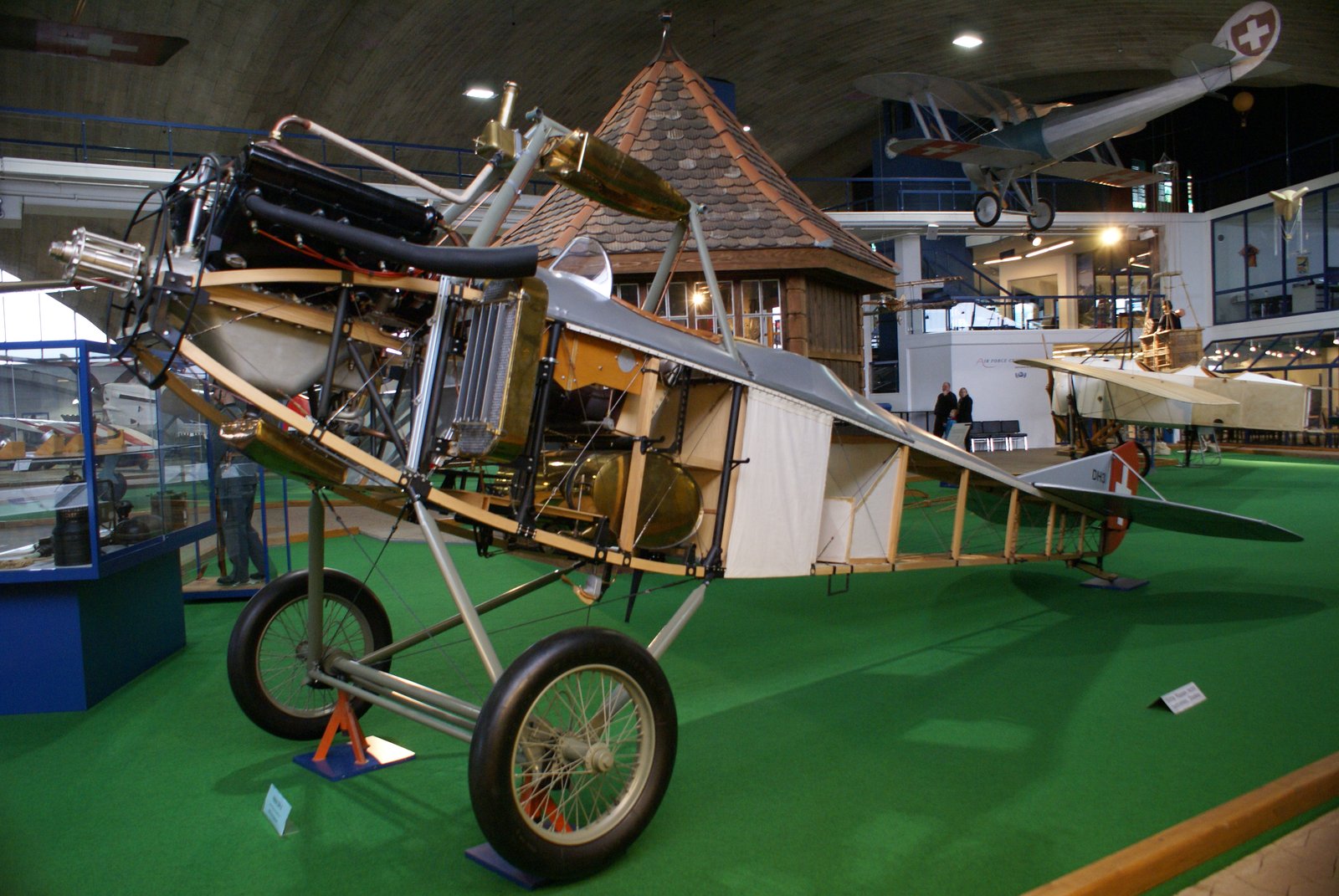
The Häfeli DH-3 was developed under the leadership of August Häfeli, who served as the chief aircraft designer for the Eidgenössische Konstruktionswerkstätte (K+W) in Thun from 1915 to 1928. Designed as a two-seat biplane with a fixed tailskid undercarriage, the aircraft was intended for reconnaissance and training roles for the Swiss Army. The crew consisted of a pilot in the forward cockpit and an observer or gunner in the rear. While a specific first flight date is not documented, the aircraft was designed and entered service in 1917.
Production and Manufacturer
The aircraft was manufactured by the Flugzeugbau-Abteilung (aircraft department) of the K+W in Thun, a state-run Swiss arsenal. A total of 79 aircraft were produced across the DH-3, DH-3a, and DH-3b variants. The original K+W entity no longer exists as a named organization, but its legacy continues through the modern Swiss state-owned defense and aerospace group, RUAG.
Technical Specifications and Variants
The standard DH-3a variant was powered by a single Hispano-Suiza HS-41 8Aa V-8 liquid-cooled piston engine producing 150 PS (110 kW). This version featured a wingspan of 12.50 meters, a length of 7.95 meters, and a maximum take-off weight of 1,110 kg. Performance figures for the DH-3a include a maximum speed of 145 km/h at sea level, a range of 400 km, and a service ceiling of 4,500 meters.
Experimental variants included a test aircraft fitted with a 180 PS Hispano-Suiza HS-41 8Ab engine, tested between October 1929 and April 1930. Additionally, three DH-3b aircraft were built in 1918, utilizing a 150 PS LFW O engine from Lokomotivfabrik Winterthur. While the standard model carried a single flexible machine gun in the rear, the DH-3b was equipped with two fixed, engine-mounted guns in addition to the observer's weapon.
Service History
Operated exclusively by the Swiss Air Force, the DH-3 saw an unusually long service life. Following a structural test failure in 1923, the original configuration was withdrawn and replaced by the DH-3a standard. To further improve safety and low-speed handling, Handley-Page leading-edge slats were retrofitted to the remaining fleet. The DH-3a remained in military service until 1938 or 1939, while the DH-3b variants were scrapped in 1922.
Beyond its military utility, the DH-3 played a pivotal role in Swiss civil aviation. On 8 January 1919, a military DH-3 flew the first regular airmail route between Dübendorf (near Zürich) and Oberlindach (near Bern), marking the birth of Swiss airmail and establishing the aircraft as essentially the first scheduled-service aircraft in the country.
Legacy
As a cornerstone of early indigenous Swiss aviation, the DH-3 demonstrated the feasibility of domestic series production. Although no original airworthy examples are recorded, a detailed cutaway structural replica of the aircraft is preserved for display.