
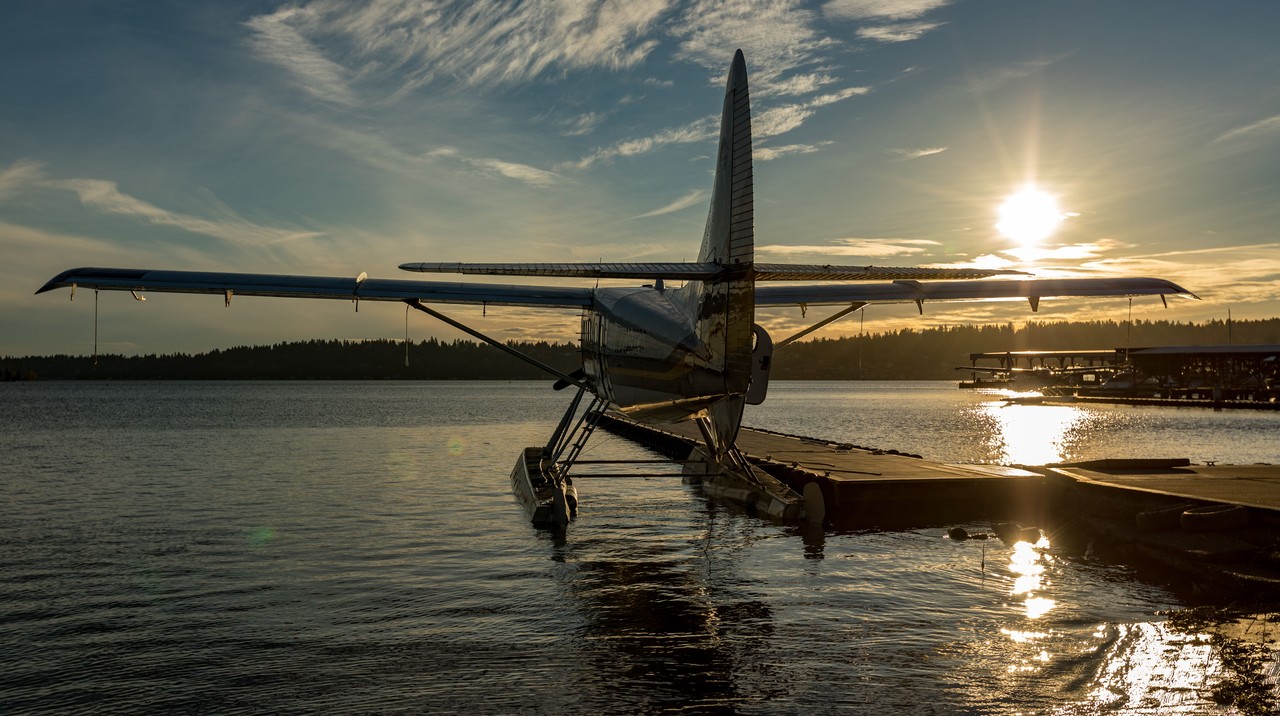
Service History
The DHC-3 Otter dominated wilderness aviation for three decades, serving operators on every continent except Antarctica. By the 1970s, the type provided the primary passenger and cargo service to hundreds of remote communities across northern Canada, Alaska, and Scandinavia. Float-equipped Otters became the workhorse of fishing lodges and mining operations throughout the Canadian Shield, while ski-equipped variants opened year-round access to Arctic research stations and military installations.
Military Operations
Military forces worldwide recognized the Otter's exceptional utility, with over 200 entering service with armed forces in 15 countries. The United States Army designated it the U-1A Otter, operating 184 aircraft primarily for liaison and light transport duties. During the Vietnam War, Army Otters flew reconnaissance missions and transported personnel to remote landing zones throughout Southeast Asia. The Royal Canadian Air Force operated 32 CC-3 Otters for search and rescue missions, while the Indian Air Force used the type extensively along the disputed Kashmir border.
The Manufacturer
De Havilland Aircraft of Canada Limited, established in 1928 as a subsidiary of the British de Havilland company, specialized in aircraft designed for harsh Canadian conditions. Under the leadership of chief designer Dick Hiscocks, the company developed the Otter following the success of the smaller DHC-2 Beaver. The design team, including Wsiewolod Jakimiuk and George Neal, created an aircraft specifically engineered for maximum payload and minimum runway requirements. Today, de Havilland Canada continues operations as a subsidiary of Longview Aviation Capital Corporation, maintaining support for the DHC series aircraft.
Engine and Technical Innovation
The Otter's exceptional performance stemmed from its powerful Pratt & Whitney R-1340-S1H1 Wasp radial engine, producing 600 horsepower and driving a three-blade constant-speed propeller. This engine selection provided 50 percent more power than the Beaver's powerplant while maintaining proven reliability in extreme conditions. The aircraft featured innovative design elements including full-span flaps, leading-edge slots, and a fixed tailwheel landing gear designed to absorb the punishment of rough-field operations. Large cargo doors and a reinforced floor allowed the Otter to carry bulky freight that challenged smaller bush planes.
Pilot Perspective
Pilots praised the Otter's forgiving handling characteristics and exceptional short-field performance, with typical takeoff rolls of 700 feet and landing distances under 500 feet. The aircraft cruised at 130 miles per hour with a service ceiling of 18,800 feet and a range of 875 miles with standard fuel. Veteran bush pilots particularly valued the Otter's ability to maintain control at extremely low airspeeds, with a stall speed of just 58 miles per hour. The spacious cockpit provided excellent visibility, while the rugged construction withstood decades of operation from unpaved strips, frozen lakes, and challenging mountain airfields.
Production and Legacy
De Havilland Canada manufactured 466 Otters between 1951 and 1967, when rising costs and competition from turbine-powered aircraft ended production. The final aircraft, serial number 466, was delivered to the Ontario government in September 1967. Despite ending production over five decades ago, more than 200 Otters remain in active service worldwide, testament to the design's durability and continued utility. The type's success established de Havilland Canada's reputation for building aircraft specifically suited to remote operations, leading directly to the development of the larger DHC-6 Twin Otter.
Museum Preservation
Significant examples of the DHC-3 Otter are preserved at aviation museums worldwide, including the National Air and Space Museum in Washington D.C., which displays a U-1A variant, and the Canadian Museum of Flight in British Columbia, home to the prototype CF-DHO-X. The de Havilland Aircraft Heritage Centre in Ontario maintains the most comprehensive collection of company aircraft, while the Alaska Aviation Museum in Anchorage showcases an Otter that served Alaskan bush operations for over four decades.