
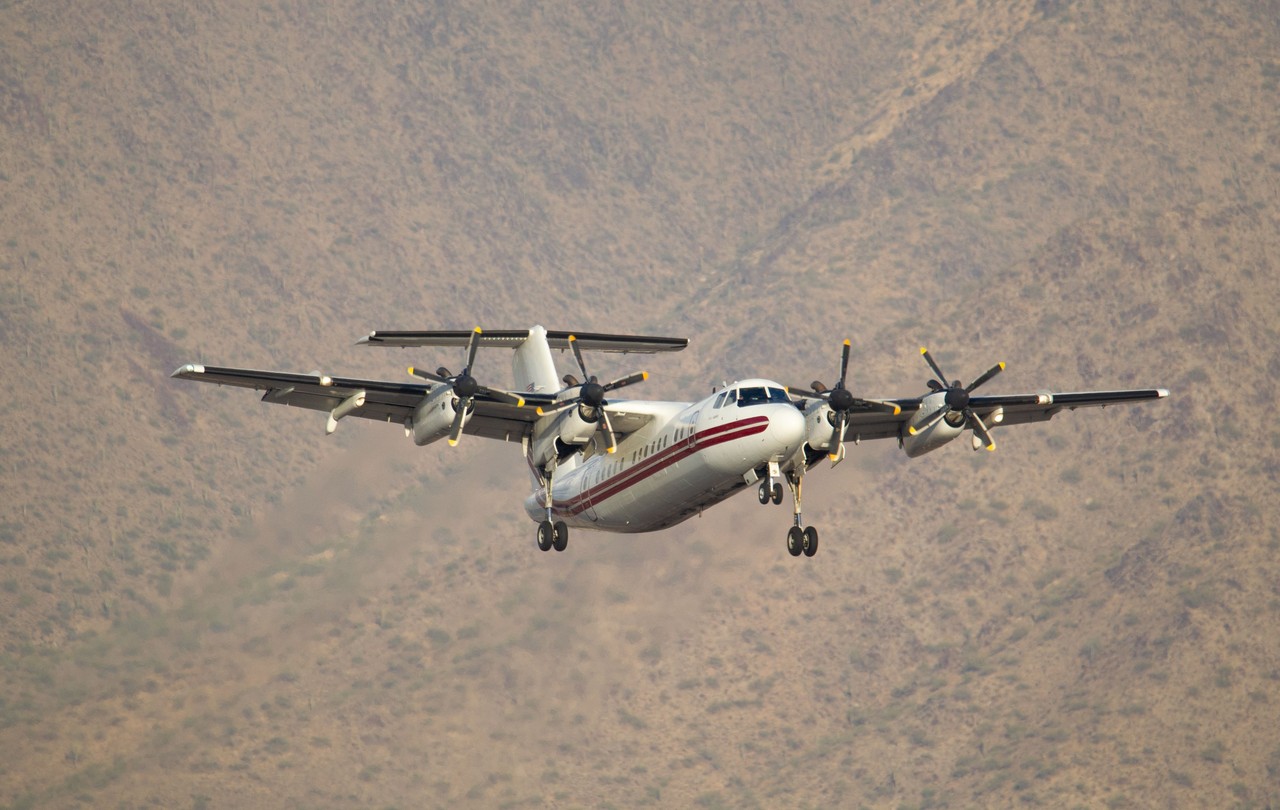
Development and Design Philosophy
De Havilland Canada launched the Dash 7 program in 1972 with Canadian government funding secured in July 1970, after the British parent company declined to pursue the project. The aircraft officially received its "Dash 7" designation on October 1, 1973, reflecting the company's systematic approach to regional aircraft development. Chief engineer George Neal led the design team in creating what would become the world's quietest four-engine airliner, specifically engineered to meet newly introduced noise restrictions that threatened to limit turboprop operations at urban airports.
The second prototype joined flight testing on June 26, 1975, leading to Transport Canada certification on May 2, 1977. This rigorous development process emphasized the aircraft's primary mission: providing airline-quality service to remote locations with short, unpaved runways while maintaining acceptably low noise levels in populated areas.
Revolutionary Quiet Technology
The Dash 7's four Pratt & Whitney Canada PT6A-50 engines, each producing 1,120 shaft horsepower, were mounted high on the wing and equipped with large, slow-turning propellers that generated significantly less noise than comparable twin-engine designs. This configuration allowed the aircraft to operate at a maximum takeoff weight of 43,000 pounds while maintaining noise levels 10-15 decibels lower than competing regional aircraft. The innovative acoustic design proved so successful that several major airports specifically welcomed Dash 7 operations during noise-restricted hours when other turboprops faced limitations.
Early Commercial Operations
Rocky Mountain Airways of Denver, Colorado received the first production Dash 7 on February 3, 1978, immediately deploying it on scheduled passenger service between Denver International Airport and the high-altitude Avon STOLport. This inaugural route perfectly demonstrated the aircraft's capabilities: operating from a 4,000-foot runway at 7,300 feet elevation while carrying 50 passengers in airline comfort. During 1980, the entire U.S. Dash 7 fleet achieved an exceptional 99.1 percent dispatch reliability while averaging 140-mile stage lengths, proving the type's mechanical dependability in demanding short-haul service.
The 1980 oil crisis created unexpected marketing opportunities when crude oil prices surged from $15 per barrel in 1978 to $37 in 1980. De Havilland Canada aggressively promoted the fuel-efficient Dash 7 to airlines operating Boeing 737s and McDonnell Douglas DC-9s on routes under 300 miles, where the four-engine turboprop's lower fuel consumption provided significant economic advantages.
Military and Government Service
The Canadian Armed Forces acquired two Dash 7s, redesignating them CC-132 in 1979 for VIP transport and logistical support missions. These aircraft served until retirement in 1986-87, replaced by more modern equipment as military priorities shifted. De Havilland Canada subsequently developed the Dash 7 Ranger variant, featuring specialized reconnaissance equipment and modified crew accommodations for surveillance and patrol missions, though this military version attracted limited international interest.
Manufacturing and Corporate Changes
Production at de Havilland Canada's Downsview Toronto facilities proceeded steadily, with 100 aircraft delivered by 1984. However, Boeing's acquisition of de Havilland Canada in 1986 dramatically altered the program's trajectory. Boeing management, focusing on larger commercial aircraft, terminated Dash 7 production in 1988 after completing just 114 examples. The final aircraft went to Tyrolean Airways, ending a production run that many industry observers considered premature given the type's technical success and growing market acceptance.
Boeing subsequently sold de Havilland Canada to Bombardier, which concentrated on developing the more conventional twin-engine Dash 8 series rather than reviving four-engine production. In 2005, Bombardier transferred the Dash 7 type certificate to Viking Air of British Columbia, later reorganized as De Havilland Canada, completing the brand's return to Canadian ownership.
Operational Challenges and Limited Success
Despite superior technical capabilities, the Dash 7 faced significant market timing challenges. The 1981-1982 recession reduced airline equipment purchases just as production was accelerating, while many potential customers questioned the economic wisdom of four engines versus two on a 50-seat aircraft. Airlines operating in noise-sensitive environments appreciated the Dash 7's quiet operation, but the broader market increasingly favored lower-maintenance twin-engine designs as engine reliability improved throughout the 1980s.
International operators included airlines in locations as diverse as Norway and the United Arab Emirates, demonstrating the aircraft's versatility across different climatic and operational conditions. The type's 2,295-kilometer range and excellent short-field performance made it particularly valuable for airlines serving remote destinations with challenging airport conditions.
Current Status and Legacy
Of the 114 Dash 7s manufactured, only 19 remain in active service worldwide as of recent surveys, performing specialized transport and charter operations where their unique capabilities justify higher operating costs. Six aircraft have been lost in accidents, with one additional example scrapped, while many others await restoration or conversion to cargo service.
The prototype Dash 7, registration C-GNBX, occupies a place of honor in the Canada Aviation and Space Museum's Reserve Hangar. This aircraft served de Havilland Canada for thirteen years in experimental, demonstration, and corporate roles before its final flight on October 26, 1988, piloted by chief training pilot Ted McLaughlin and chief liaison pilot Dick Hutton.
The Dash 7 achieved an unexpected cultural reference when American band Wilco included a song titled "Dash 7" on their 1995 album A.M., introducing the aircraft's name to audiences far beyond aviation circles.