
Combat Legacy
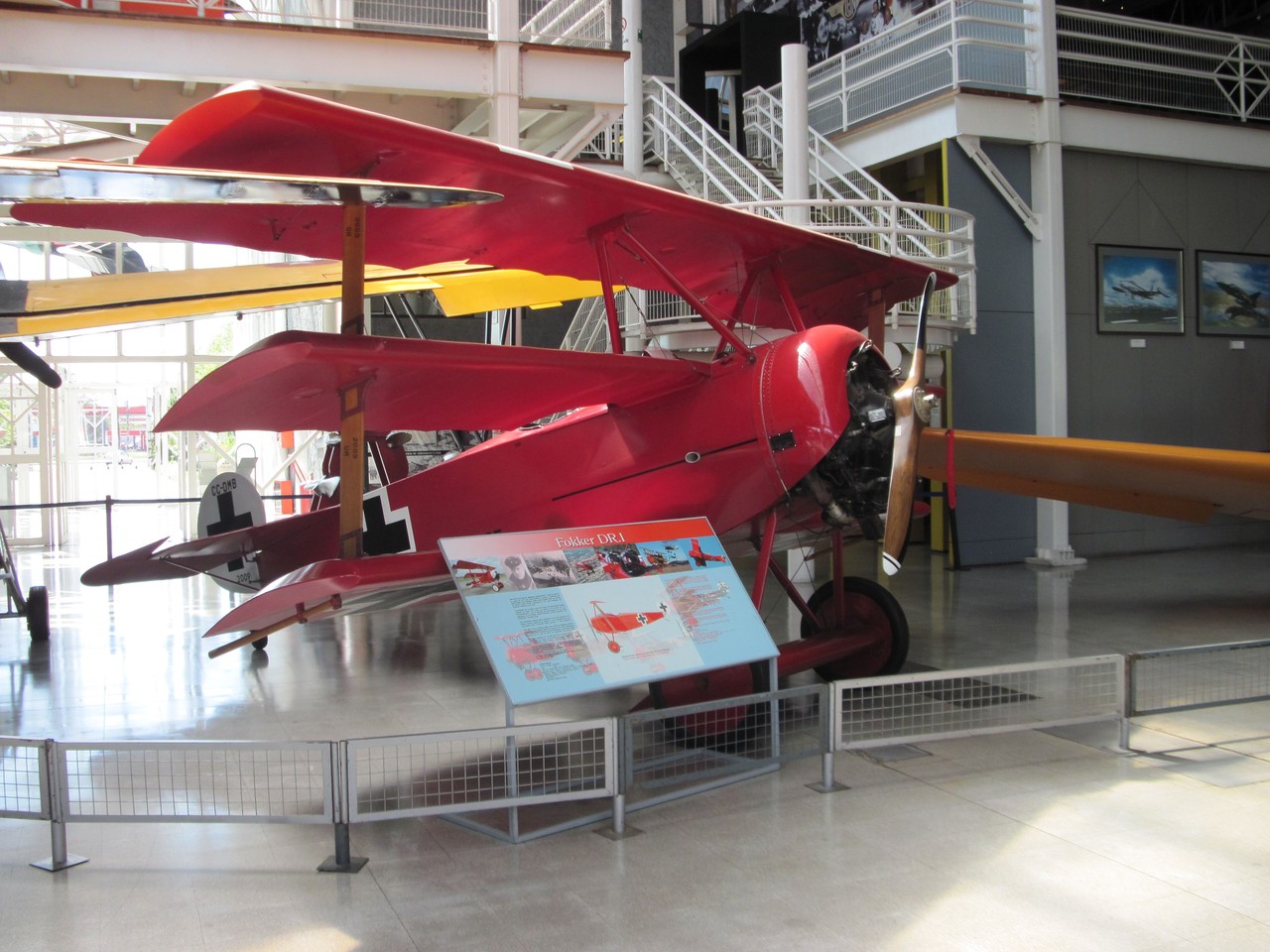
The Dr.I entered frontline service in October 1917, with never more than 171 aircraft operational simultaneously across 14 Jagdstaffeln (fighter squadrons). Despite its brief service window ending in May 1918, pilots flying the triplane accumulated over 600 aerial victories. The aircraft's exceptional climb rate of 1,120 feet per minute and superior maneuverability made it deadly in dogfights, though its maximum speed of only 103 mph left it vulnerable to faster opponents.
Manfred von Richthofen scored his final ten victories in Dr.I serial number 477/17 between April 1 and 21, 1918, before his death on April 21. Werner Voss, flying prototype F.I 103/17, achieved eleven victories in just six weeks during August and September 1917, including his legendary final combat against eight British fighters on September 23.
Design Innovation
Reinhold Platz led Fokker's design team in creating the triplane as a direct response to the captured British Sopwith Triplane's impressive performance. The three cantilever wings eliminated the need for external bracing wires, reducing weight while maximizing lift. This configuration provided the Dr.I with an exceptional service ceiling of 20,000 feet and turning ability that surpassed contemporary fighters.
However, structural weaknesses plagued early production. Wing failures killed two pilots in October 1917, grounding the entire fleet until November 28 when reinforced wings solved the problem. The high drag created by three wing surfaces limited top speed, making the Dr.I increasingly obsolete as newer, faster fighters entered service.
The Manufacturer
Fokker Flugzeug-Werke GmbH operated from Schwerin, Germany, under Dutch aviation pioneer Anthony Fokker's leadership. The company revolutionized fighter aircraft design by developing the interrupter gear that allowed machine guns to fire through spinning propellers without striking the blades. Founded in 1912, the German operation flourished during World War I before facing dismantlement under Armistice terms.
Anthony Fokker smuggled equipment and aircraft designs to the Netherlands in 1919, establishing Fokker Aircraft, which eventually became Fokker N.V. The Dutch company achieved success with civil aircraft like the F.VII and F.27 Friendship before declaring bankruptcy in 1996. Various revival attempts followed, but the original Fokker name disappeared from aviation manufacturing.
Engine and Technical Details
The Oberursel UR.II nine-cylinder rotary engine powered all production Dr.I aircraft. This air-cooled powerplant was essentially a licensed copy of the French Le Rhône 9J, manufactured by Oberursel-Motorenwerke. The engine's 110 horsepower provided adequate performance for 1917 standards, but reliability problems from poor lubrication and overheating limited operational effectiveness.
The single pilot operated two synchronized 7.92mm Spandau MG 08 machine guns mounted above the engine cowling. The aircraft's range of 185 miles restricted operations to local defense and short-range escort missions. Despite these limitations, the Dr.I's remarkable agility made it formidable in the hands of experienced pilots.
Modern Replicas
No original Dr.I aircraft survive in complete form today. Museum fragments exist, but both significant early survivors were destroyed during World War II Allied bombing raids. Richthofen's Dr.I 152/17, displayed in Berlin's Zeughaus museum, was lost during a 1943 bombing attack.
Numerous flying replicas now preserve the triplane's legacy. Dean Husted's DH-1 replica, completed in 1980, flies with the Planes of Fame Air Museum in California. The National Warplane Museum in New York operates JB Allred's 2020-completed replica. Two replicas powered by original Le Rhône engines were constructed for the 1966 film "The Blue Max," with one example registered EI-APW still existing.
Cultural Impact
The Dr.I's association with Manfred von Richthofen elevated it beyond military significance into cultural icon status. Hollywood films, aviation art, and model aircraft have perpetuated the triplane's distinctive silhouette for over a century. The aircraft represents the romantic era of individual aerial combat, when pilot skill mattered more than technological superiority.
Modern replica builders often substitute more reliable radial engines like the Warner Scarab or Continental R-670 for the troublesome Oberursel rotary. These airworthy reproductions carry the ICAO type designation DR1, allowing them to participate in airshows and commemorative events worldwide, ensuring the famous triplane's story continues inspiring new generations of aviation enthusiasts.