
Dominance in European Aviation
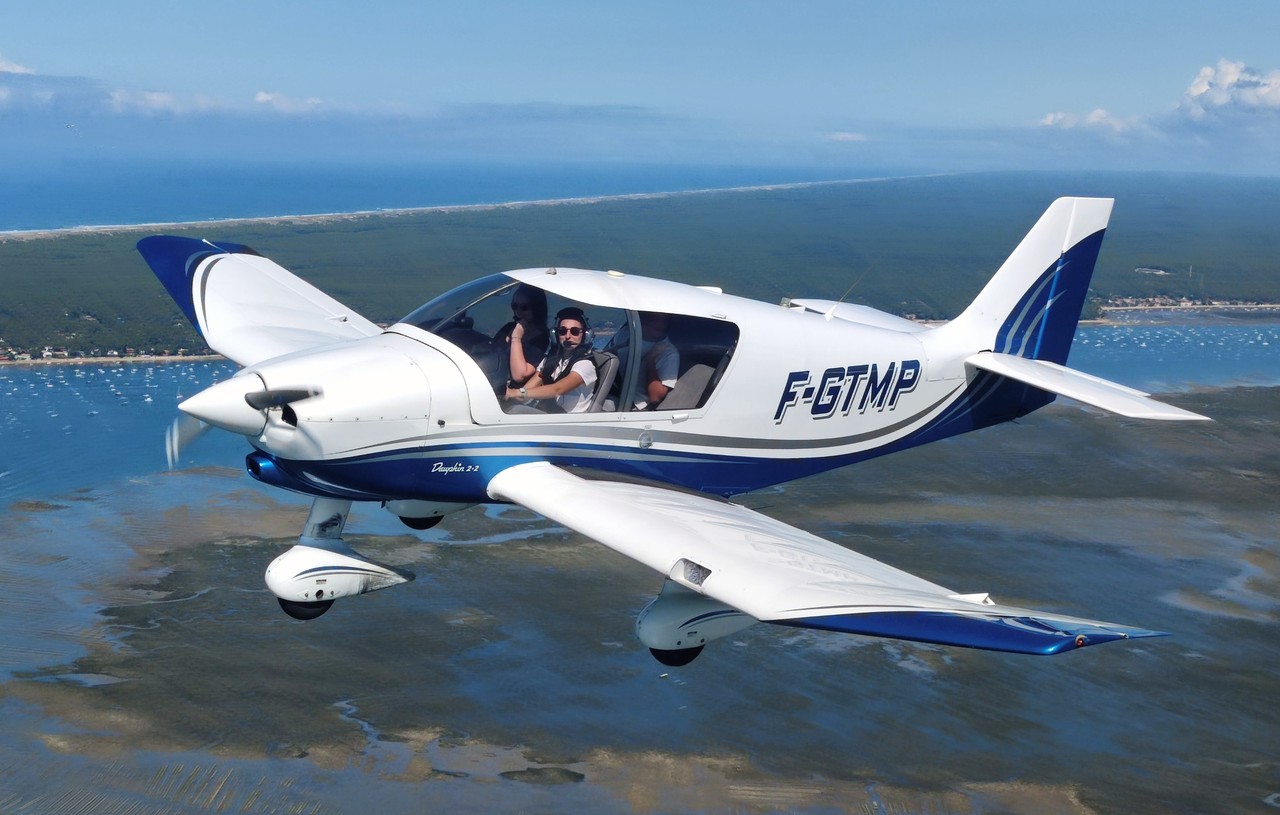
The DR-400's impact on European general aviation proved extraordinary, with the type capturing flying club markets across France and Germany through superior economics and performance. By 1994, over 1,500 aircraft had been delivered, with the wood-and-fabric design outselling metal competitors by a ratio of 10:1. Flying clubs embraced the DR-400 for its combination of low purchase price, excellent range, substantial useful load, and short-field capabilities that allowed operations from smaller airports throughout Europe.
Development and Manufacturing Origins
Centre Est Aéronautique, founded in 1957 by flight instructor Pierre Robin and former Jodel designer Jean Delemontez, developed the DR-400 after Jodel rejected Delemontez's four-seat design concept. Robin sought a comfortable cross-country aircraft for his aero club fleet, leading to the partnership that would transform French general aviation. The original DR-400 Petit Prince prototype took flight on May 15, 1972, followed by serial production beginning May 10, 1972.
Production faced immediate challenges when fire destroyed the Darois factory on April 18, 1972, consuming 17 DR-300s, 13 HR100/200s, and the workshops. Despite this setback, the rebuilt facility resumed operations by July 1972, with 42 DR-400s handcrafted that year. The company later became Avions Robin, continuing operations through 2014 when the DR-400 was replaced by the modernized DR-401.
Technical Innovation and Design
Delemontez incorporated several advanced features into the DR-400, including a forward-sliding glass canopy replacing conventional door arrangements and distinctive cranked dihedral wings with upward-angled outer sections. The tricycle landing gear configuration, derived from the 1966 DR-253 precursor, provided stable ground handling characteristics preferred by training operations.
The DR-400 family utilized various Lycoming four-cylinder piston engines, with the O-360 producing 180 horsepower in the Régent variant and O-320 engines delivering 160 or 155 horsepower in the Dauphin and Major models. A fuel-injected Continental IO-240 powered the prototype DR-400/125i that first flew in 1995, demonstrating improved takeoff performance, climb rate, and reduced noise levels. A unique Porsche PFM 3200-powered variant served as a glider tug between 1987 and 1989.
Performance and Pilot Appeal
Pilots praised the DR-400 for its docile handling characteristics combined with respectable performance figures. The aircraft achieved cruise speeds of 134 knots or higher depending on engine variant, with the DR-250 capable of 140 knots true airspeed. Range capabilities impressed operators, with the DR-250 achieving 680 nautical miles and the Major 80 extending to 1,375 kilometers. The aircraft demonstrated a climb rate of 800 feet per minute and service ceiling exceeding 15,000 feet.
The wood-and-fabric construction, while traditional, provided advantages in repairability and operating costs that metal alternatives could not match. European flying clubs found maintenance straightforward, with familiar construction techniques available at smaller facilities throughout the continent.
Production Variants and Evolution
Robin developed multiple DR-400 variants to serve different market segments. The DR-400-180R Remorqueur, first flying November 6, 1972, specialized in glider towing operations. The DR-400-140 Major followed on November 16, 1972, while the DR-400-108 Dauphin 2+2 made its maiden flight November 24, 1972, becoming the most produced variant before being renamed in 1979. Additional models included the two-seat DR-400-100 Cadet, the DR-400-120 Petit Prince later redesignated as Dauphin, and the Major 80 introduced in 1980.
Legacy and Continuing Influence
Production totaling over 3,000 DR-400 and successor DR-401 aircraft established the design as one of Europe's most successful general aviation types. The aircraft proved wood-and-fabric construction remained viable in an era dominated by metal and composite designs, with many examples continuing active service throughout Europe as of 2017. Sales revenue from the DR-400 funded Robin's other development projects for decades, including unsuccessful attempts at metal construction with the HR100/285 and composite technology with the ATL.
The DR-401 successor entered production maintaining the basic DR-400 configuration while incorporating modern avionics and comfort improvements. Robin Aircraft continues operations from Darois, producing 2-3 DR-401s monthly as of 2017, testament to the enduring appeal of the original DR-400 design philosophy in contemporary general aviation markets.