
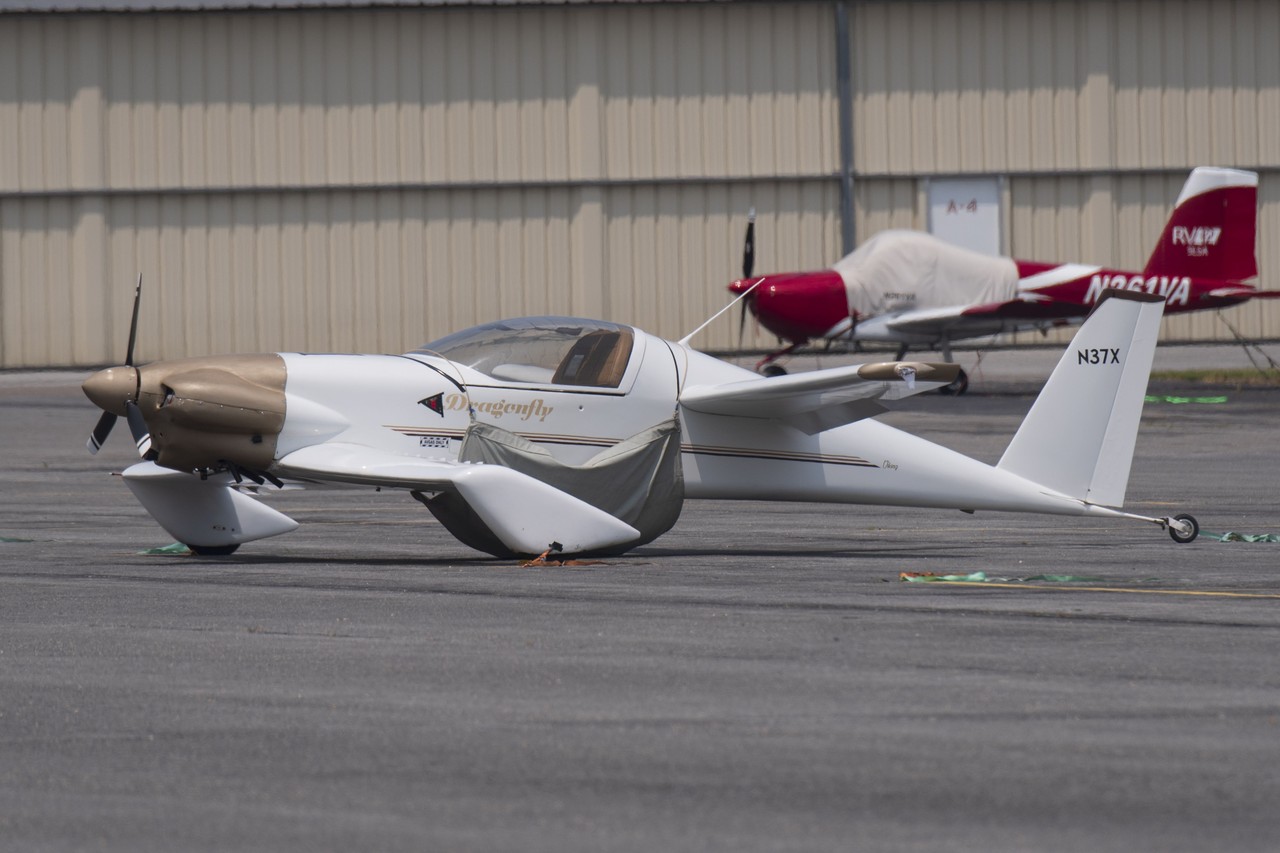
Service History
The Dragon Fly carved out a unique niche in recreational aviation by solving a fundamental problem for hang gliding enthusiasts. In regions lacking suitable hills or mountains for traditional foot-launched hang gliding, the aircraft provided an essential service as a specialized tug. Since entering production in 1990, the type has enabled hang gliding operations across flat terrain worldwide, particularly in Australia and the United States where many hang gliding clubs adopted the design.
The aircraft's exceptional low-speed performance, with a power-off stall speed of just 17 knots (31 kilometers per hour), made it ideally suited for towing operations that required precise speed control and rapid climb capability. This performance envelope allowed pilots to safely tow hang gliders and ultralight sailplanes to release altitude while maintaining the slow airspeeds necessary for the towed aircraft.
The Manufacturer
The Dragon Fly emerged from Moyes Microlights, an Australian company based in Botany, New South Wales, that had specialized in hang gliding equipment since the late 1980s. The company's deep understanding of hang gliding requirements directly influenced the aircraft's design philosophy and performance parameters.
Through the 1990s, the company evolved into Bailey-Moyes Microlights as part of a joint venture arrangement, before eventually operating under the LiteFlite name. This continuity of ownership and focus allowed for consistent development and production of the Dragon Fly design over more than three decades.
Expansion into the American market came through Pitman Air in Red Bluff, California, which obtained approval to manufacture the aircraft as a Federal Aviation Administration special light-sport aircraft. This certification opened the United States market and demonstrated the design's compliance with modern safety standards.
Technical Design and Innovations
The Dragon Fly's design team at Moyes Microlights developed the aircraft in the late 1980s with specific operational requirements driving every design decision. The high-wing configuration with 170 square feet of wing area provided the low-speed handling characteristics essential for towing operations, while V-strut bracing kept structural weight to a minimum.
The tandem open cockpit arrangement placed the pilot in front with space for a trainee or passenger in the rear seat. For solo towing operations, the rear seat could be completely removed, improving weight and balance. Dual controls throughout the cockpit enabled the aircraft to serve as a training platform for new tug pilots.
A particularly innovative feature was the extended rudder post that served as the primary tow point. This steel cable-supported attachment point provided the structural strength necessary for towing operations while positioning the tow line attachment in an optimal location for directional control during the towing phase.
The airframe utilized Dacron covering over the wing and tail surfaces, reducing weight while providing adequate strength for the aircraft's operational envelope. The conventional landing gear configuration ensured compatibility with basic airfield facilities.
Production and Availability
Unlike mass-produced aircraft, the Dragon Fly has been manufactured in relatively small numbers since 1990, with exact production figures remaining undisclosed. The aircraft has been available both as completed aircraft and as kit versions requiring approximately 200 hours of assembly time.
This kit availability made the aircraft accessible to recreational builders and small operators who might not have the budget for a completed aircraft. The 200-hour assembly time represented a reasonable commitment for most builders while allowing for cost savings and intimate familiarity with the aircraft's systems.
Legacy and Current Operations
More than three decades after entering production, the Dragon Fly remains in continuous manufacture, testament to the enduring need for specialized towing aircraft in the hang gliding community. The design has achieved iconic status within recreational aviation circles, particularly among hang gliding enthusiasts who recognize its contribution to expanding the sport beyond mountainous regions.
The aircraft's Federal Aviation Administration approval as a special light-sport aircraft validated the design's safety and performance characteristics while opening new markets. This certification path became increasingly important as aviation regulations evolved to accommodate recreational aviation activities.
Today, Dragon Fly aircraft continue operating at hang gliding facilities worldwide, their distinctive high-wing silhouette and extended rudder post making them immediately recognizable to participants in the sport. The ongoing production ensures that replacement aircraft and spare parts remain available to operators, supporting the long-term viability of hang gliding operations that depend on reliable towing services.