
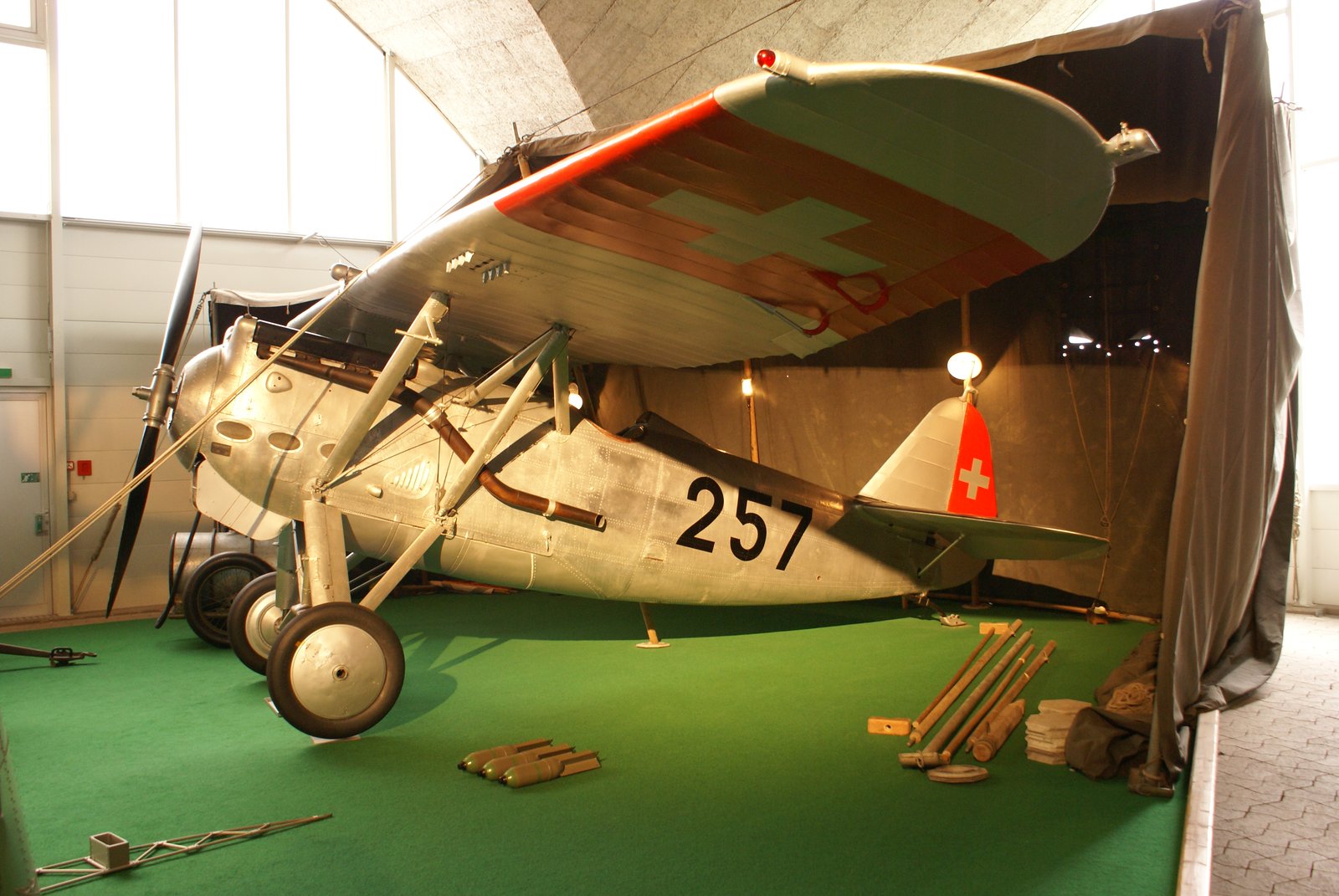
Design and Development
The Dewoitine D.27 was designed by Émile Dewoitine and his team at Constructions Aéronautiques Émile Dewoitine (CAED). The prototype first flew in 1928, introducing a parasol-wing monoplane configuration. This layout was intended to provide superior visibility and maneuverability compared to the biplanes prevalent during the era. The aircraft featured an advanced all-metal structure, consisting of a metal fuselage and wing frame, with fabric covering applied to certain surfaces. To balance aerodynamic efficiency with mechanical simplicity, the D.27 utilized a fixed, spatted undercarriage.
Production and Manufacturing
Initial production of the D.27 was limited in France, with original prototypes and small-scale series produced by CAED, largely at Toulouse. Additional licensed assembly was performed by Société Lioré et Olivier at their plants in Rochefort and Villeneuve-Saint-Georges. A small number of aircraft were also license-built by I.A.R. Brașov in Romania.
The most significant production run occurred in Switzerland, where the D.27 fighter (and the related D.26 trainer) was manufactured under license starting around 1931 and continuing into the early to mid-1930s. Swiss production was carried out by Eidgenössische Konstruktionswerkstätte (EKW) at Thun and Ateliers Aéronautiques de Suisse (AAS) at Altenrhein. While exact start and end manufacturing years by plant are not precisely given, it is estimated that about 66 aircraft were produced under license in Switzerland. Overall, dozens of D.27-family aircraft were built, with Swiss production making up the majority.
Technical Specifications and Service
The D.27 was powered by a liquid-cooled V-12 piston engine, typically the Hispano-Suiza 12Mb, producing approximately 500–530 hp. The aircraft had a maximum speed of roughly 260–280 km/h and a service ceiling of approximately 7,000–8,000 m. Standard armament consisted of two fixed forward-firing machine guns synchronized to fire through the propeller arc.
In military service, the D.27 was operated by France, Romania, and Switzerland. The Swiss Air Force was the primary operator, utilizing the aircraft in front-line service until 1940, after which they were relegated to secondary and training roles during the early years of World War II. Despite its utility, the D.27 was considered obsolete by the start of the second World War.