
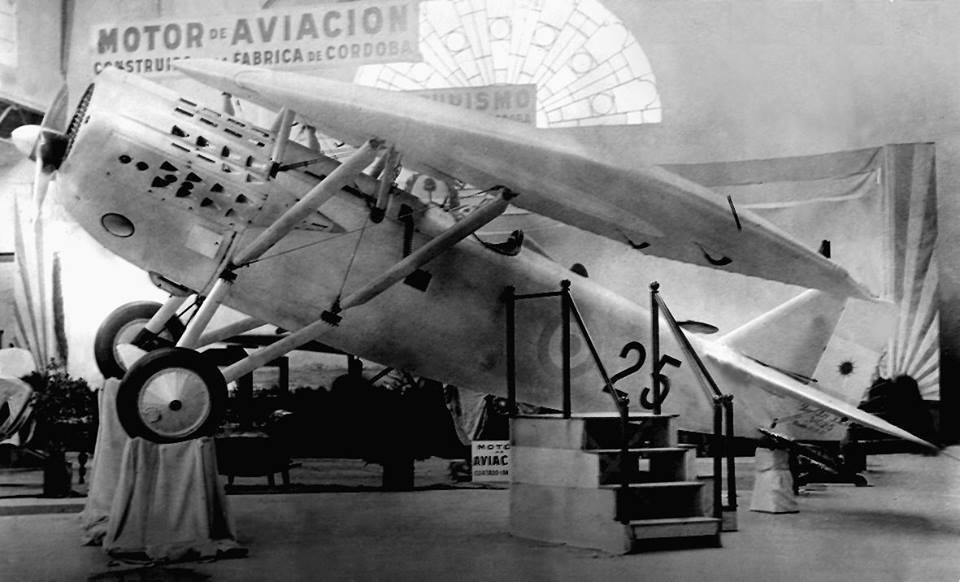
Production and Manufacturer History
The Dewoitine D.21 was developed by the Société des Avions Dewoitine, a French firm founded by Émile Dewoitine in 1920. Emerging in the late 1920s, the D.21 was part of a series of parasol fighters that established the company as a significant designer of French combat aircraft. While the original production run occurred in France during the late 1920s, the type gained international traction through license production. In Argentina, the Fábrica Militar de Aviones (FMA) produced the aircraft between 1929 and 1932. Argentina acquired a total of 45 aircraft, consisting of seven built in France and 38 manufactured under license. Additionally, 25 aircraft were license-built for the Czechoslovakian air force. Other operators included Turkey, Switzerland, and Paraguay, though specific production numbers for these nations are not documented.
Design and Technical Specifications
Designed under the leadership of Émile Dewoitine, the D.21 featured a fixed-undercarriage, open-cockpit parasol-wing monoplane configuration. The D.21 C.1 variant was powered by a liquid-cooled piston engine, specifically the Hispano-Suiza HS-50. In the Czechoslovakian license-built versions, this was replaced by the Škoda L, a license-produced version of the HS-50.
Technically, the D.21 C.1 possessed a wingspan of 9.70 meters, a length of 7.35 meters, and a wing area of 18.2 square meters. It had an empty weight of 1,012 kg and a gross weight of 1,492 kg. For armament, the standard fighter configuration included two fuselage-mounted synchronized 7.7 mm Vickers machine guns, with the option to add two 7.5 mm Darne machine guns located in the wing center section.
Performance and Service History
The D.21 C.1 achieved a maximum speed of 267 km/h at sea level, with speeds gradually decreasing to 250 km/h at an altitude of 5,000 meters. It had a range of 400 km and a service ceiling of 8,991 meters. The aircraft could climb to 4,000 meters in 8 minutes and 4 seconds, maintaining a rate of climb of 10 m/s.
In military service, the D.21 operated as a fighter for several nations. In Argentina, it served with both the Argentine Naval Aviation and the Army Aviation Service. It was also utilized by the Czechoslovakian Gendarmerie, the Turkish Air Force, and the Paraguayan Air Force. Although the aircraft became obsolete by the start of World War II, it remained in service in some capacities until 1941. Due to the nationalization of the French aircraft industry in 1936–1937, Société des Avions Dewoitine was absorbed into the state-run Société nationale des constructions aéronautiques du Midi (SNCAM), ending its existence as an independent entity.