
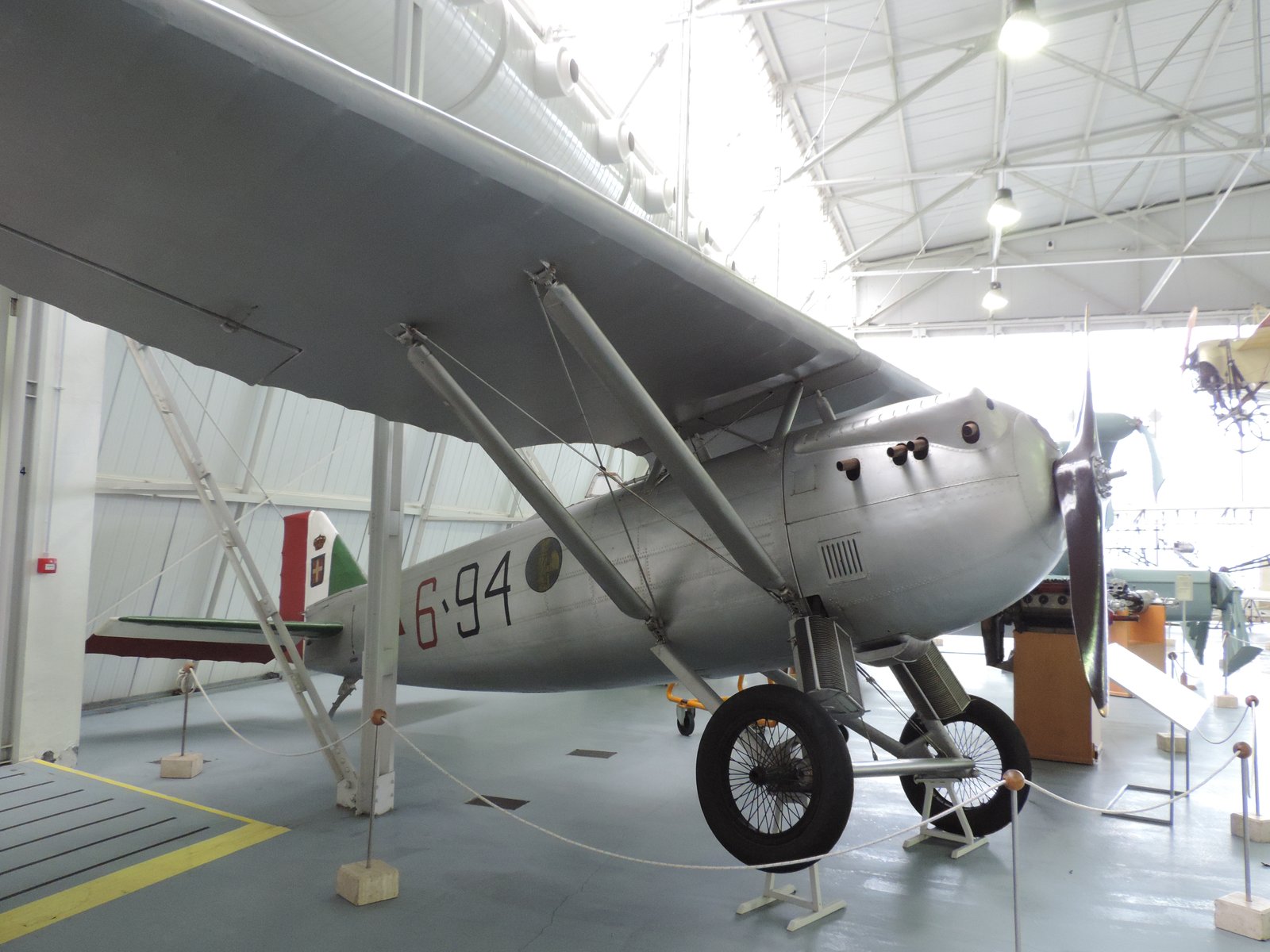
Designed by Émile Dewoitine, the Dewoitine D.1 was developed to meet the French 1921 C.1 single-seat fighter requirement. The aircraft was innovative for its era, featuring an all-metal structure and a single-bay parasol monoplane configuration at a time when the majority of front-line fighters were constructed from wood and fabric in biplane layouts. The prototype first took to the air on 18 November 1922.
Production of the D.1 occurred during the mid-1920s by Société des avions Dewoitine, a firm founded by Émile Dewoitine in Toulouse. While the exact total of French-built airframes is not documented, the aircraft saw extensive export and license production. Yugoslavia purchased 79 aircraft (D.1bis and D.1ter variants), and Italy acquired one D.1bis before producing 112 license-built versions under the designation Ansaldo AC.2 via Gio. Ansaldo & C. Other smaller acquisitions included two D.1bis for Switzerland, and one each for Japan and Czechoslovakia.
Technically, the D.1 was powered by a liquid-cooled Hispano-Suiza V-12 piston engine. While specific horsepower ratings are not documented in the available records, the aircraft achieved a maximum speed of 255 km/h. For armament, it was equipped with two 7.7 mm Vickers machine guns mounted in the fuselage and synchronized to fire through the propeller arc.
In military service, the D.1 was utilized by several nations as a front-line fighter. The French Navy (Marine Nationale) operated 30 D.1ter aircraft, with at least 15 assigned to Escadrille 7C1. These aircraft operated from the aircraft carrier Béarn, marking an early application of metal monoplanes in carrier-borne operations. Other naval units included Escadrille 6C3. Despite its international adoption, the D.1 was obsolete by the mid-1930s and did not see documented combat in major conflicts, having been superseded by later Dewoitine models such as the D.500 and D.520.
The legacy of the D.1 lies in its role as the foundation for Dewoitine's fighter lineage. The company remained independent until 1936, when it was nationalized by the French government and absorbed into the state-owned holding SNCAM. No surviving airframes or specific museum examples are currently documented.