
Service History
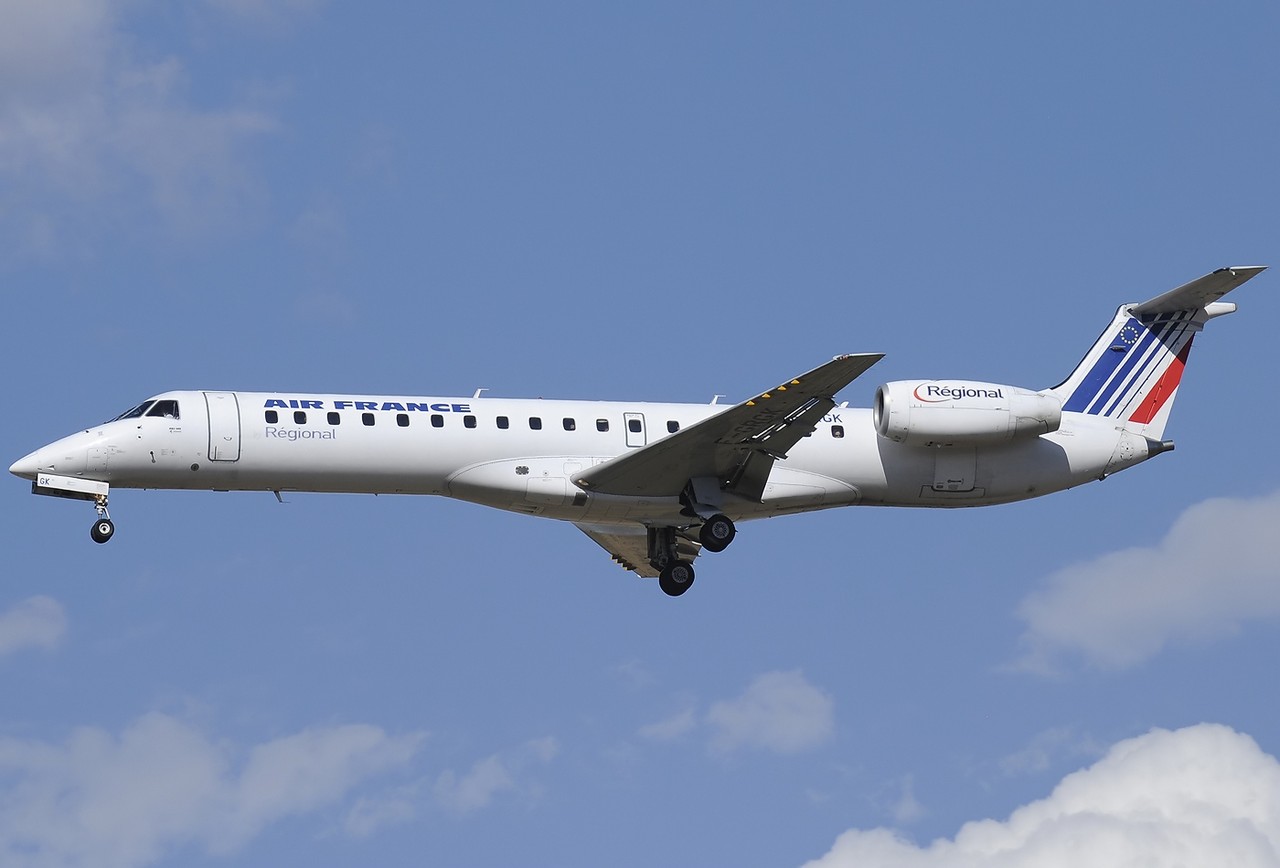
The ERJ-140 carved out a significant niche in North American regional aviation, particularly through its adoption by American Eagle, which operated multiple examples including aircraft registered N802AE, N803AE, and N804AE delivered between 2014 and 2023. The aircraft competed directly with Bombardier's CRJ series in the 44-seat market segment, offering airlines an efficient solution for thin routes where larger jets proved uneconomical. Operating from regional airports with shorter runways, the ERJ-140 enabled carriers to provide jet service to smaller communities previously served only by turboprops.
The Manufacturer
Embraer S.A. emerged from humble beginnings as Empresa Brasileira de Aeronáutica, established by the Brazilian government in 1969. The company faced near-bankruptcy in the 1990s before privatization in 1994 revitalized its fortunes. The ERJ family, including the ERJ-140, became instrumental in Embraer's recovery and transformation into the world's third-largest commercial aircraft manufacturer. Operating from its headquarters in São José dos Campos, Brazil, Embraer produced 1,231 aircraft across the entire ERJ family from 1992 to 2020, with additional manufacturing occurring in China from 2003 to 2016.
Engine & Technical Details
Powering the ERJ-140 were two Rolls-Royce AE 3007 turbofan engines, products of the company's Allison division. These rear-mounted powerplants represented a significant design evolution from Embraer's initial overwing engine configuration, ultimately providing better ground clearance and maintenance access. The engines enabled the aircraft to achieve a service ceiling of 37,000 feet while maintaining fuel efficiency crucial for regional operations. The cockpit accommodated two pilots using systems derived from larger commercial aircraft, reducing training costs for airlines transitioning crews between aircraft types.
Design Innovation
Embraer's engineering team developed the ERJ-140 as a stretched derivative of their successful EMB-120 Brasilia turboprop, transitioning from propeller power to jet propulsion. The design incorporated swept-back wings optimized for the aircraft's operating envelope and a three-abreast passenger cabin configuration that maximized comfort within the constraints of a narrow-body fuselage. Initial design work began in the early 1990s, with the first EMB-145 prototype achieving its maiden flight on August 11, 1995, leading to the ERJ-140 variant introduction in 1999.
Pilot Perspective
Regional airline pilots appreciated the ERJ-140's jet performance characteristics, which eliminated many limitations associated with turboprop aircraft in adverse weather conditions. The aircraft's 530 mph cruise speed enabled faster sector times compared to competing turboprops, while its 2,000 nautical mile range provided operational flexibility for multi-leg routes. Flight crews noted the aircraft's modern avionics suite and handling qualities that bridged the gap between smaller regional aircraft and mainline jets, making it an attractive stepping stone for pilot career progression.
Production & Legacy
Production of the ERJ-140 extended from 1999 through 2020 as part of Embraer's broader ERJ family manufacturing program. While exact production numbers for the ERJ-140 variant remain unspecified, the aircraft contributed to Embraer's dominance in the 37-to-50-seat regional jet market segment. As of 2023, at least five ERJ-140 aircraft remain in active service, including recent deliveries such as N530CN and N531CN manufactured in 2023, demonstrating the type's continued relevance in niche markets.
The ERJ-140's success established Embraer as a formidable competitor to established manufacturers like Bombardier and paved the way for the company's subsequent E-Jet family development. Though production ceased in 2020, the aircraft's operational efficiency and passenger comfort standards influenced regional aviation expectations and contributed to the broader transformation of short-haul air travel from turboprop to jet service across numerous routes worldwide.