
Competition Dominance
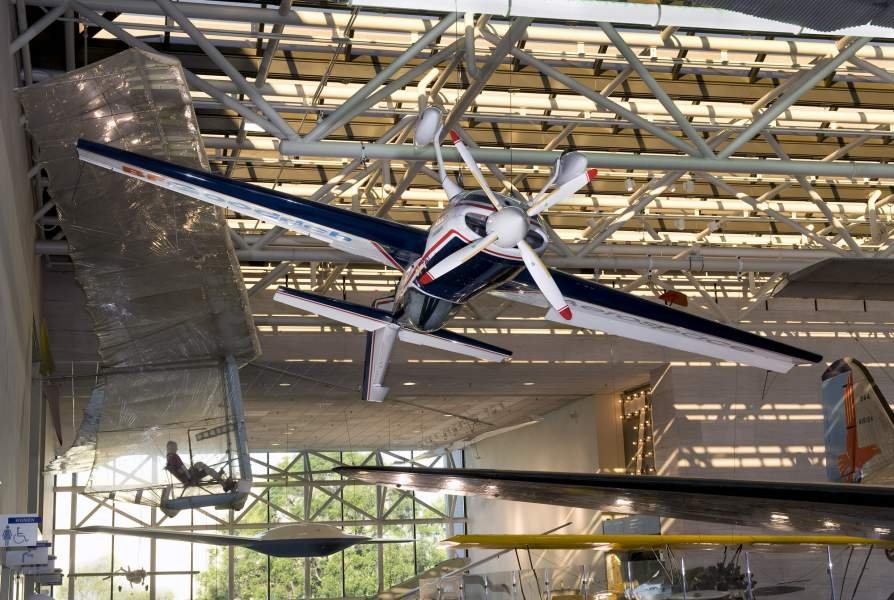
The EA-260's most significant achievement came through Patty Wagstaff's historic victories at the U.S. National Aerobatic Championship. Wagstaff, who earned her private pilot license in 1979, flew Walter Extra's personal prototype to claim championship titles in 1991 and 1992, breaking a longstanding gender barrier in competitive aerobatics. She served as a six-time member of the U.S. Aerobatic Team until retiring from competition in 1996, later adding a third championship in 1993 flying an Extra 300S.
The Designer and Manufacturer
Extra Flugzeugbau emerged from Walter Extra's personal quest to build the ultimate aerobatic aircraft. Beginning as a one-man experimental operation in the 1980s, the company reflected Extra's evolution from modifying existing aircraft to creating original designs. In 1980, Extra flew a modified Pitts Special in the World Championship before completing his first Extra 230 in 1981, featuring a wood wing, four-cylinder 230-horsepower engine, and two-blade propeller. The EA-260 followed in 1987 as a more powerful successor with 60 percent more power and an 18 percent weight increase over the Extra 230.
Engineering Excellence
The EA-260 demonstrated innovative construction combining traditional and advanced materials. Walter Extra designed a welded steel tube fuselage covered in fabric, paired with a carbon-glass hybrid composite empennage and bubble canopy. The monocoque wings utilized Polish pine wood spars with birch plywood skins, while the symmetrical airfoil mounted at zero angle of incidence provided equal performance in upright and inverted flight. Fixed taildragger landing gear featured composite main legs and fiberglass wheel pants.
Powerplant Performance
The Lycoming AEIO-540-D4A5 six-cylinder engine delivered 240 kilowatts (320 horsepower) through a four-bladed MT constant-speed composite propeller. This fuel-injected horizontally-opposed piston engine provided reliable power across altitude ranges, crucial for demanding aerobatic operations. The powerplant enabled the EA-260 to achieve a maximum speed of 252 mph, climb at 4,000 feet per minute, and maintain its remarkable 360-degree-per-second roll rate.
Operational Characteristics
Pilots praised the EA-260's precise handling and exceptional performance envelope. The aircraft's empty weight of 1,151 pounds and gross weight of 1,715 pounds provided an optimal power-to-weight ratio for aerobatic maneuvers. Its 219-knot maximum speed and 4,000-foot-per-minute climb rate established new benchmarks for single-seat aerobatic aircraft design in the late 1980s.
Acquisition Story
Wagstaff's acquisition of the prototype involved an unusual transaction. She had originally ordered an aircraft similar to Walter Extra's personal EA-260, but when the delivered aircraft proved larger and different from expectations, she declined it. Instead, she negotiated a deal to trade both the new plane and her existing EA-230 for Walter Extra's personal prototype, securing the aircraft that would carry her to championship victories.
Limited Production Legacy
Extra Flugzeugbau produced only four EA-260 aircraft by 2021, making it one of the rarest high-performance aerobatic aircraft ever built. Production began in 1986 with the prototype's first flight, but rather than traditional manufacturing, each aircraft represented hand-built, bespoke construction. As of 2021, the four existing EA-260s were registered with aviation authorities in the United States, United Kingdom, and France.
Museum Recognition
Walter Extra's personal prototype EA-260, the same aircraft flown by Patty Wagstaff to her championship victories, was donated to the Smithsonian Institution's National Air and Space Museum in Washington, DC. The aircraft remains on display in the museum's West End, recognized as a one-of-a-kind masterpiece of aerobatic aircraft design. This preservation ensures future generations can study the engineering innovations that established Extra Flugzeugbau's reputation for excellence.
Continuing Influence
The EA-260's design philosophy of combining traditional construction methods with advanced composite materials influenced subsequent Extra aircraft models. The company continues operations today, producing aerobatic and general aviation aircraft including the EA-300L, EA-400, and EA-500. The EA-260's exceptional performance characteristics and championship pedigree established benchmarks that influenced competitive aerobatic aircraft design for decades following its introduction.