
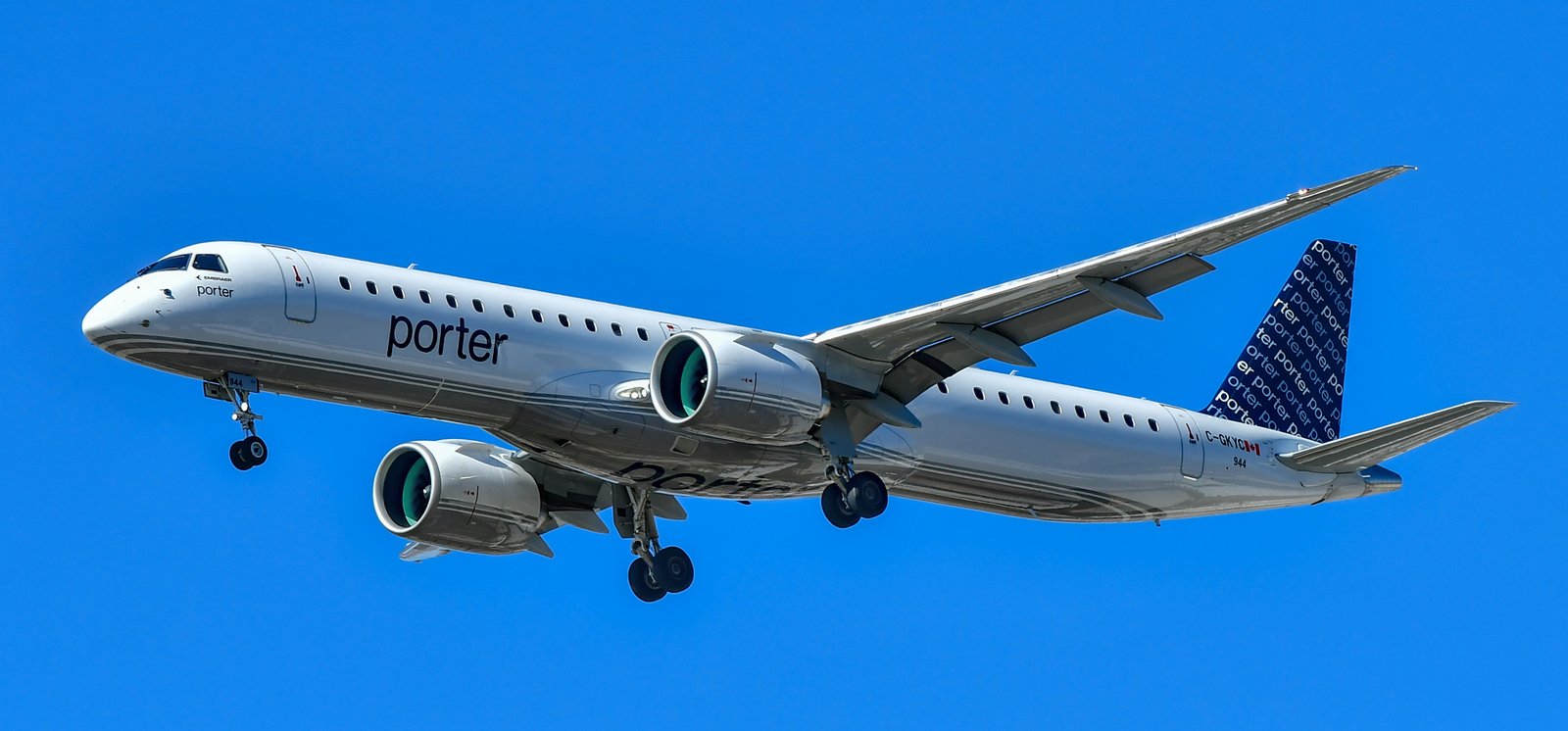
Commercial Dominance
The ERJ-190-400 quickly established itself as a game-changer in regional aviation following its service entry on April 24, 2018, when launch customer Widerøe deployed the aircraft on Norway's Bergen-Tromsø route. Within its first four months of operation, early aircraft achieved an impressive 99.35% dispatch reliability over 413 flight hours, surpassing the reliability benchmarks set by the original E-Jet family. By 2024, the type served multiple airlines across continents, from Air Astana in Kazakhstan to GX Airlines in China, demonstrating its global appeal for regional operators seeking efficiency and passenger comfort.
The Brazilian Aerospace Giant
Embraer S.A., founded in 1969 as a state-owned enterprise, evolved into Brazil's premier aircraft manufacturer through decades of innovation and strategic partnerships. The company survived near-bankruptcy in the 1990s through privatization in 1994, subsequently launching the revolutionary E-Jet family in 1999. Boeing's attempted acquisition of 80% of Embraer's commercial aviation division between 2018-2020 ultimately collapsed, leaving the São José dos Campos-based manufacturer independent and focused on advancing regional aviation technology. Today, Embraer continues operations under its original name, maintaining its position as a global leader in aircraft manufacturing.
Engineering Excellence
Embraer's internal engineering teams designed the ERJ-190-400 with specific objectives: achieve 25% superior fuel efficiency compared to first-generation E-Jets while extending operational range and maintaining compatibility with challenging airports. The design process culminated in Brazilian, American, and European certification on February 28, 2018, following extensive testing that included 46,000 ground hours and 2,200 flight hours. Key innovations include enlarged wings spanning 35.10 meters, optimized aerodynamics, and integration with Pratt & Whitney's revolutionary geared turbofan technology.
Powerplant Innovation
Two Pratt & Whitney PW1900G geared turbofan engines power the ERJ-190-400, representing cutting-edge propulsion technology manufactured by RTX Corporation's Pratt & Whitney division. These engines enable the aircraft's remarkable fuel savings through a geared fan design that reduces both consumption and noise emissions. Early PW1900G engines required combustor life retrofits, but subsequent improvements achieved 99.5% reliability targets by the fourth year of service, supporting ETOPS 120 approval by 2024.
Operational Capabilities
The ERJ-190-400 operates with a two-pilot crew configuration, accommodating passenger loads ranging from 136 in single-class layouts to 146 in high-density configurations. Its 2,880 nautical mile range enables medium-haul regional routes previously dominated by larger narrow-body aircraft, while specialized capabilities include steep approach certification for challenging airports like London City Airport. The first E195-E2 landed at London City Airport on July 22, 2022, with full EASA certification following in November 2023.
Service Milestones
Azul Brazilian Airlines received its first ERJ-190-400 on September 12, 2019, delivered through AerCap leasing in a 136-seat configuration, marking the type's expansion into South American markets. Royal Jordanian joined the operator community in 2023 with aircraft including JY-REA, while Nordic Aviation Capital took delivery of additional units in 2024. These deliveries demonstrate continued production momentum at Embraer's São José dos Campos facility, where manufacturing operations maintain steady output schedules.
Legacy and Future
As of 2024, dozens of ERJ-190-400 aircraft remain active in commercial service, with recent production examples including units with manufacturing serial numbers 19020129 and 19020144 delivered to Royal Jordanian. The aircraft's cultural significance extends beyond operational statistics, representing sustainable aviation advancement through reduced emissions and enhanced efficiency. While no dedicated freighter variant exists for the ERJ-190-400, Embraer's related E190F cargo aircraft achieved first flight in April 2024, indicating potential future developments in the E2 family's cargo capabilities.