
Service History
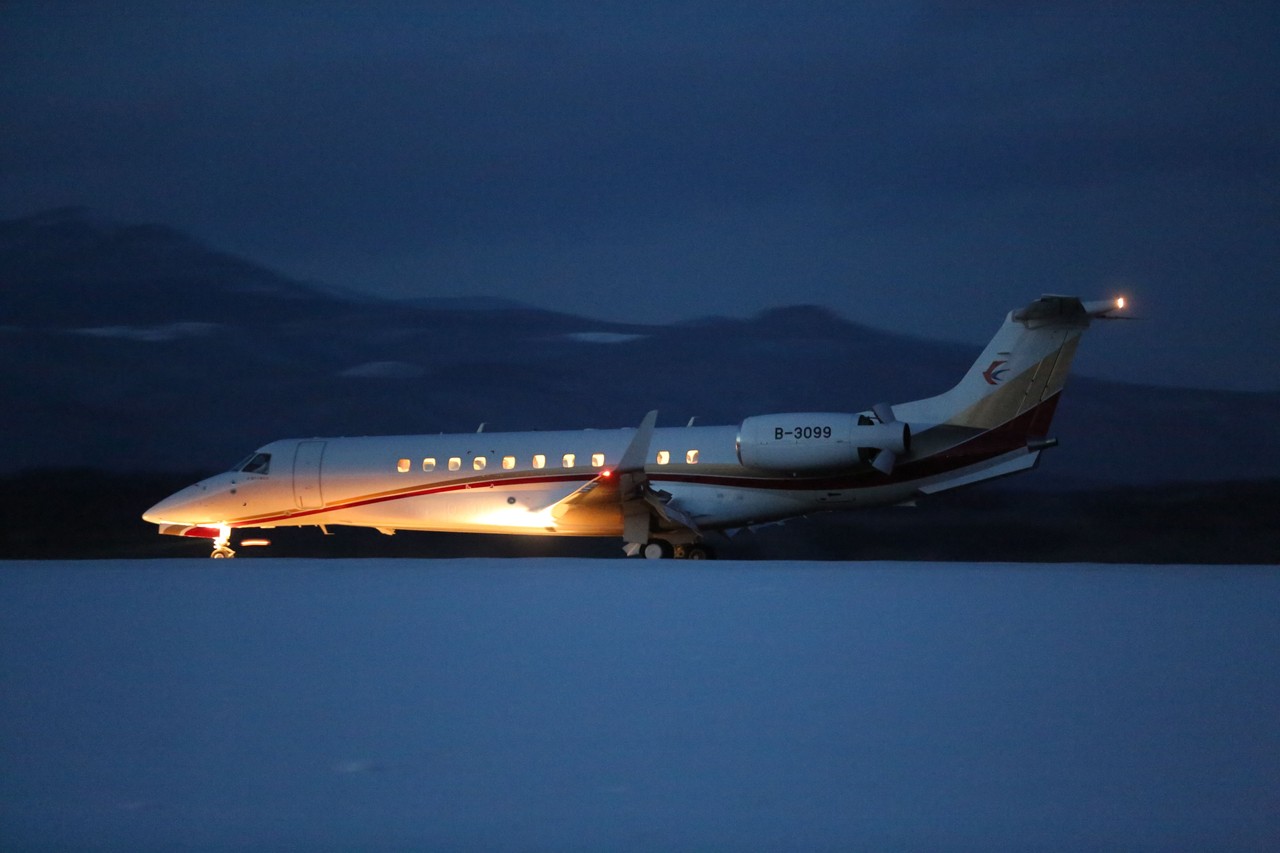
The Legacy quickly established itself in the super-midsize business jet market following its certification by Brazil's CTA on December 10, 2001, followed by European JAA approval on July 9, 2002, and FAA certification on August 23, 2002. Swift Aviation of Phoenix, Arizona, became the launch customer with an order for 25 aircraft plus 25 options placed in July 2000, demonstrating early market confidence in Embraer's business aviation debut.
The aircraft attracted diverse operators across multiple sectors. Chicago-based Indigo ordered 25 Corporate Shuttle versions with options on 50 more in December 2001, while an unnamed major energy company in Houston, Texas, selected the type for corporate shuttle operations in April 2001. International customers included Sheikh Fahad Al Athel of Saudi Arabia, who took delivery on December 16, 2002, and the Greek Air Force, which ordered one in Executive configuration for December 2001 delivery.
The Manufacturer
Embraer (Empresa Brasileira de Aeronáutica, S.A.), founded in 1969, had established itself as a major regional aircraft manufacturer over 32 years before launching the Legacy. The Brazilian aerospace company had achieved significant success with the EMB-145 regional jetliner, which provided the foundation for the Legacy's development. Embraer remains operational today as one of the world's leading aircraft manufacturers, having expanded from its regional aircraft roots into business aviation, defense, and agricultural aviation sectors.
The company's decision to enter business aviation represented a strategic expansion of its product portfolio, leveraging proven EMB-145 technology and manufacturing expertise to compete in the lucrative corporate jet market.
Engine & Technical Details
The Legacy 650 variant featured twin Rolls-Royce AE3007A2 turbofan engines, each producing 9,020 pounds of thrust. These sophisticated powerplants incorporated advanced technology including a 5:1 bypass ratio, 14-stage high-pressure compressor, 2-stage high-pressure turbine, and 3-stage low-pressure turbine. The AE3007A2 variant distinguished itself with 22 fan blades compared to 24 on earlier models, featuring a 38.5-inch diameter fan with revised Full Authority Digital Engine Control (FADEC) systems.
The aircraft's airframe utilized conventional semi-monocoque construction with stressed aluminum skins, hoop frames, and longitudinal stringers. Advanced composite materials were strategically employed for fairings, primary and secondary control surfaces, and main landing gear doors, optimizing weight distribution and structural integrity.
Design Innovation
Embraer's engineering team transformed the EMB-135 regional jet into a capable business aircraft through strategic modifications including auxiliary fuel tanks, distinctive winglets, and completely redesigned interior configurations. The Legacy 600 could fly 3,200 nautical miles with 10 passengers, while the improved Legacy 650 achieved 3,900 miles with 4 passengers through enhanced fuel capacity and strengthened airframe components.
The aircraft's fuel system incorporated 10,266 liters total capacity with 10,160 liters usable, enabling transcontinental range capabilities that positioned it competitively against established business jet manufacturers.
Performance Characteristics
Operators praised the Legacy for its exceptional dispatch reliability, operational simplicity, and economic efficiency. The aircraft achieved a maximum speed of 450 knots (518 mph) with a service ceiling of 41,000 feet. Direct operating costs were calculated at $1,243 per hour for Executive configuration and $1,162 per hour for Shuttle configuration in 2002 pricing.
The Legacy's performance envelope made it suitable for both corporate shuttle operations with higher passenger loads and executive transport requiring maximum range and luxury accommodations.
Production & Legacy
The Legacy 600 entered production in 2002 and continued through at least 2010, when the improved Legacy 650 first delivered in November 2010. Embraer initially projected a market for 240 aircraft over a ten-year period as of 2002. Executive configuration aircraft were priced at $20.275 million while Shuttle variants cost $16.1 million in 2002 dollars.
The Legacy program successfully established Embraer as a credible business aviation manufacturer, demonstrating the company's ability to adapt its regional aircraft expertise to serve the demanding corporate market. The aircraft's reputation for reliability and operating economy validated Embraer's engineering approach and provided the foundation for subsequent business jet developments including the Phenom and Praetor series.
Today, Legacy aircraft continue serving operators worldwide, representing a significant milestone in both Embraer's corporate evolution and Brazil's emergence as a major aerospace manufacturing nation.