
Operational Dominance
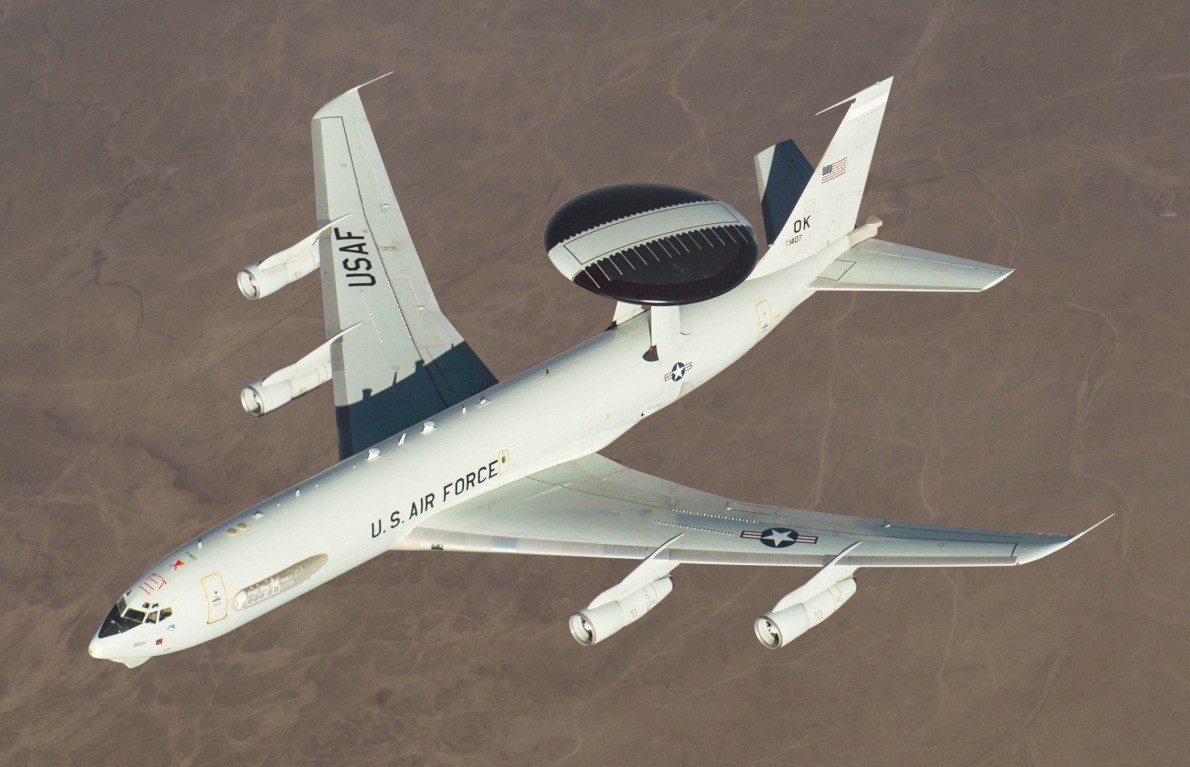
The E-3A Sentry has dominated airborne early warning operations for nearly five decades, serving as the backbone of NATO and allied air defense networks worldwide. Since achieving initial operational capability in April 1978, these aircraft have provided continuous airspace surveillance and command coordination across every major military operation from Desert Storm to ongoing counter-terrorism missions. Of the 68 E-3As produced, 61 remain operational today, distributed among six nations with the United States Air Force operating 31 aircraft, NATO maintaining 17 at Geilenkirchen Air Base in Germany, and smaller fleets serving the United Kingdom, France, Saudi Arabia, and Japan.
Combat Heritage
The Sentry proved its battlefield value during Operation Desert Storm in 1991, where E-3As coordinated over 120,000 coalition sorties while maintaining complete situational awareness of Iraqi airspace. These aircraft directed air-to-air engagements that resulted in 38 confirmed enemy aircraft destroyed without a single coalition air-to-air loss. The platform's combat record extends through Operations Allied Force over Kosovo in 1999, Enduring Freedom in Afghanistan from 2001, Iraqi Freedom beginning in 2003, and NATO's Libyan operations during Odyssey Dawn and Unified Protector in 2011.
Boeing's Military Legacy
The Boeing Company developed the E-3A under the U.S. Air Force's Airborne Warning and Control System program, leveraging their extensive experience with the commercial 707 platform. Founded in 1916 as Pacific Aero Products Company by William Boeing, the company had already established itself as America's premier military aircraft manufacturer through programs like the B-52 Stratofortress and pioneering commercial aviation with the 707 in 1958. Boeing's military aircraft division engineered the Sentry's complex integration of radar, communications, and battle management systems into a proven airframe, creating an entirely new category of warfare capability.
Advanced Propulsion
The CFM56 variant represents a significant advancement over earlier TF33-powered models, utilizing four CFM International CFM56-2A-3 turbofan engines producing 24,000 pounds of thrust each. CFM International, the joint venture between General Electric and France's Safran Aircraft Engines established in 1974, designed the CFM56 family to deliver exceptional reliability with dispatch rates exceeding 99 percent. This powerplant provides the Sentry with a maximum speed of 593 mph and operational range of 4,000 nautical miles, enabling missions lasting over 11 hours with aerial refueling.
Mission Capabilities
The E-3A's AN/APY-1 surveillance radar, housed within the aircraft's distinctive 30-foot diameter rotodome, can simultaneously track more than 600 targets at ranges exceeding 250 nautical miles while directing dozens of friendly aircraft. The mission crew of 13 to 19 specialists operates sophisticated command, control, communications, and intelligence systems from a pressurized cabin configured with radar scopes, communication stations, and battle management workstations. Unlike fighter or bomber aircraft, the Sentry carries no armament, instead serving as an airborne nerve center that multiplies the effectiveness of entire air campaigns.
Technical Excellence
Measuring 152 feet 11 inches in length with a maximum takeoff weight of 335,000 pounds, the E-3A operates at altitudes up to 29,000 feet for optimal radar coverage and fuel efficiency. The aircraft's 21,000-gallon fuel capacity enables 8-hour missions without refueling, though aerial refueling capability extends operational time indefinitely. Flight crews of four manage the complex aircraft systems while mission specialists focus entirely on surveillance and battle management tasks, creating an efficient division of responsibilities that maximizes operational effectiveness.
International Variants
While the basic E-3A serves American and Saudi forces, international customers operate specialized variants including the Royal Air Force's seven E-3D Sentrys and France's four E-3F aircraft. NATO's fleet of 17 E-3As, delivered beginning in January 1982, operates under multinational crews and represents one of the alliance's most successful collaborative programs. Japan operates four similar aircraft built on Boeing 767 airframes, demonstrating the enduring appeal of the airborne early warning concept across different platforms.
Future Service
The U.S. Air Force plans to operate its E-3A fleet until 2035, when the Boeing E-7A Wedgetail will begin replacing the aging Sentrys. Current upgrade programs including the Block 40/45 modifications continue extending the aircraft's service life while improving radar processing and communication capabilities. With 47 years of continuous operations, the E-3A Sentry stands as one of military aviation's most enduring success stories, having transformed aerial warfare through persistent surveillance and command capabilities that remain unmatched in scope and reliability.