
Corporate Aviation Leadership
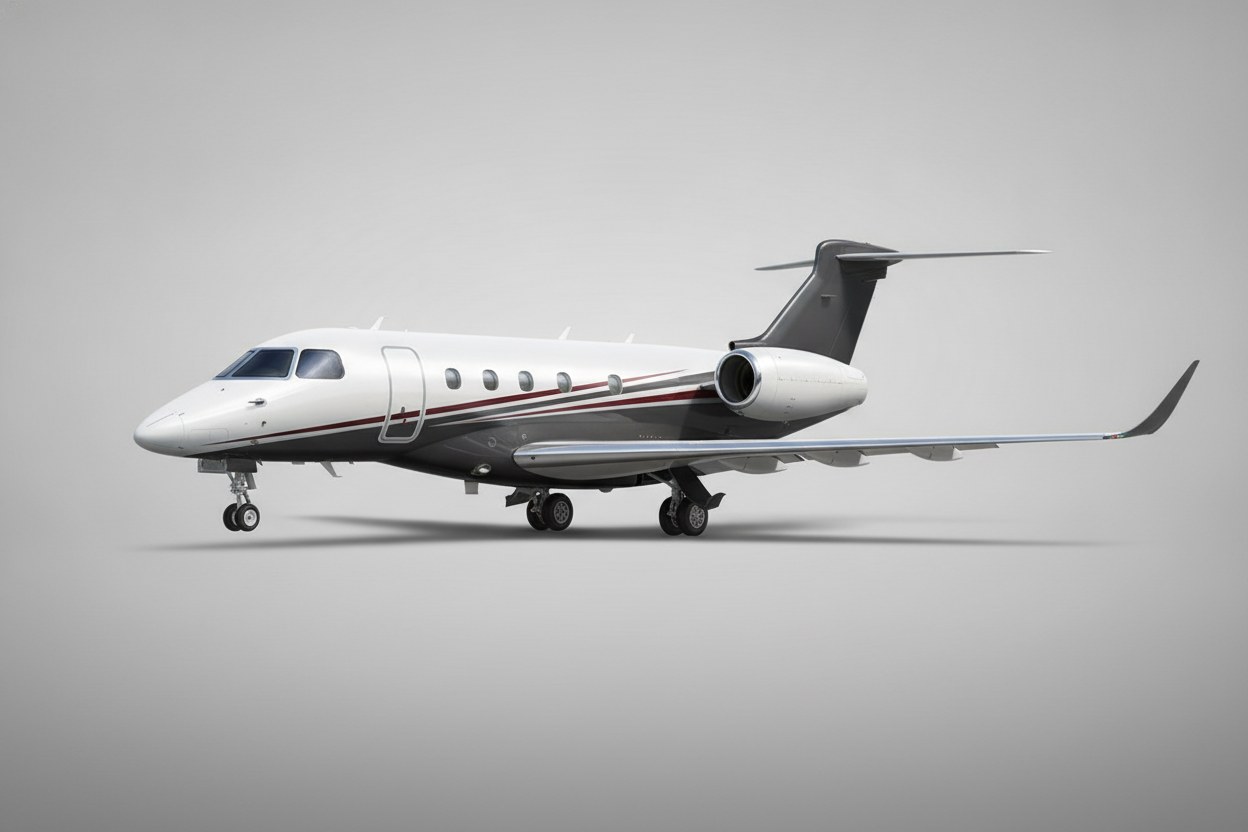
The Praetor 500 has rapidly established itself as the benchmark for midsize business aviation since entering service. With 95 aircraft produced and a total fleet of 136 units as of 2026, the type commands significant market presence in the competitive corporate jet segment. Charter operators and private owners have embraced the aircraft for its combination of transcontinental range and midsize cabin comfort, enabling non-stop flights between major business centers across North America and beyond.
Embraer's Aviation Heritage
Empresa Brasileira de Aeronáutica S.A., founded as Brazil's national aircraft manufacturer, has evolved into a global leader in regional and executive aviation. The company invested $750 million in developing the Legacy program beginning in April 2008, establishing the foundation for what would become the Praetor series. Embraer's manufacturing network spans two continents, with fuselages constructed in Botucatu, Brazil, and wings manufactured in Évora, Portugal. The company expanded production capacity with an assembly facility in Melbourne, Florida, opened on June 2, 2016, capable of producing 72 aircraft annually.
The Praetor 500 emerged from Embraer's systematic evolution of the Legacy 450, which first flew on December 28, 2013, and received Brazilian certification on August 11, 2015, followed by FAA certification on August 31, 2015. Announced on October 14, 2018, at the NBAA convention, the Praetor variants represented a comprehensive upgrade focused on extended range and enhanced capabilities.
Powerplant and Performance
Two Honeywell HTF7500E turbofan engines provide 6,540 pounds of thrust each, delivering exceptional performance across the aircraft's operational envelope. These powerplants enable a maximum cruise speed of 466 knots and a service ceiling of 45,000 feet, with an impressive initial climb rate of 2,050 feet per minute. The engines consume fuel from tanks holding 13,050 pounds, supporting the aircraft's 3,340-nautical-mile range and seven-hour endurance capability.
The Praetor 500 demonstrates remarkable field performance, requiring just 4,222 feet for takeoff and only 2,087 feet for landing, with an approach speed of 115 knots. These characteristics enable operations from shorter runways often inaccessible to larger business jets, expanding destination options for operators.
Advanced Flight Systems
The aircraft incorporates cutting-edge flight deck technology centered on the Rockwell Collins Pro Line Fusion avionics suite. Full fly-by-wire flight controls with side stick configuration provide precise handling characteristics while reducing pilot workload. Active Turbulence Reduction technology automatically adjusts flight controls to minimize passenger discomfort during rough air encounters.
For challenging weather operations, the Praetor 500 features Head-Up Display technology and Enhanced Vision System capability, enabling approaches and landings in low-visibility conditions that would ground conventional aircraft. The maximum operating speed reaches Mach 0.83 between 30,000 and 45,000 feet, positioning the aircraft among the fastest in its category.
Cabin and Operational Capabilities
The pressurized cabin accommodates up to eight passengers in typical corporate configurations, with seven passengers representing the standard layout. Baggage capacity reaches 150 cubic feet, providing substantial storage for extended trips. The cabin maintains comfortable conditions throughout the 45,000-foot service ceiling, ensuring passenger comfort during long-range missions.
Operators appreciate the aircraft's versatility, supporting both scheduled charter services and on-demand corporate transportation. The combination of midsize cabin dimensions with near-heavy-jet range capabilities fills a specific market niche for operators requiring transcontinental capability without the operating costs of larger aircraft.
Production and Market Position
Continued production through 2026 demonstrates sustained market demand, with recent deliveries including aircraft registered as N84GL completed in 2025. The manufacturing process leverages Embraer's established production systems while incorporating advanced materials and construction techniques developed specifically for the Praetor series.
The Praetor 500's market success reflects Embraer's strategic positioning between traditional midsize jets with limited range and heavy jets with excessive capacity for many missions. By extending the proven Legacy 450 design with increased fuel capacity and upgraded systems, Embraer created an aircraft that bridges performance gaps in the business aviation market while maintaining competitive acquisition and operating costs.