
Design Innovation
The American Eaglet emerged from a September 1974 design effort aimed at solving a fundamental problem in soaring flight: the need for ground crews, tow planes, and specialized gliderports. Construction of the prototype began in June 1975, with the aircraft making its maiden flight on November 19, 1975, registered as N101EA. The design preceded the ultralight aviation boom by several years, establishing new possibilities for personal soaring aircraft.
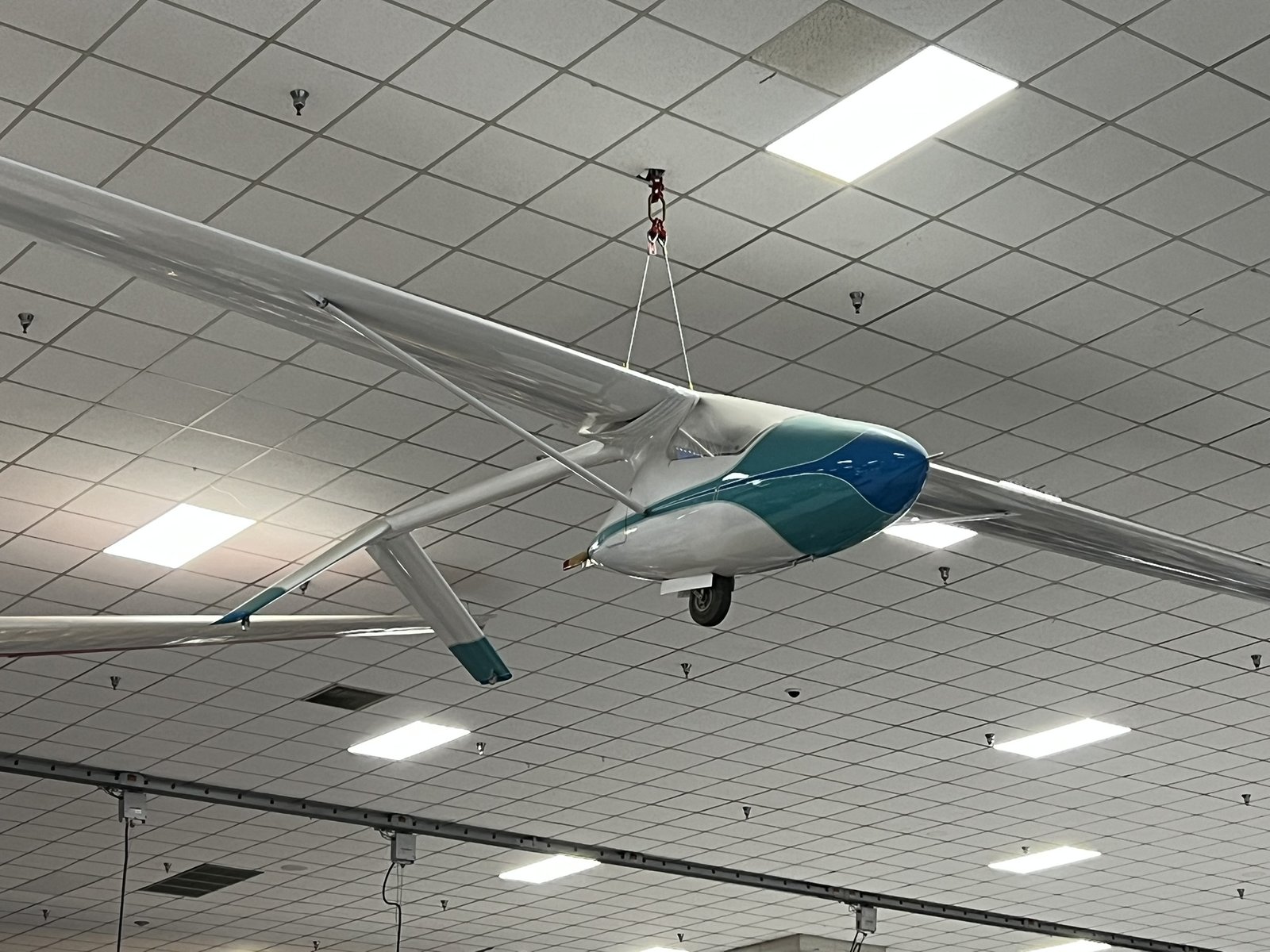
The Eaglet's unconventional configuration combined sailplane efficiency with minimal engine power through careful engineering. Its high-mounted wings spanned 36 feet with 72 square feet of area, supported by struts and built around spruce spars encased in urethane foam with precured fiberglass skins. The distinctive inverted V-tail mounted on a long boom extending from the pod-like cockpit provided directional and pitch control while minimizing weight and drag.
Construction and Materials
AmEagle designed the aircraft specifically for amateur construction, employing a hybrid construction method that simplified homebuilding. The wings and empennage used composite materials advanced for the mid-1970s, while the fuselage consisted of two preformed fiberglass shells pop-riveted to an aluminum tube framework. This approach allowed builders to achieve professional-quality results without extensive metalworking or composite fabrication skills.
The aircraft's 160-pound empty weight represented a breakthrough in motorized sailplane design. With a maximum takeoff weight of 360 pounds, the Eaglet could accommodate pilots up to 200 pounds while carrying its minimal fuel load and maintaining its impressive 5-pound-per-square-foot wing loading.
Engine and Performance
The McCulloch MC-101B single-cylinder, two-stroke engine producing 12.2 horsepower at 8,000 rpm served a specialized role distinct from conventional aircraft powerplants. Mounted in pusher configuration, it drove a two-blade fixed-pitch propeller with folding plastic blades that could be secured during soaring flight to minimize drag. The engine featured recoil starting and was designed specifically for takeoff and thermal-seeking climbs rather than sustained cross-country flight.
Fuel capacity of just half a gallon reflected the engine's intended use pattern. The four-pound fuel load provided sufficient power for one takeoff and climb to 2,000 feet, plus three airborne restarts and climbs from 500 feet back to soaring altitude. This capability eliminated the anxiety of off-field landings that plagued pure sailplane pilots, while the engine's minimal weight penalty preserved the aircraft's 38-mph stall speed and excellent glide characteristics.
Market Success and Production
The Eaglet achieved remarkable commercial success for a specialized homebuilt design. By 1978, AmEagle had sold at least 250 sets of plans with 12 completed aircraft reported flying. The momentum continued through the decade, with 400 kits ordered by early 1980 and at least 26 aircraft registered in the United States alone. This production level exceeded many contemporary homebuilt designs and demonstrated genuine market demand for self-launching sailplanes.
The aircraft's appeal stemmed from its operational independence. Traditional soaring required coordination with ground crews, tow pilots, and access to established gliderports with suitable runway facilities. The Eaglet could operate from short grass strips or even rough fields, launching under its own power and climbing to soaring altitude before shutting down the engine for silent flight.
Technical Specifications and Limits
Engineering analysis showed the Eaglet's impressive performance envelope for such a lightweight aircraft. Its rate of climb of 450 feet per minute at sea level exceeded many conventional light aircraft, while structural limits of +4.4/-2.2 G provided adequate margins for normal soaring flight and mild aerobatics. The 16-foot overall length and 3-foot height allowed hangar storage alongside conventional aircraft.
The aircraft's operational ceiling exceeded most thermal activity, while its glide performance allowed extended soaring flights once engine-assisted climbs located suitable lift. Pilots could restart the engine in flight when thermal activity weakened, climbing back to altitude for continued soaring or returning to their departure point.
Legacy and Influence
The American Eaglet's significance extends beyond its modest production numbers. As the first successful ultralight motorglider, it demonstrated the viability of combining minimal engine power with sailplane efficiency years before the ultralight movement gained momentum. The design principles pioneered in the Eaglet influenced subsequent motorglider development and helped establish the self-launching sailplane category.
The aircraft proved that sophisticated aerodynamic performance could be achieved in an amateur-built design using then-advanced composite construction techniques. Its success encouraged other manufacturers to explore similar configurations and helped legitimize the concept of engine-assisted soaring for recreational pilots seeking independence from traditional gliderport operations.