
Service History
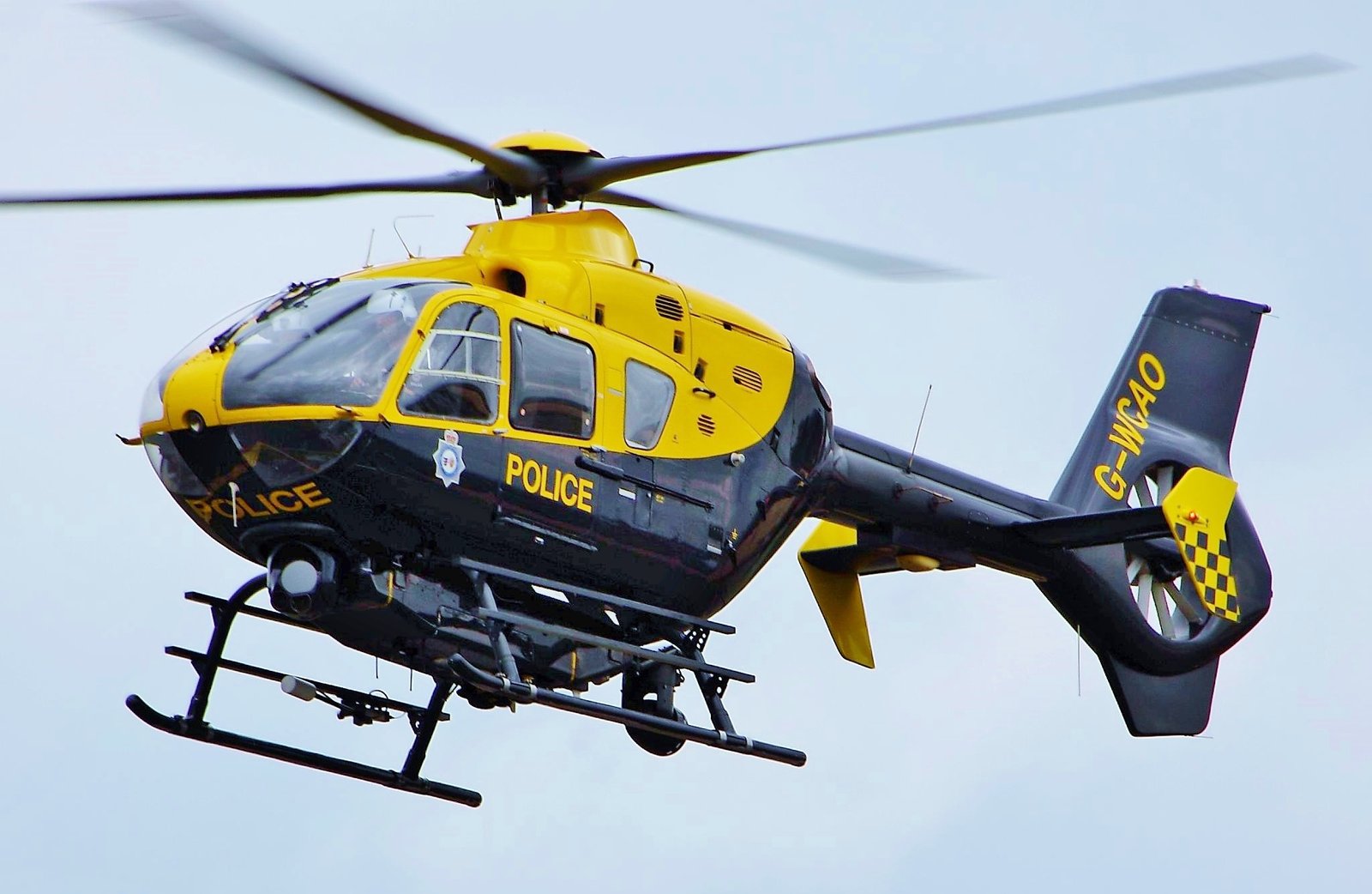
The EC-135 quickly established itself as the dominant platform for emergency medical services, search and rescue, and law enforcement operations across Europe and beyond. By 2017, operators in 58 countries had taken delivery of more than 1,220 aircraft, with the milestone 1,000th helicopter rolling off the production line in 2011. The majority of EC-135s serve in aeromedical configurations, where their spacious cabin, twin-engine reliability, and advanced avionics make them ideal for critical care transport missions. Police services worldwide have similarly embraced the type for surveillance and tactical support roles.
Military Service
The military variant, designated EC-635 and later H135M after 2014, entered service in May 1998. Multiple sub-variants serve armed forces globally, including the EC635T1, EC635P2, and specialized configurations like the EC635VIP for government transport and the TH-135 trainer for the Japanese Maritime Self Defense Force. Military operators use the aircraft primarily for training, transport, and VIP missions, with its twin-engine safety margin making it particularly suitable for over-water operations and flights in challenging terrain.
The Manufacturer
The EC-135's development represents a complex international collaboration spanning decades of European aerospace consolidation. Originally conceived by Messerschmitt-Bölkow-Blohm (MBB) as the BO 108 prototype, which first flew on October 17, 1988, the design transferred to Eurocopter when that company formed in 1992 from the merger of Aerospatiale's and Daimler-Benz Aerospace's helicopter divisions. Eurocopter, now operating as Airbus Helicopters since January 1, 2014, continues manufacturing the aircraft at its Donauwörth facility near Munich, Germany. The first production EC-135, registered D-HQQQ, was delivered to DRF German air rescue service on August 1, 1996.
Engine and Technical Innovation
The EC-135 pioneered the use of full-authority digital engine controls (FADEC) in helicopter design, becoming the first helicopter to incorporate this advanced system. Operators can choose between two engine families: Turbomeca Arrius powerplants ranging from 435 to 473 kilowatts, or Pratt & Whitney Canada PW206B engines producing 463 kilowatts each. The aircraft's bearingless main rotor system reduces maintenance requirements while its distinctive Fenestron tail rotor, enclosed within a shrouded housing, significantly reduces noise levels and improves safety around ground personnel.
Design Evolution
Engineers designed the EC-135 as a technological leap forward from the successful BO 105, incorporating extensive composite construction in the main airframe structure. The original BO 108 technology demonstrator underwent significant redesign through the early 1990s, with the installation of the Fenestron tail rotor system and expanded use of composite materials marking the transition to the production EC-135 configuration. The helicopter's streamlined fuselage and advanced rotor systems represent a compendium of 1990s rotorcraft technology.
Production Success and Legacy
Series production began in 1996 and has continued uninterrupted for over two decades, making the EC-135 one of Eurocopter's greatest commercial successes. The aircraft's combination of twin-engine reliability, spacious cabin, and advanced systems has made it the preferred choice for operators requiring dependable performance in demanding roles. Multiple variants serve distinct market segments, from the basic EC135T1 and EC135P1 models to enhanced variants like the EC135T2+ and EC135P2+ with improved engines and extended component overhaul intervals. The luxurious EC135 Hermès variant, developed in partnership with the French fashion house, targets the VIP and corporate transport market with premium interior appointments.
Today, the EC-135 continues in production as part of Airbus Helicopters' comprehensive rotorcraft lineup, with ongoing improvements ensuring its relevance in an increasingly competitive market. Its success has validated the European approach to helicopter development, combining advanced technology with proven reliability to create an aircraft that excels in the most demanding operational environments.