
Design Innovation
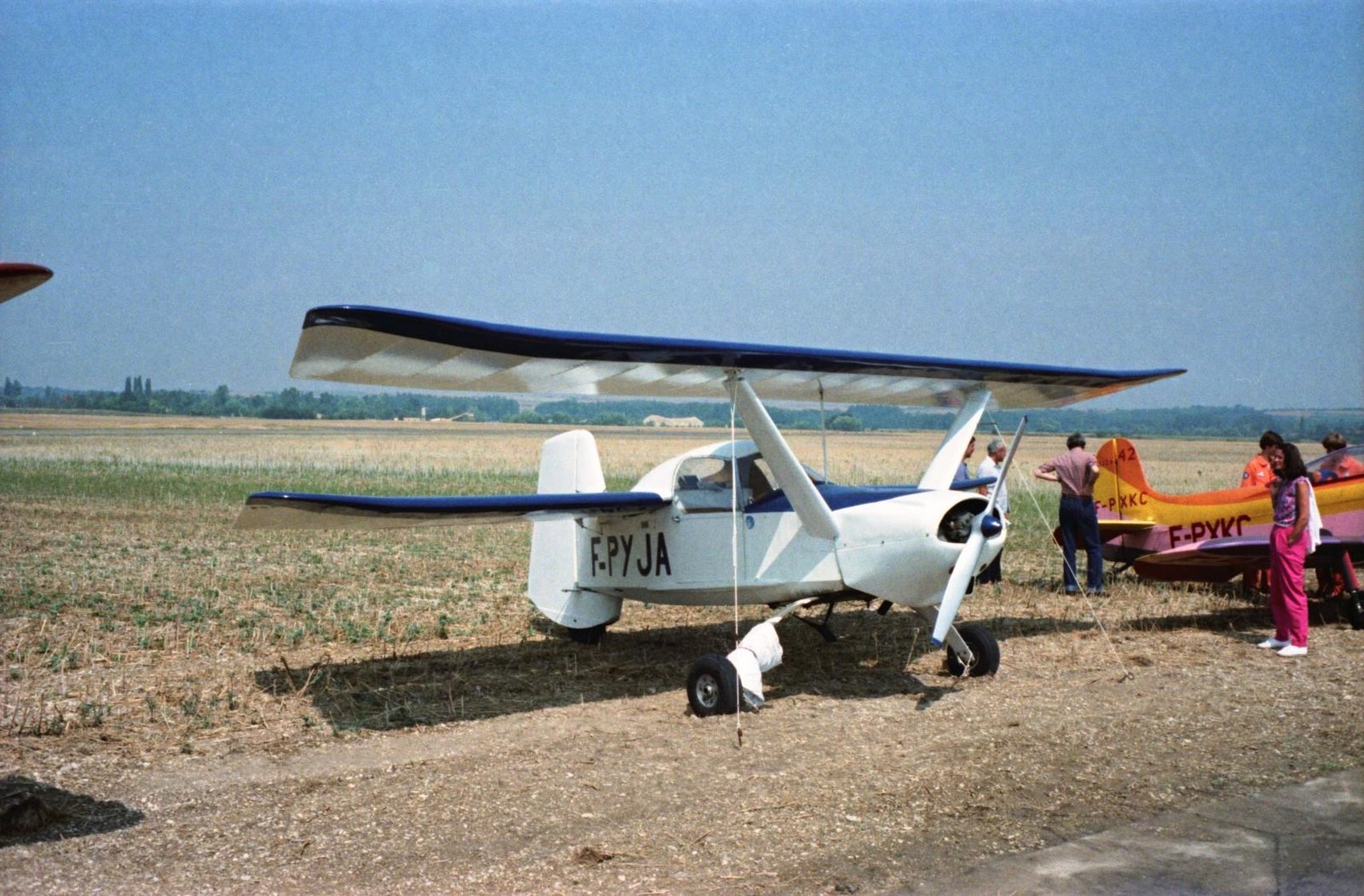
Emilien Croses developed the EC-6 Criquet as a refined evolution of the Mignet Pou-du-Ciel tandem-wing formula, addressing key handling deficiencies that had plagued earlier designs. The most significant innovation was Croses' split-trim-tab system on the rear wing, which dramatically improved control during crosswind landings—a notorious weakness of traditional Mignet configurations. This breakthrough made the Criquet far more practical for everyday flying than its predecessors.
The aircraft's tandem-wing configuration placed a smaller forward wing ahead of the main wing, with the rear wing providing primary lift and pitch control. Unlike conventional aircraft, the Criquet could not stall in the traditional sense, maintaining control authority down to its minimum flying speed of 25 mph. This characteristic made it exceptionally forgiving for amateur-built aircraft operators.
Production and Variants
Croses marketed the EC-6 strictly as plans for homebuilders rather than as a factory-produced aircraft. By 1977, seven examples had completed their first flights, with more than 60 under construction across France and beyond. The design's popularity continued growing, with more than 30 examples flying by 1997.
The basic EC-6 spawned numerous variants adapted for different missions and construction methods. Gilbert Landray developed the improved LC-6 Criquet, which became popular at French flying clubs. M. Millet of Société Co-Plasud created the LC-10 Criquet, featuring fiberglass construction and serving as a trainer with the Aéro-Club du Maconnais. The EC-6 Criquet Léger emerged as an ultralight variant powered by an uncowled Rotax 614 engine, while the Criquet Plastique composite version achieved cruise speeds of 124 mph.
Perhaps the most commercially successful derivative was the Airplume, a tandem ultralight variant equipped with a 35-horsepower engine. Commercialized as kits, the Airplume cruised at 68-75 mph and saw 36 examples completed, demonstrating the enduring appeal of the basic Croses formula.
Technical Specifications
The Continental C90 engine provided reliable power for the 1,213-pound maximum takeoff weight aircraft. This four-cylinder, air-cooled, horizontally-opposed engine drove a two-bladed SIPA propeller, delivering performance that impressed amateur aviation enthusiasts. The Criquet could reach 2,000 feet in just 6 minutes 14 seconds, demonstrating respectable climb performance for its class.
With 60 liters of fuel capacity, the aircraft achieved a range of 300 miles at its cruise speed of 99 mph. The tailwheel landing gear configuration kept construction simple while maintaining the classic appearance that appealed to traditional aircraft enthusiasts.
Operational History
The EC-6 Criquet found its niche in recreational flying, particularly among pilots who appreciated its unique handling characteristics and forgiving nature. French owners regularly flew their Criquets to national and international light aircraft rallies, showcasing the type's cross-country capabilities. A notable appearance occurred at the 1992 rally at RAF Wroughton airfield near Swindon, England, where a French-owned example demonstrated the aircraft's international appeal.
Several individual aircraft gained recognition in the amateur aviation community. F-PYLF, an LC-6 variant, became a familiar sight at Epinal airfield, while F-PZRR regularly operated from the same location. Nikolas Kuchto's LC-6 Criquet, registered F-PYFV, made multiple visits to Britain, serving as an ambassador for the type. The LC-10 variant F-PXKK joined several others at Brienne, demonstrating the fiberglass version's popularity.
The Croses Legacy
Emilien Croses had been advocating for the Mignet tandem-wing formula since 1946, making him a two-decade veteran of the concept when the EC-6 first flew. His persistence in refining the design paid dividends, as the EC-6 became recognized as his most successful creation. The aircraft proved that amateur-built designs could incorporate meaningful innovations while remaining accessible to homebuilders.
Today, at least 200 examples of various Croses designs remain active, with the EC-6 Criquet representing the largest portion of this fleet. This longevity speaks to the fundamental soundness of Croses' engineering approach and the aircraft's practical utility for recreational flying. The continued development of variants—from composite construction to ultralight adaptations—demonstrates how a well-conceived basic design can adapt to changing technology and regulations while maintaining its essential character.