
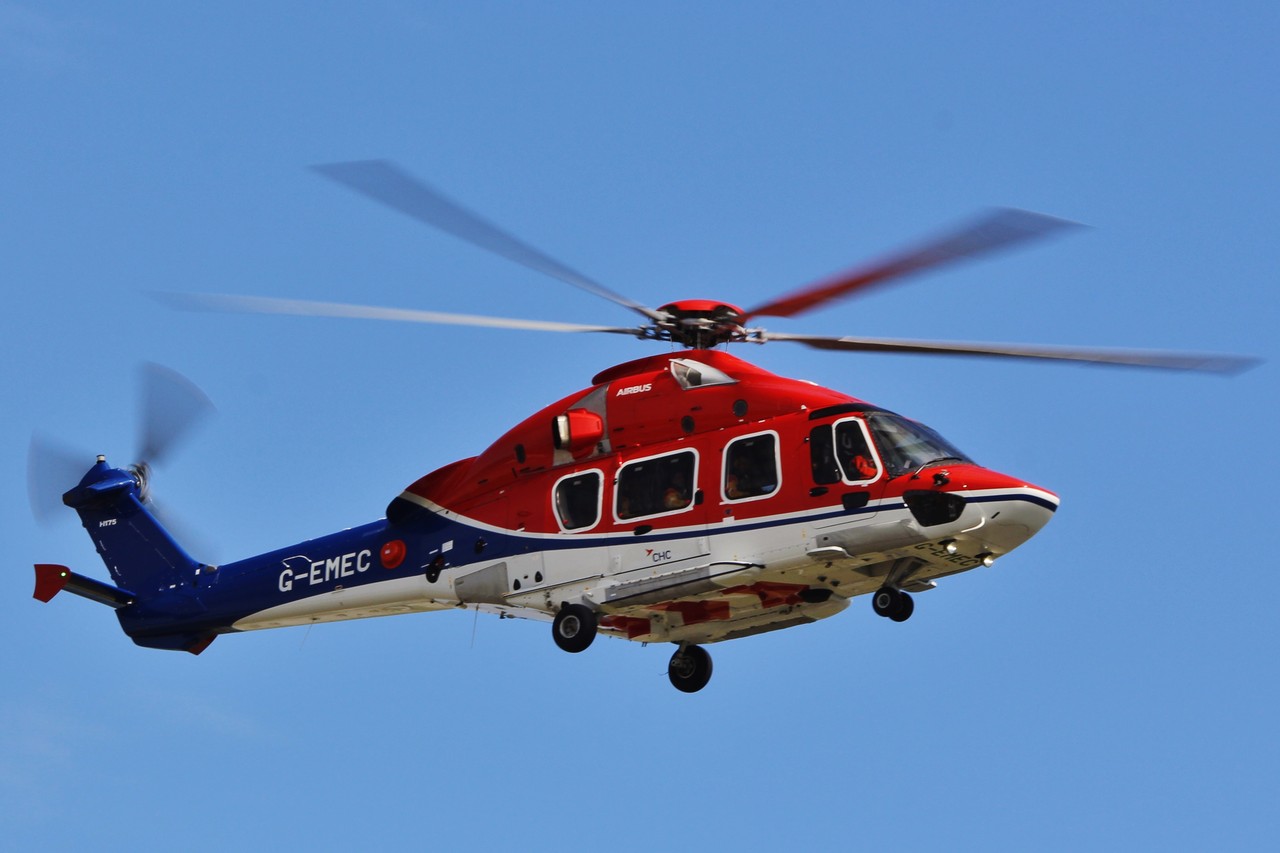
Development Partnership
The H175 emerged from an unprecedented international collaboration that began during President Jacques Chirac's official visit to China in October 2004. On December 5, 2005, Eurocopter and AVIC-II's Harbin Aircraft Industry Group signed the formal development contract, establishing a unique 50/50 joint venture that would reshape helicopter manufacturing. This partnership divided responsibilities strategically: Eurocopter handled the main gearbox, tail rotor, avionics, autopilot system, hydraulics, and electrical systems, while Harbin built the airframe, tail transmission, main rotor, fuel system, flight controls, and landing gear.
The development timeline proceeded with military precision. The Preliminary Design Review concluded exactly one year after contract signing on December 5, 2006, followed by the Critical Design Review on December 5, 2007, when the design was frozen. On November 15, 2008, Harbin delivered the first airframe structure to Eurocopter's Marignane facility in France, setting the stage for final assembly.
Flight Testing and Certification
The prototype achieved an unofficial first flight on December 4, 2009, followed by the official maiden flight on December 17, 2009, in Marignane. Test pilot Dominique Maunoury lifted the EC175 into French skies, beginning a certification campaign that would span five years. The second prototype joined the program on December 17, 2010, exactly one year after the first flight.
Certification proved more challenging than anticipated, with delays partly attributed to issues with the Helinix avionics suite. The European Aviation Safety Agency finally granted type certification in 2014, followed by the Civil Aviation Administration of China's approval. The aircraft entered commercial service in December 2014 with Belgian operator Noordzee Helikopters Vlaanderen (NHV) for North Sea oil and gas operations.
Powerplant and Performance
The H175's twin Pratt & Whitney Canada PT6C-67E turboshaft engines represent a significant advancement in helicopter propulsion. Each engine delivers 1,775 shaft horsepower and features Full Authority Digital Engine Control (FADEC), providing pilots with simplified engine management and improved reliability. The engines boast a 5,000-hour Time Between Overhaul rating with on-condition maintenance capability, reducing operational costs for commercial operators.
The helicopter accommodates 16 passengers in its standard configuration and holds certification for both two-pilot instrument flight rules and single-pilot visual flight rules operations. Early operational data from NHV's first two H175s demonstrated the aircraft's commercial viability: by August 2015, these helicopters had accumulated 1,000 flight hours across 750 flights, transporting 11,000 passengers while maintaining a dispatch rate exceeding 90 percent.
Manufacturing Revolution
The April 2014 agreement between Airbus Helicopters and Avicopter projected production of 1,000 EC175s over 20 years, with manufacturing split equally between French and Chinese facilities. This arrangement established parallel assembly lines at Airbus Helicopters' Marignane facility and Avicopter's Chinese plant. In China, the aircraft is produced as the Avicopter AC352, powered by indigenously developed WZ-16 series turboshaft engines.
The corporate rebranding of Eurocopter to Airbus Helicopters in January 2014 coincided with the aircraft's service entry, and the EC175 was formally redesignated as the H175 in 2015. This timing reflected the broader consolidation within the European aerospace industry as EADS transformed into the Airbus Group.
Operational Legacy
Approximately 100 H175s have been delivered since production began, establishing the aircraft in the competitive super-medium helicopter market. NHV's order for 16 H175s demonstrated early confidence in the type for demanding North Sea operations, where reliability and passenger capacity are paramount. The helicopter's classification as "super-medium" positioned it between traditional medium helicopters and larger heavy-lift aircraft, filling a crucial market gap.
By June 2021, Airbus Helicopters showcased evolved versions with increased reliance on Western suppliers, reflecting changing geopolitical considerations in international aerospace cooperation. The H175 continues production at both French and Chinese facilities, representing one of the most successful East-West helicopter collaborations in aviation history.
The aircraft's development bridged two aerospace cultures and manufacturing philosophies, creating a template for future international helicopter programs. Its success validated the concept of truly integrated joint ventures, where both partners contribute core competencies rather than simple assembly work, establishing a new model for global aerospace cooperation.