
Service History
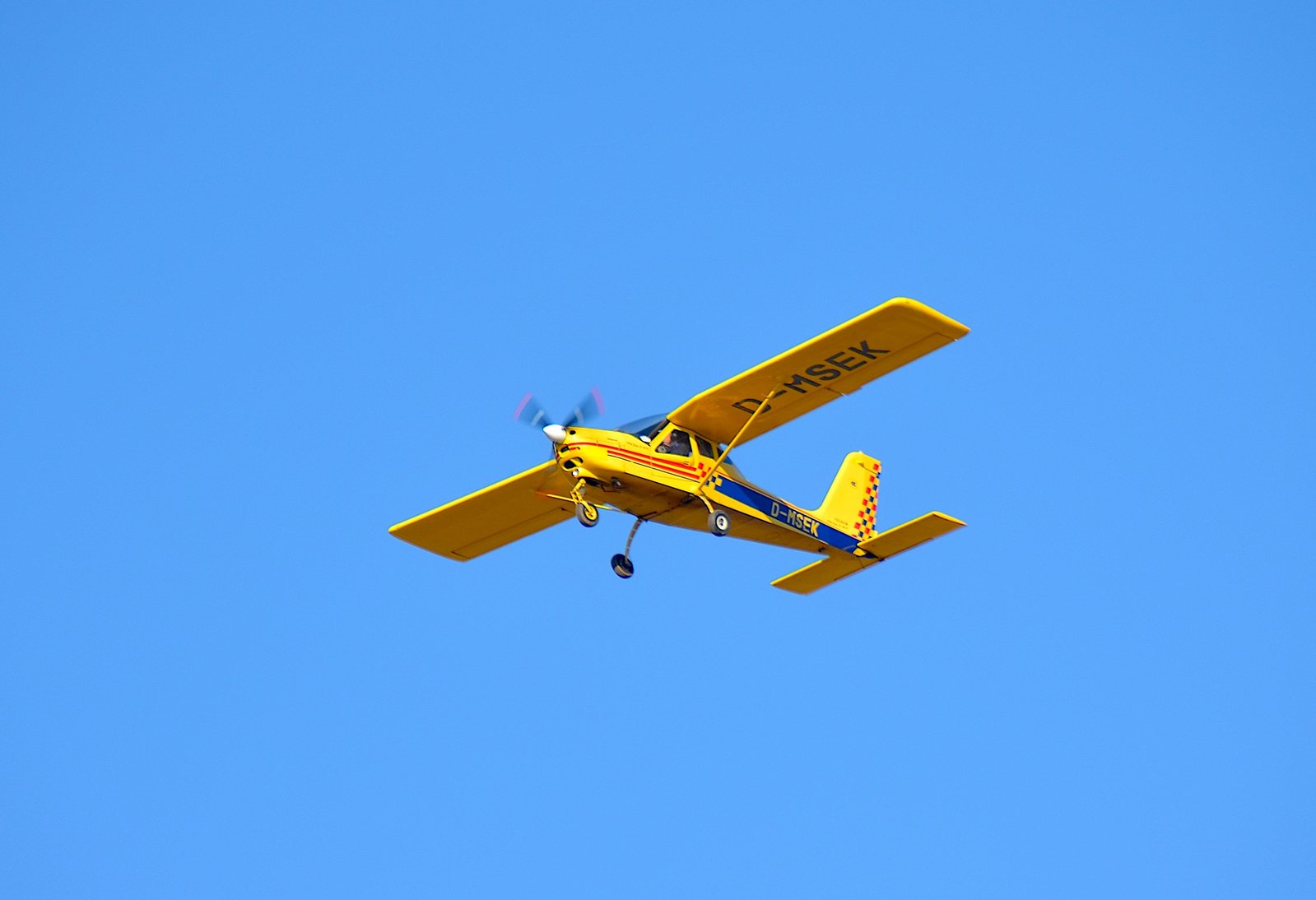
The P-92 Echo dominated the ultralight market throughout the 1990s and 2000s, becoming Tecnam's most popular model with production exceeding 2,600 aircraft worldwide. By 2003, overseas orders represented 51 percent of total production, demonstrating the aircraft's global appeal. The type found particular success in flight training operations and personal flying, with significant market penetration in Israel and other international markets. In New Zealand alone, more than 1,000 P-92s were produced for the local market.
Military Applications
While primarily a civilian aircraft, the P-92 saw limited military adoption. The Cambodian Air Force acquired six aircraft, with the first two delivered in September 1994. The military variant maintained the same basic configuration as civilian models but served in training and liaison roles.
The Manufacturer
Costruzioni Aeronautiche Tecnam was founded in 1986 by brothers Luigi and Giovanni Pascale, who departed Partenavia to establish their own aircraft manufacturing company. The Pascale family's aviation heritage dates back to 1948, when the brothers built their first aircraft. Initially, Tecnam manufactured components for Partenavia before transitioning to independent aircraft production at their facility at Naples International Airport. The company remains active today, recently certifying the twin-engine P2006T NG in early 2025, maintaining their position as a recognized international aviation manufacturer.
Design Development
Paolo Pascale, representing the second generation of the Pascale family, directed the P-92's development with the goal of creating a practical ultralight that bridged the gap between ultralight freedom and real aircraft capability. The prototype P92-J, registered I-TECN, first flew in the second quarter of 1995 and received type certification on November 10, 1995. The design featured innovative mixed construction: a steel-tube frame cockpit covered by metal sheeting, stressed-skin rear fuselage, composite engine cowling with quick-release latches, and metal flight surfaces with composite wing leading edges.
Engine Specifications
The P-92 Echo accommodated multiple powerplant options to meet various market requirements. The Rotax 912 UL delivered 79.9 horsepower, while the upgraded 912 ULS produced 98.6 horsepower. Alternative engines included the two-stroke Rotax 582 at 64.1 horsepower, the Limbach 2000 at 80 horsepower, and the flat-four Jabiru 2200 at 80 horsepower, which became standard on the Short-Wing variant. These Austrian-built Rotax engines became industry standards for ultralight aviation due to their proven reliability and fuel efficiency.
Pilot Perspective
Pilots appreciated the P-92's forgiving handling characteristics and practical design features. The aircraft offered side-by-side seating with full dual controls and two throttles, accommodating both training operations and personal flying. Three-point harnesses provided safety, while baggage space behind the seats added utility. The high-wing configuration delivered stable flight characteristics ideal for training applications. Fuel capacity varied from 70 liters in the Short-Wing variant to 90 liters in the P92-JS, providing adequate range for cross-country flights.
Production Variants
Tecnam developed numerous variants to address specific market segments. The P92-J complied with JAR-VLA airworthiness requirements, with 12 built by 1998. The P92-JS featured increased maximum takeoff weight and fuel capacity, with 21 delivered by February 2003. The P92-S "Super" variant introduced in 1999 incorporated a redesigned wing profile, improved engine cowling, and enhanced visibility through bulged windscreens and additional rear windows. The P92 Echo 2000 RG offered retractable landing gear and shortened wingspan, with 29 delivered by mid-2002.
Specialized Configurations
The P92 SeaSky amphibious variant first flew on July 1, 1997, featuring Lotus floats with optional wheel systems for versatile operations. This configuration expanded the aircraft's operational envelope to include water-based operations while maintaining land capability. The latest P92 Echo Mark II, introduced in 2020, incorporated increased cabin volume, wider seats, and improved adjustment mechanisms, representing ongoing refinement of the original design.
Production Legacy
With over 2,600 aircraft produced, the P-92 Echo stands as one of the most successful ultralight designs in aviation history. The aircraft proved that ultralight aircraft could achieve airline-like reliability while maintaining the regulatory advantages of the ultralight category. Production numbers reached 726 deliveries by January 2003, with continued manufacturing extending well into the 2020s. The P-92's success fundamentally changed perceptions of ultralight aviation, demonstrating that practical, reliable aircraft could be built within ultralight weight limitations while providing real transportation capability.