
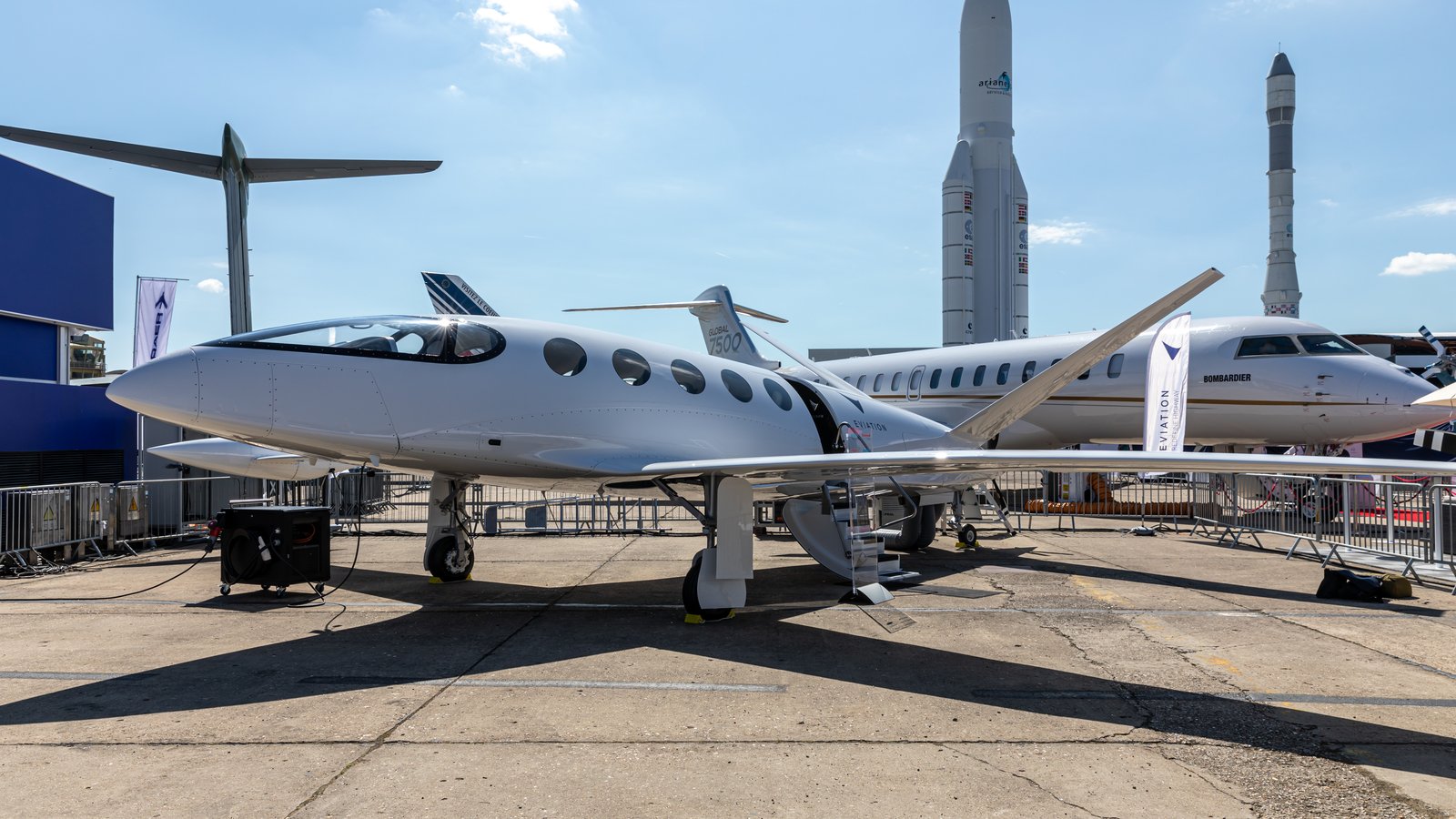
Development and Certification
The eFlyer 2 emerged from Bye Aerospace's vision to electrify general aviation training, with company founder George E. Bye leading the development program. Originally designated Sun Flyer 2, the aircraft underwent a rebranding in April 2019 to reflect the company's expanding electric aircraft portfolio. On April 13, 2018, Bye Aerospace filed the first FAA Type Certificate application under 14 CFR Part 23 Amendment 64 for an electric aircraft, marking a historic milestone in aviation certification.
The prototype achieved its maiden flight on April 10, 2018, at Centennial Airport in Colorado, followed by the production configuration's first flight on February 8, 2019. However, the path to certification has proven challenging, with first deliveries now projected for 2028, significantly delayed from original timelines.
Production Strategy
Bye Aerospace initiated production activities in early 2021, partnering with Composites Universal Group in Oregon for fuselage assembly of Serial #001. The company plans to build three conforming prototypes for FAA certification testing, representing a methodical approach to achieving type certification. As of 2024, no completed production aircraft have been delivered, though prototype construction continues.
The manufacturing strategy reflects the specialized nature of electric aircraft production, requiring new partnerships and supply chains distinct from traditional aviation manufacturing. Bye Aerospace maintains primary development and assembly operations in Denver, Colorado, while leveraging specialized composite expertise in Oregon.
Market Response
Despite remaining in pre-production, the eFlyer 2 has generated substantial market interest, accumulating 711 orders and purchase agreements by November 2020. The largest single order came from OSM Aviation of Norway, which committed to 60 aircraft in April 2019 for all-electric pilot training operations—the largest commercial electric aircraft order at that time.
This strong order book reflects growing demand for sustainable aviation solutions, particularly in flight training where repetitive operations amplify the economic and environmental benefits of electric propulsion. The aircraft's projected operating costs represent a dramatic reduction compared to conventional trainers like the Cessna 172.
Technical Innovation
The eFlyer 2's design prioritizes aerodynamic efficiency, achieving more than twice the efficiency of legacy training aircraft through careful optimization. The cantilever low-wing configuration, combined with fixed tricycle landing gear and a bubble canopy, provides modern ergonomics while minimizing drag.
Powering the aircraft is the Safran ENGINeUS 100 smart electric motor, selected in November 2020 after replacing the original Siemens SP70D due to commercial considerations. Weighing just 18 kilograms, the Safran motor is 90 kilograms lighter than a comparable Cessna 172 piston engine, contributing significantly to the aircraft's efficiency advantage.
The electric propulsion system couples with lithium-ion battery packs—up to six in the design—to achieve the target 3.5-hour endurance. This duration matches typical flight training requirements while eliminating CO2 emissions and reducing noise pollution around airports.
The Manufacturer
Bye Aerospace, founded and led by George E. Bye, has focused exclusively on electric aviation since its establishment. The company secured significant validation in January 2019 when Japanese automotive giant Subaru and investment firm SBI provided funding, recognizing the potential of electric aircraft technology.
The company has expanded its vision beyond the two-seat eFlyer 2 to include the four-seat eFlyer 4, targeting both training and personal transportation markets. This product strategy positions Bye Aerospace to capture multiple segments of the emerging electric aviation market.
Certification Progress
The FAA certification process has progressed through several milestones, including G-2 Means of Compliance approval in January 2023. This regulatory framework establishment represents crucial progress for the entire electric aircraft industry, as the eFlyer 2 serves as a pathfinder for future electric aircraft certifications.
Current projections target first flight of production-conforming aircraft in 2026, with initial deliveries following in 2028. These timelines reflect the complexity of certifying new propulsion technology and the FAA's methodical approach to ensuring safety standards.
Industry Impact
The eFlyer 2 represents more than a single aircraft program—it embodies the potential transformation of flight training from emission-intensive to zero-emission operations. Bye Aerospace projects that widespread adoption could save millions of tonnes of CO2 emissions annually, fundamentally changing general aviation's environmental footprint.
The aircraft's development has also accelerated regulatory frameworks for electric aircraft, establishing certification pathways that future manufacturers will follow. As the first applicant under FAA Part 23 Amendment 64 for electric aircraft, the eFlyer 2 is pioneering the regulatory landscape for sustainable aviation technologies.