
Development and Innovation
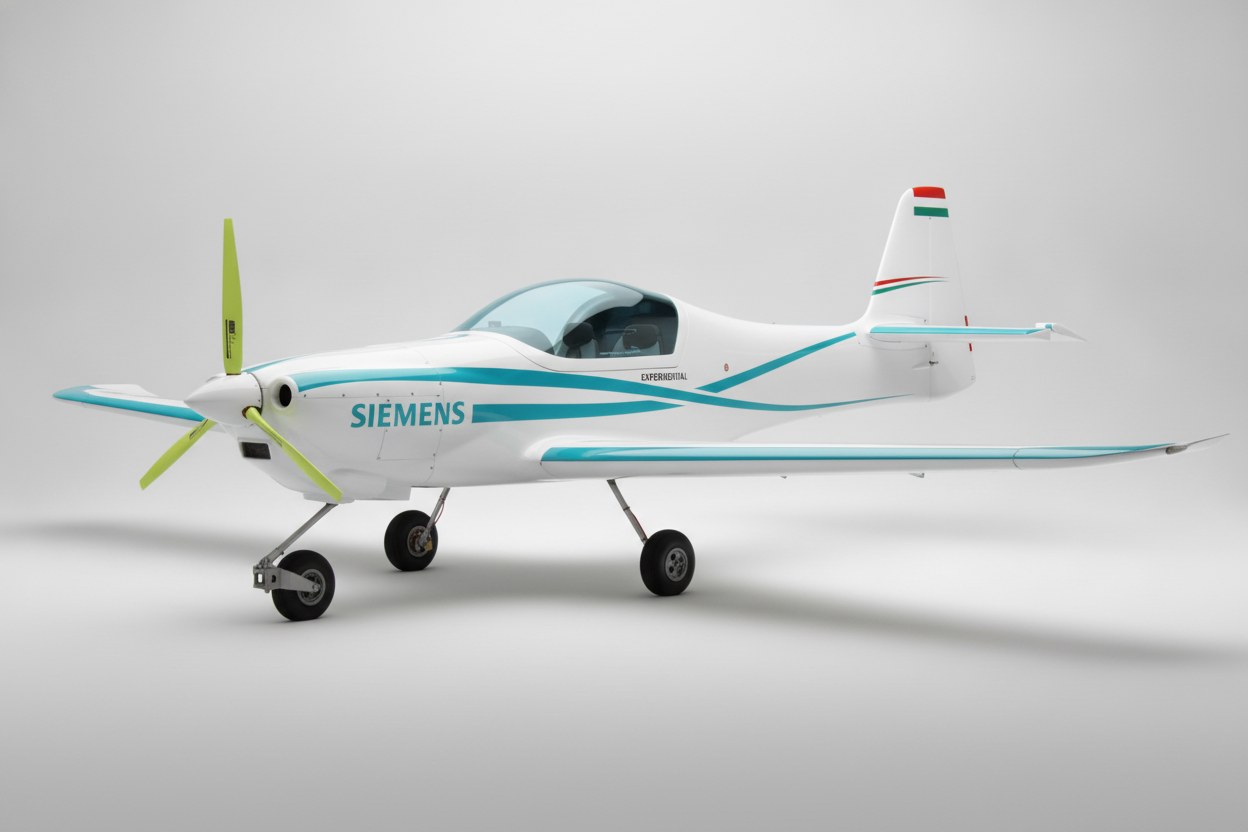
The eFusion emerged from the aviation industry's growing interest in sustainable propulsion systems during the late 2010s. Siemens, the German industrial giant, partnered with Hungarian company FlyEco to create what they envisioned as the future of light aircraft propulsion. The design team based their hybrid aircraft on the existing piston-powered Fusion airframe, adapting it to accommodate the complex dual-powerplant system required for hybrid operation.
The aircraft's most distinctive feature was its innovative propulsion architecture. The Siemens SP55D electric motor, producing between 55 and 60 kilowatts, provided clean, quiet power for takeoff and landing operations. During cruise flight, a FlyEco three-cylinder diesel engine, derived from automotive Smart Car technology, would engage to recharge the aircraft's battery pack while maintaining flight. This system promised to combine the environmental benefits of electric flight with the extended range capabilities of conventional engines.
Technical Specifications and Performance
The eFusion's all-composite construction kept its empty weight to just 410 kilograms, allowing a useful load of 190 kilograms within its 600-kilogram maximum takeoff weight limit. The aircraft demonstrated impressive short-field performance, requiring only 120 to 130 meters for takeoff and between 150 and 200 meters for landing roll. On battery power alone, the aircraft could maintain approximately one hour of flight endurance.
The side-by-side seating configuration provided excellent visibility for both pilot and passenger, while the low-wing design contributed to efficient cruise performance. The fixed tricycle landing gear simplified maintenance requirements and reduced operating costs, aligning with the aircraft's intended market in the ultralight, light sport aircraft, and very light aircraft categories.
Test Flight Program and Tragedy
The eFusion's maiden flight took place at Matkópuszta airfield near Kecskemet, Hungary, marking a significant milestone in hybrid-electric aviation development. The initial flight demonstrated the viability of the hybrid concept and validated the aircraft's basic handling characteristics. Test pilots reported that the electric motor provided smooth, vibration-free operation during the critical phases of takeoff and landing.
However, the program suffered a devastating setback on May 31, 2018, when the prototype crashed during a training flight, killing both occupants. The subsequent accident investigation determined that pilot error was the most likely cause, specifically citing a high bank-angle stall occurring close to the ground. This type of accident, while tragic, was not directly related to the aircraft's hybrid propulsion system but rather to conventional flight envelope limitations.
Market Introduction and Industry Impact
Siemens and FlyEco had unveiled the eFusion concept at the prestigious AERO Friedrichshafen airshow in 2018, generating considerable interest from the light aviation community. The aircraft represented part of Siemens' broader strategy to establish leadership in electric aviation propulsion, leveraging their extensive experience in industrial electric motor technology.
The hybrid approach addressed one of the primary limitations facing pure electric aircraft: limited range and endurance. While battery-only aircraft were restricted to short local flights, the eFusion's diesel generator promised to extend operational capability to levels approaching conventional aircraft. This made it potentially suitable for flight training operations, recreational flying, and short-haul transportation missions.
The Siemens Aviation Initiative
Siemens' involvement in the eFusion project was part of their larger commitment to electrifying aviation. The company had previously demonstrated electric propulsion technology in various aircraft platforms and was actively developing higher-power systems for larger aircraft applications. Their SP55D motor used in the eFusion incorporated advanced permanent magnet technology and sophisticated electronic control systems derived from industrial applications.
The German engineering giant viewed light aircraft as an ideal proving ground for electric aviation technology, where weight and power limitations were less constraining than in larger commercial applications. Success in the light aircraft market could provide valuable experience and credibility for future applications in regional and eventually larger commercial aircraft.
Production Plans and Current Status
As of 2018, Magnus Aircraft had announced plans to move the eFusion into production, targeting the growing market for environmentally conscious aviation solutions. The company projected that hybrid propulsion would appeal to flight schools seeking to reduce operating costs and noise emissions, as well as private owners interested in sustainable flying.
However, the prototype's crash significantly impacted the program's timeline and commercial prospects. The accident, combined with the broader challenges facing electric aviation development, appears to have slowed progress toward certification and production. The complex regulatory environment surrounding hybrid propulsion systems also presented additional hurdles for bringing the aircraft to market.
The eFusion's legacy lies in its demonstration of hybrid-electric technology's potential for light aviation, even as the specific aircraft failed to reach commercial production. Its innovative approach to combining electric and conventional propulsion influenced subsequent developments in sustainable aviation technology.