
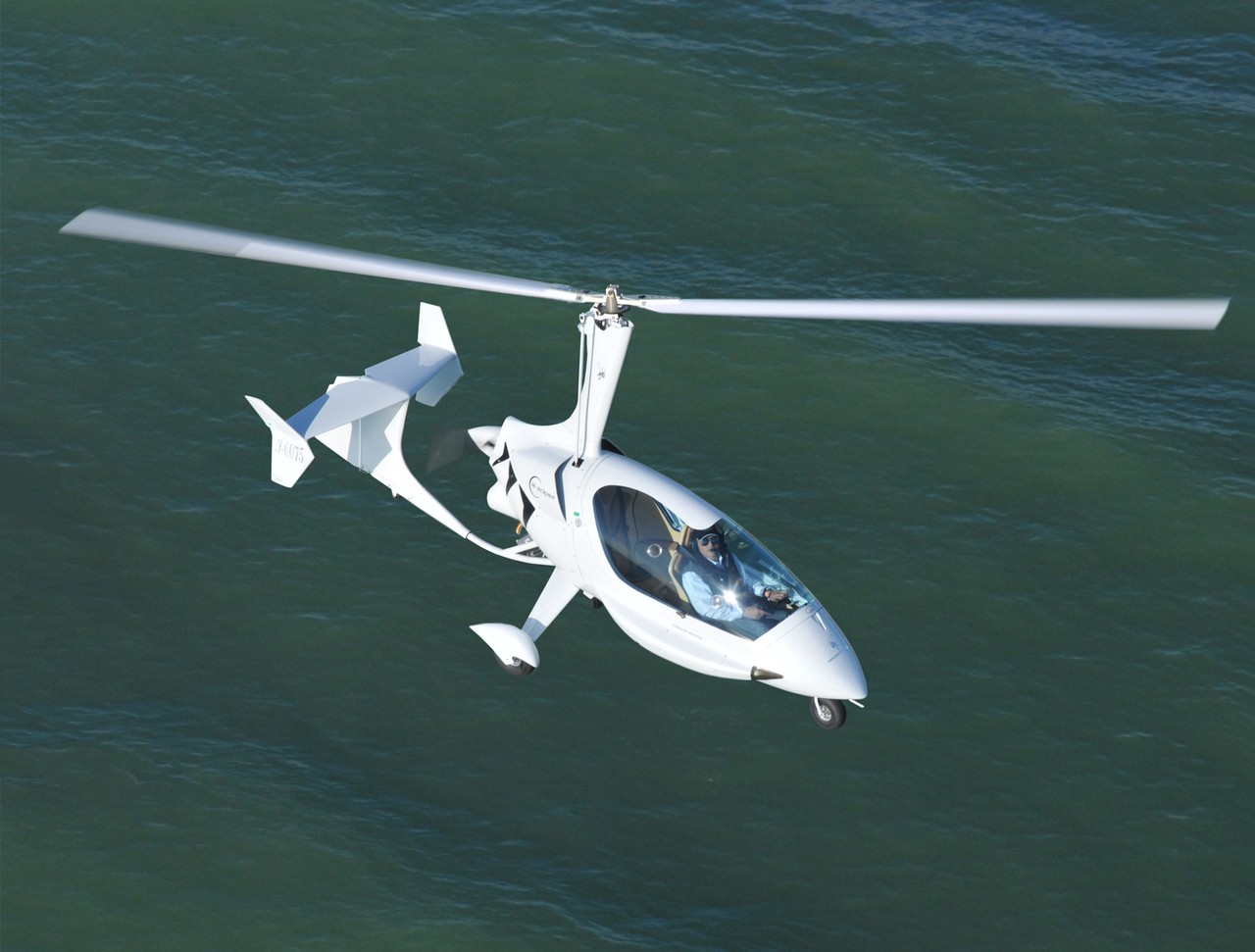
Revolutionary Design Achievement
The ELA-10 Eclipse represented a quantum leap in gyrocopter engineering when Emilio López Jr. and Daniel López completed their three-year design effort in 2014. Unlike traditional open-cockpit autogyros built on steel tube frames, the Eclipse featured a fully enclosed carbon fiber cockpit with a removable bubble canopy, allowing operation in both enclosed and open-air configurations. This innovative construction approach, combining a chrome molybdenum 4130 steel frame with extensive carbon fiber components, delivered unprecedented performance while maintaining the inherent safety characteristics of gyrocopter flight.
Commercial Success and Market Impact
Following its debut at the AERO Friedrichshafen airshow in 2014, the ELA-10 Eclipse entered production immediately and achieved remarkable commercial success. The aircraft's popularity helped establish ELA Aviación as "the Spanish company that has manufactured and sold the most aircraft in history," according to company records. Its combination of 640-kilometer range, 5-to-7-hour endurance, and cruising speeds between 150-165 kilometers per hour attracted private operators seeking high-performance rotorcraft capabilities without the complexity of traditional helicopters.
ELA Aviación: From Startup to Industry Leader
ELA Aviación was founded in 1996 by Emilio López Alemany and his wife Rita Nieves, beginning operations at the modest Griñón aerodrome near Madrid. The company's growth trajectory required multiple facility expansions: relocating to Casarrubios del Monte aerodrome around 2002, then establishing their current manufacturing facility in Fuente Obejuna, Córdoba in 2005. Their breakthrough came with the earlier ELA-07 model, but the Eclipse represented the culmination of their engineering expertise and established them as a reference standard in the global gyrocopter industry.
Austrian Engineering Partnership
The Eclipse's propulsion system relies on proven Austrian Rotax engines, a partnership ELA Aviación established in 2002. Operators can choose between the naturally aspirated Rotax 912 ULS producing 100 horsepower or the turbocharged Rotax 914 delivering 115 horsepower, both four-cylinder, liquid and air-cooled, four-stroke engines. The pusher configuration places the engine behind the cockpit, providing excellent forward visibility while maintaining the aircraft's 530-kilogram gross weight within light sport aircraft limitations.
Performance Specifications and Capabilities
The Eclipse's performance envelope demonstrates the advanced state of modern gyrocopter design. With a useful load capacity between 237-255 kilograms depending on engine selection, the aircraft accommodates two occupants plus 65 liters of baggage storage. Its two-blade rotor system spans 8.5 meters in diameter with a 22-centimeter chord, generating sufficient lift for a maximum speed of 190 kilometers per hour and climb rate of 5 meters per second. The aircraft's disk loading of 9.3 kilograms per square meter contributes to its exceptional autorotational characteristics.
Operational Advantages
The Eclipse's short-field performance capabilities distinguish it from fixed-wing aircraft in its class. Requiring only 100 meters for takeoff, the gyrocopter can operate from confined spaces inaccessible to conventional aircraft. Its landing performance proves even more impressive, touching down in distances between zero and 20 meters depending on conditions. These characteristics, combined with fuel capacity of 87-100 liters depending on configuration, enable operations from small private strips while maintaining respectable cross-country capability.
Technical Innovation Legacy
ELA Aviación marketed the Eclipse as the beginning of the "Gyronautics revolution," merging automotive-grade technology with rotorcraft engineering principles. Standard equipment includes pneumatic pre-rotator and rotor brake systems, hydraulic wheel brakes, cockpit heating, LED landing lights, mast-mounted strobe lighting, oil thermostat, stainless steel exhaust system, and friction clutch engagement. The carbon fiber three-blade propeller represents another advancement in gyrocopter propulsion efficiency.
Continuing Evolution
The Eclipse's success enabled ELA Aviación to develop subsequent models building on its design foundation. The company introduced the ELA EVO in 2021, marketed as "the fastest certified autogyro in history," followed by the ELA REV in 2023, promoted as "the autogyro with the shortest takeoff in history." Emilio José López currently leads the company's research and development department, ensuring continuity with the original founders' vision while advancing gyrocopter technology.
Current Operations
ELA Aviación continues manufacturing and marketing the Eclipse as a complete, ready-to-fly aircraft for civilian operators worldwide. The company maintains operations under its original name, with documented examples operating in locations including Australia, demonstrating the aircraft's global appeal and operational versatility in diverse environments.